

How To Poach Chicken For Tender Results
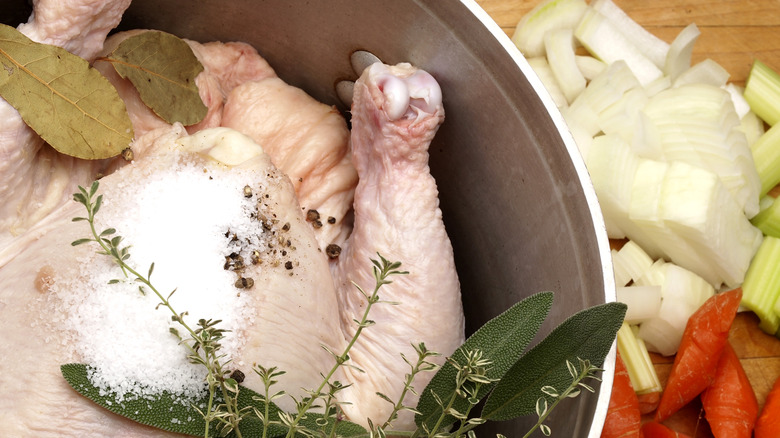
Everyone loves a good crispy roast chicken, but spending hours on dinner prep isn't always feasible. For quick meals or knocking out a week's worth of cooking in one go, poaching chicken is a solid route. Most people don't realize poached chicken doesn't have to be bland. Not only does it produce a juicy, tender bite, but it's much faster and less labor-intensive than many alternatives.
I had the chance to speak with acclaimed chef and restaurateur Andrew Carmellini at the 2025 New York City Wine and Food Festival, and he said the trick is to never boil the chicken. "You should never boil any kind of meat," he explained. He recommends poaching chicken on the bone whenever possible because it acts as a natural barrier, preventing overcooking while adding more depth to the flavor. Poaching is a great way to upgrade the flavor of chicken breast, and it's one of Carmellini's favorite ways to prepare chicken during colder months when he's craving something nourishing to warm him from within.
Temperature is the key to poaching, but aromatics help, too
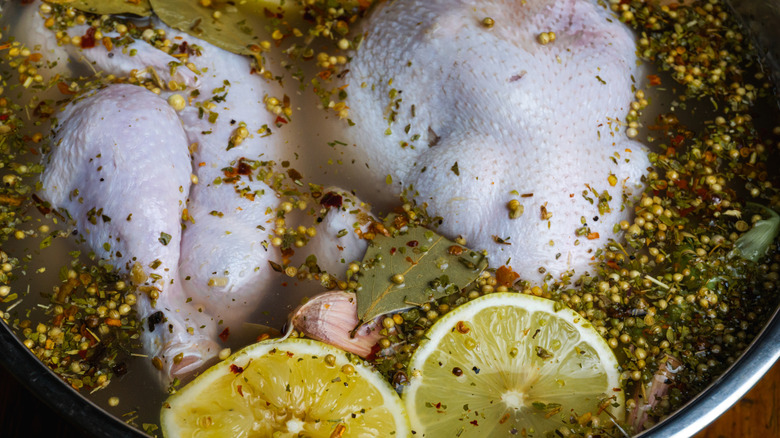
Knowing how simmering is supposed to work is critical to a flawlessly poached chicken. Aim for water that's between 160 to 180 degrees Fahrenheit, where you'll occasionally see a few bubbles breaking the surface. Some recommend taking the pot of simmering chicken off the heat once it's reached the ideal temperature, and letting it stand, covered, until it's fall-apart tender. Seasoning the poaching liquid is also encouraged.
"I'll just take a chicken, I'll poach it slowly with water and aromatics, add onion, carrot, celery, and herbs," Andrew Carmellini explained. This method rewards you in two ways: with tender meat and a rich, flavorful broth. Once the chicken is done, Carmellini removes the spent vegetables, cuts up the chicken, adds fresh vegetables to the hot broth, and returns the chicken pieces. The result is juicy, fork-tender chicken in a versatile broth that can evolve into soup or a magical cooking elixir for grains.
Carmellini offered some wise insight for beginners who instinctively crank up the heat to make stock or soup. "You can simmer it to death and it's going to taste like mom's chicken soup," he said. No offense to the hard-working mothers out there, but remember to keep the heat soft and trust the process.