

How To Tell If Your Vintage Pyrex Pieces Are Worth Anything
We may receive a commission on purchases made from links.
Scoring a vintage Pyrex piece at a yard sale or antique store is always a great find. The older the Pyrex, the more it's worth, as long as it's in good condition. If you're curious about whether that vintage Pyrex dish you found at the thrift store is worth anything, then also consider its pattern, practicality, and price. And if you think it could be one of the more valuable pieces, then it's also worth it to consult an expert and get a true understanding of what you could sell it for.
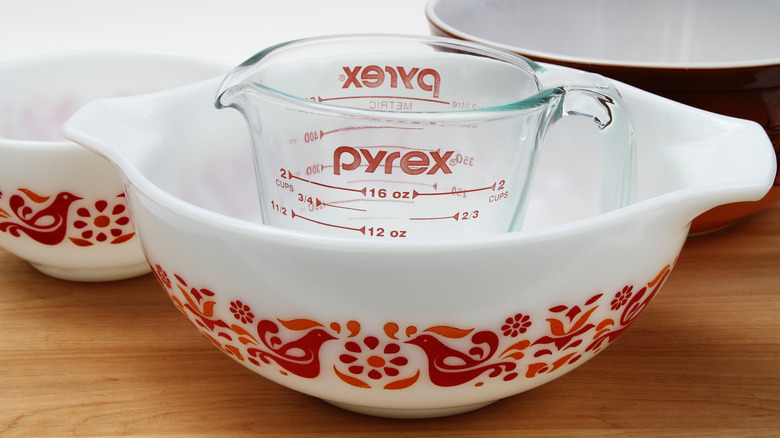
Maybe you've wondered why some secondhand glassware is labeled "PYREX," while others are labeled "Pyrex." If you see the former on your glassware, it could be a sign that it's older and made with borosilicate, a more heat-resistant form of glass that was used in the earlier days of the Pyrex brand. However, this isn't an absolute, as more than 150 different compositions have been used to make Pyrex glassware through the years. The all-caps logo style could be a good starting point for determining the glassware's age, but there are plenty of other factors to consider in order to most knowledgeably understand how old a vintage piece really is.
Determine the age of the glassware
New York-based Corning Glass Works created heat-proof, borosilicate glassware back in 1908 for commercial use in items such as lanterns and batteries. But it wasn't until 1915 that the brand established Pyrex, the baking version of the same glass, which changed home cooking forever. Now, more than 100 years later, the age of your branded glassware makes a difference in its value. Corning even has a glass museum that has a number of vintage Pyrex dishes on display.
It's worth checking out that 1915 glassware, whether in-person or through online images, to know if any of your glassware is identical to those earliest designs. The brand's utility baking dish, which remains one of its earliest releases, was fairly basic; it was made from thick clear glass in a square shape with rounded edges. It narrowed slightly toward the bottom and had a "PYREX" seal underneath the bottom in the center. Another way to tell the age of glass is by its color. If it has a yellow hue, it could contain arsenic, which suggests it's from a pre-1934 collection, when they still used said chemical in glassware to help create its shape. If you can credibly establish the age of your glassware, then it could be worth a decent amount, though the actual price still depends on factors like condition and pattern.
Learn which Pyrex patterns and colors are worth a lot of money
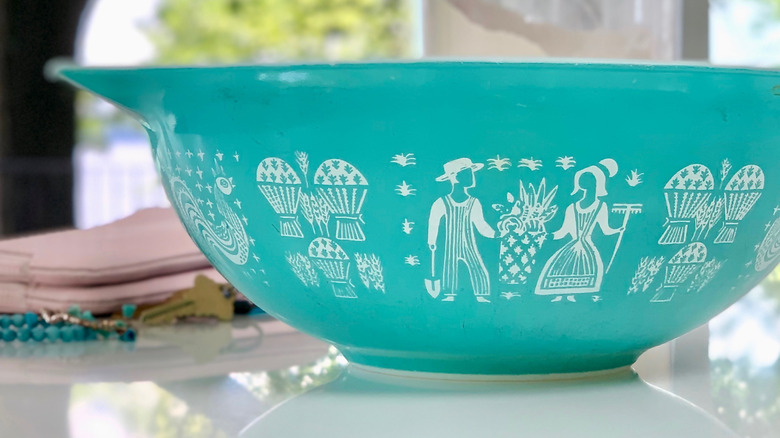
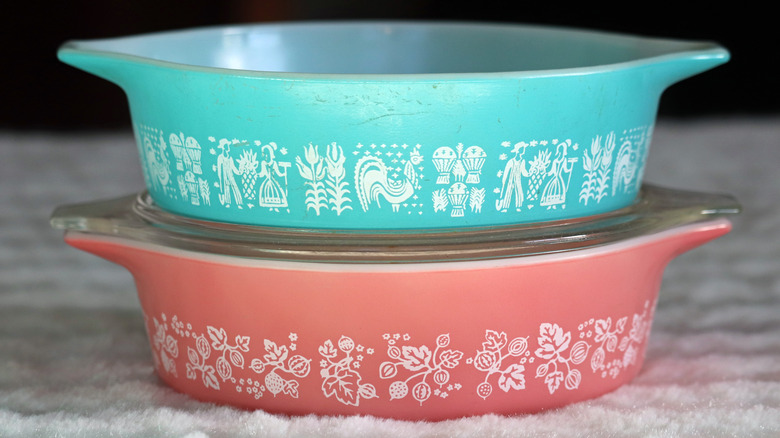
Through the years, the glassware brand has come out with a number of collections in various colors and patterns. Collectors tend to be interested in vintage patterned items with the original Pyrex logo, and full sets are worth even more. For example, original glassware in the specialty Pink Daisy pattern line (launched in 1956) or the Butterprint pattern line (launched in 1957) would be valuable to collectors; intact sets could be worth hundreds of dollars.Another valuable design is the "Starburst" pattern, which was produced in 1960 and featured brightly colored Pyrex dishes with a Starburst pattern on the sides.
If you do own any colorful vintage glassware, you should only hand-wash it, because dishwasher detergent can permanently alter the colors and patterns. Due to the metals that can be present in vintage paint, you shouldn't microwave vintage Pyrex, either. Preserving the patterns and colors of your vintage Pyrex make it more valuable.
Assess the item's practicality and condition
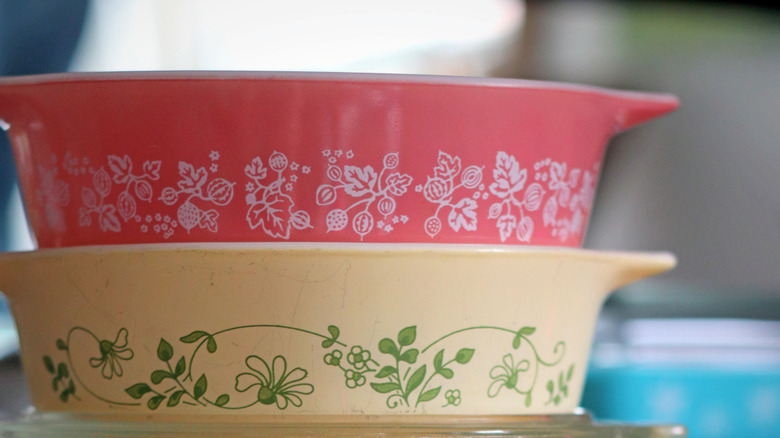
Maybe you've found a piece of patterned Pyrex but still have further questions about its value. From there, inspect it. What does it look like? If it has lipped edges on either side, then it may not be worth as much as bowls or containers that don't have lips. That's due to the practicality aspect; lipped glassware is harder to store, so in some cases, it's not as valuable to collectors.
General condition is important, too. If you have patterned or colored Pyrex, the brighter, the better. Since dishwashers have done a number on the colors and patterns of the glassware through the years, the well-preserved, hand-washed items are worth more because they're closer to the original color. Of course, inspect it for general wear and tear, too, like cracks or chips. Individual pieces that are in mint condition with their original color still intact have the potential to sell for well over $100 per piece.
Compare Pyrex prices online
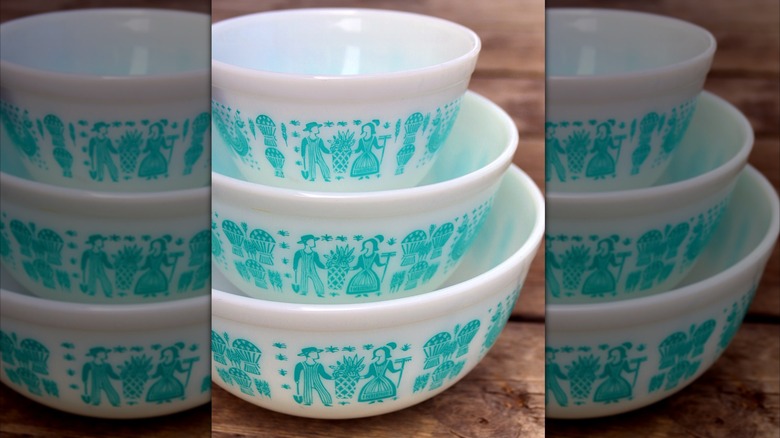
No matter how much you think your glassware is worth, price-comparing your own pieces or collections with others available for sale will give you an accurate understanding of what you might get for them. Websites like eBay, Facebook Marketplace, and even Etsy all have a decent amount of vintage Pyrex for sale; so even if you can't find your exact collection for sale (maybe that's a good thing), then you can at least gauge the pricing for other similar styles and pieces.
The best way to determine the value of your Pyrex pieces is to look at Pyrex listings that have already sold — not ones that are currently up for sale. This tells you what someone would actually pay for it. Believe it or not, we've even spotted rare pieces or sets that have sold for thousands of dollars online, though there are plenty of other vintage Pyrex glasswares that might only sell for a couple of bucks.
You can search a specific bowl or pattern on eBay to see what other styles go for — and the same goes for Facebook marketplace. If you want to collect the glassware and plan on buying vintage sets online, make sure to read the reviews of the shops and sellers to be sure you're getting a quality product. A copycat Pyrex product might get the job done in the kitchen, but it won't be worth anywhere close to the real thing.
Consult an expert for further guidance
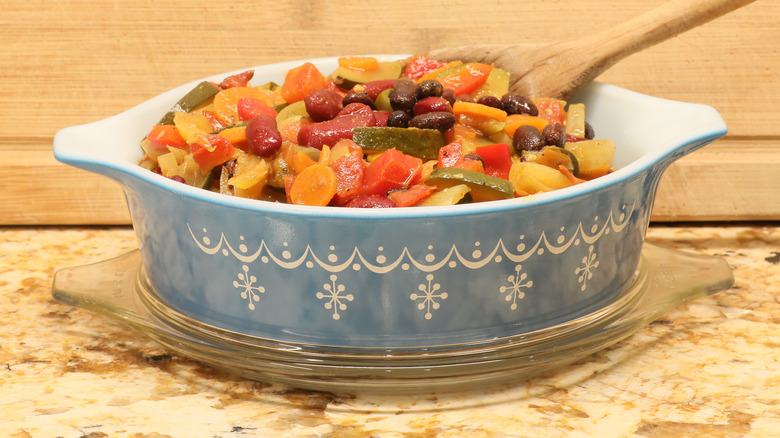
The best way to know exactly how much your Pyrex is worth is to consult someone who is knowledgeable on the product. A local antique shop might be a good place to start. It's possible the employees have seen plenty of the glassware come through; and if they haven't, perhaps they can point you to someone who has.
Another option could be to compare your glassware with official museum resources, such as from the Corning Museum of Glass. While this museum can't assess your own Pyrex pieces, it does offer resources for where to start when assessing your vintage glassware. You can also purchase a book like Pyrex Passion, which is all about understanding the vintage dishes produced between the 1940s and 1980s. These guides can give you a good point of reference for determining the rarity and value of the Pyrex you own.