

Stop Wiping Stainless Steel With Paper Towels: Here's What You Should Really Be Using
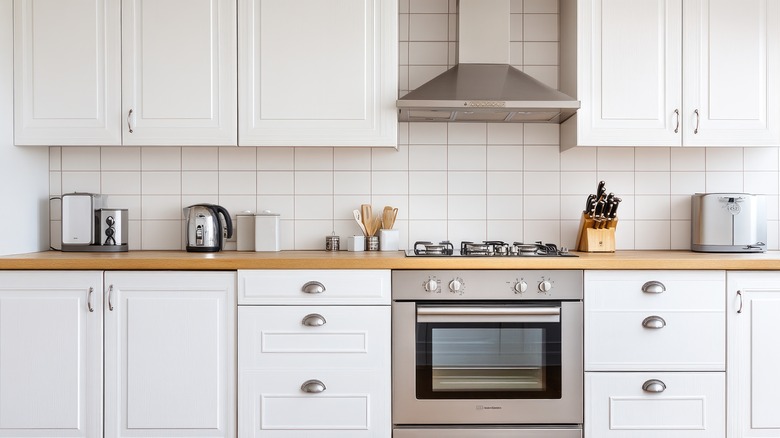
Stainless steel is one of the most popular materials for appliances, and it's easy to see why. Its smooth metallic finish makes it a visually appealing choice for home owners of most any interior design aesthetic. Modernists, minimalists, and even French country aficionados might like and use stainless steel for their appliances and fixtures (though you may want to avoid black stainless steel kitchen appliances in small cooking spaces). In fact, Ree Drummond even uses stainless steel as the material for her kitchen island. It also makes a great material for cookware, as stainless steel can provide nonstick results without any harmful coatings. Plus, its name implies an easy, untarnished nature. It is stainless, after all. However, anyone who owns a stainless steel appliance or utensil knows that it is far from impervious to splotches and smears. To clean it off, you might use a paper towel to remove those pesky smudges. And why wouldn't you? One cloth is as good as any other you might think. Except, it really isn't.
Using paper towels to wipe down your stainless steel items can scratch the metal's surface, or leave paper fibers behind with each swipe. And that can cause your appliance to become dull, uneven, or streaky. So what should you use to clean your chic metal fridge? A microfiber cloth is just the tool for the job. Unlike paper towels, microfiber cloths will not leave any residue behind. Since the cloth is made from woven or knit synthetic materials that have fine fibers and a soft texture, they won't scratch the surface of your stainless steel, but instead leave it perfectly smooth and smudge-free.
More tips for cleaning stainless steel
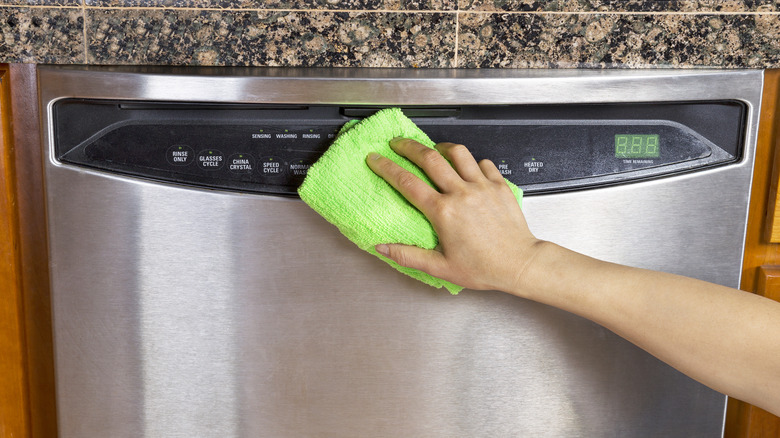
In addition to using the correct cleaning cloth, you'll also want to use the proper cleanser and technique to get your stainless steel back in shape. First, there are some things to avoid. In terms of cleaners, you should skip undiluted vinegar, bleach, or glass cleaning liquids. Undiluted vinegar is too acidic and can break down the metal. Bleaches, on the other hand, can cause rusting, and glass cleaners can leave your appliance cloudy due to the ammonia that's most often present in them. Instead, you can use a basic dish soap or a specialized stainless steel cleaner. Along with paper towels, you should avoid cleaning stainless steel with abrasive sponges, scrubbing pads, or any potentially harsh materials.
You'll also want to make sure to use proper cleaning techniques when scrubbing down your stainless steel. Before cleaning, you should identify the direction of the steel's grain. This is a pattern of lines going up and down or side to side; you should always brush along this grain and never against it. This will help achieve a perfectly shiny result. To clean, spray cleanser or apply a soap and water solution with a microfiber cloth on the steel, then gently wipe along the grain. Use a slightly wet microfiber to remove the cleaning liquid after, and finish rubbing it down with another cloth to dry the steel. And there you have it! Shiny, clean stainless steel appliances and utensils, ready to be reused and re-adorned with fingerprints and food splotches.