

The Snobbish Reason Fine Dining Restaurant Menus Avoid This Type Of Steak
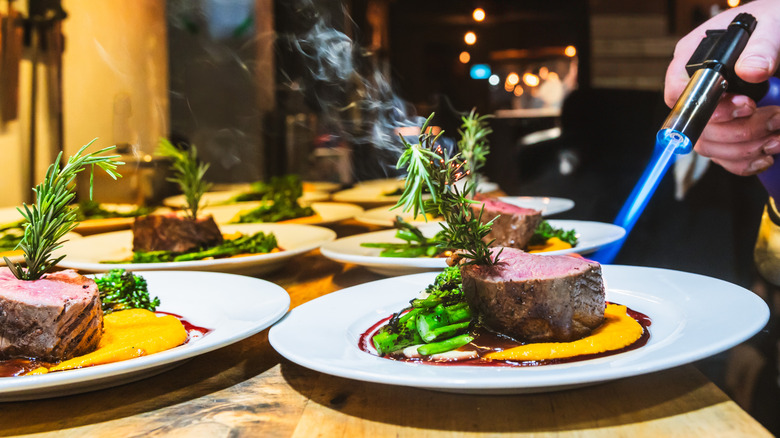
Compare steak selections across a few fine dining restaurant menus, and you'll encounter the same cuts: filet mignon, ribeye, and New York strip. This is the quintessential beefy trio of the elevated dining scene. Fancy steakhouses don't serve sirloin, however, and neither do fine-dining establishments. There are a couple of reasons for this — one is related to snobbery, the other quality.
When patrons reserve a seat at a fine-dining establishment, they do so with certain expectations of luxury. Sirloin steak just doesn't smack of culinary splendor; it's the kind of beef you cook at home and don't make a big deal about. It costs notably less per pound than other cuts, and it's a workhouse (workcow?) of a steak, equally as appropriate in stir-fries, bulgogi, and beef stroganoff as it is in its beef-steak form. That makes sirloin awesome — but not glamorous.
Then there's quality. Delectable, top-notch food (more than elevated prices) is what makes a restaurant fine dining. While sirloin can be mouthwatering in the right cook's hands, that same cook's ribeye or filet probably leaves it in the dust. Ribeye is a marvel of marbling — the intramuscular threads of fat that make it flavorful, tender, and juicy. Strip steak has a fair amount, too. While filet mignon contains only modest marbling (it's very lean), it's a paragon of tenderness, and tenderloin, where filet is cut from, is the hallowed heart of a fine-dining darling: beef Wellington. Sirloin is neither highly marbled nor famously tender, but that doesn't mean it's a dud of a cut.
Making sirloin taste like it came from a great restaurant
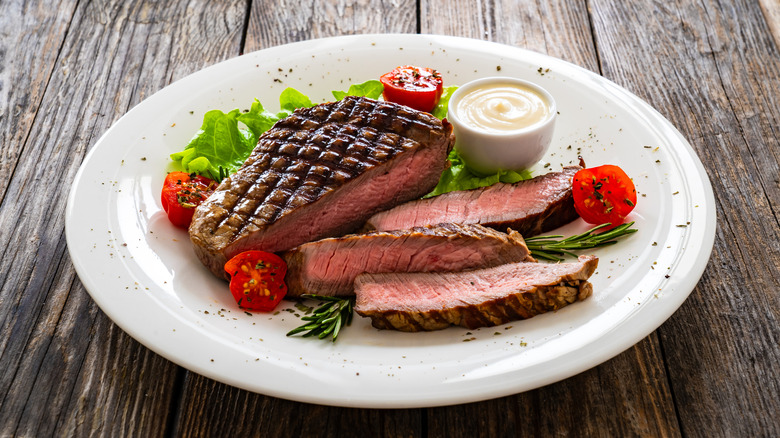
If you're craving steak but have an aversion to shelling out big bucks for bougie cuts, sirloin — particularly the top sirloin cut — is worth a try. Its flavor is generally known to be beefy and bold, and it can, indeed, be tender. The key is to understand and work with the traits that keep it off fine-dining tables: its relatively meager marbling and tougher consistency (due to sourcing from a moderately exercised muscle on the cow).
Success starts at the butcher. Look for sirloin with thin threads of fat spread more or less evenly throughout the cut; avoid an almost solid red steak. A marinade can help tenderize it while adding extra flavor — give it at least 30 minutes but ideally a few hours. This isn't necessary, though, as there's another way to get your sirloin as tender as possible: Don't overcook it. Whether you marinated your beef or not, we don't recommend taking sirloin past medium-rare. Cook temps over 140 degrees Fahrenheit risk sucking all the moisture from your sirloin, leaving you with a jaw-achingly tough steak.
Grilling and pan-searing are great methods for a succulent sirloin, as is searing the steak with oil and butter — one of the ways restaurant steak tricks your taste buds into thinking you're eating something magical. So, a judicious choice at the butcher counter, plenty of fat, careful use of heat, and your sirloin will be the closest to fine-dining caliber as it could be.