

Sorry, Your Neapolitan-Style Pizza Won't Taste As Delicious If You Use A Regular Oven — Here's Why
There are many dishes that, with the right ingredients and a bit of technique, can be just as delicious at home as in a restaurant. Indeed, when it comes to comfort food — think hearty dishes like pot roasts, or even Persian classics like a crispy, fragrant tahdig — home cooking is often tastier, and far more satisfying than anything you might find in a restaurant. But there's one icon of comfort food that, try as you might, you just won't be able to recreate at home — at least, not without the right equipment: traditional Neapolitan pizza.
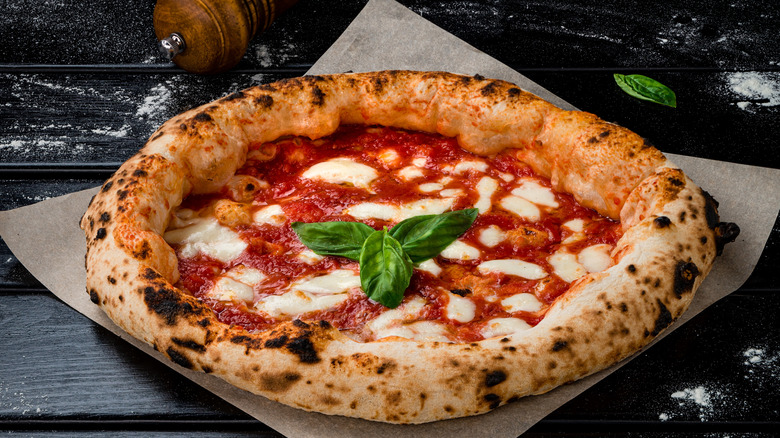
There are seemingly innumerable variations of pizza out there, from the surprisingly delicious Tokyo pizza scene to the crispy, crunchy Newhaven-style pies, to the Chicago deep dish (though depending on who you ask, the latter's not really a pizza, is it?). But the original (and according to many, still the king) is Neapolitan pizza. Simple, high quality ingredients, used to top a light, yet flavourful dough, with a thin base and fluffy, airy, wonderfully chewy crust. It's everything that pizza should be. But the fact is, using a regular oven just won't get you the results you want. Why? It's all to do with heat. The secret to the Neapolitan pizza is in how it's baked — very quickly, in an incredibly hot oven (we're talking 900 degrees Fahrenheit hot). This heat creates an effect known as "oven spring" — where the crust expands rapidly creating the air pockets that give it its signature texture, while ensuring that the toppings cook through and the base stays tender, without overcooking. While in a purpose built wood-fired oven this is a breeze, at home, in a conventional fan or gas oven, that kind of heat just isn't possible.
Why your oven won't cut the mustard when it comes to flavor
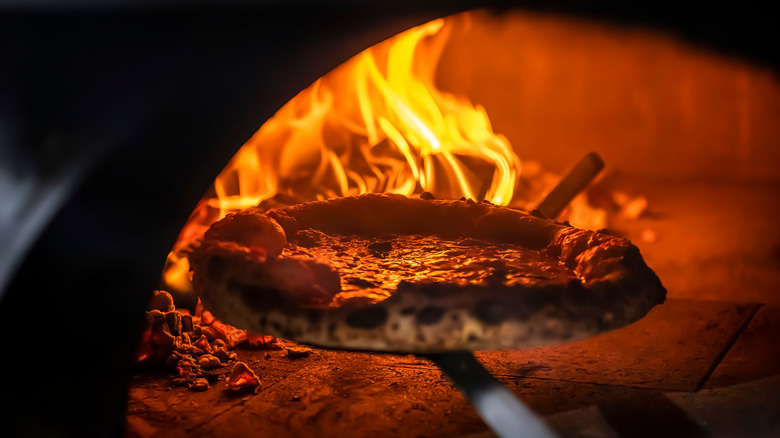
There are a few reasons why your home oven just won't cut it when you're making traditional Neapolitan style pizza. The first, as we've touched on already, is temperature. While the wood-fired pizza ovens Neapolitan pizzaiolos use get to 800 to 900 degrees Fahrenheit (and sometimes even higher) your home oven likely tops out somewhere around 500 degrees Fahrenheit — not even close to what you need to get that signature "oven spring" that Neapolitan pizza requires. It's not just about the texture of the dough, and how fast it bakes, either — it affects the flavor, too.
That intense heat from professional ovens is also essential to achieve something called "leopard spotting" — which, somewhat obviously when you think about it, refers to the intense, charred spots that appear around the crust of a proper Neapolitan-style pizza. It's one of a number of reasons why pizza in Italy just tastes that much better. This is one instance where burning your food is the goal, and not an unfortunate mistake. Not only does the charring provide a distinct look and a bit of crunchy textural contrast to the soft, doughy interior of the crust, it also brings some lovely bitterness that rounds out the flavor profile of the pizza, contrasting the sweetness of the tomato base, the creaminess of the cheese, the peppery olive oil and fresh basil. It's an underappreciated but nevertheless important part of the balance that makes such a simple dish work.
How to set yourself up for pizza-making success at home
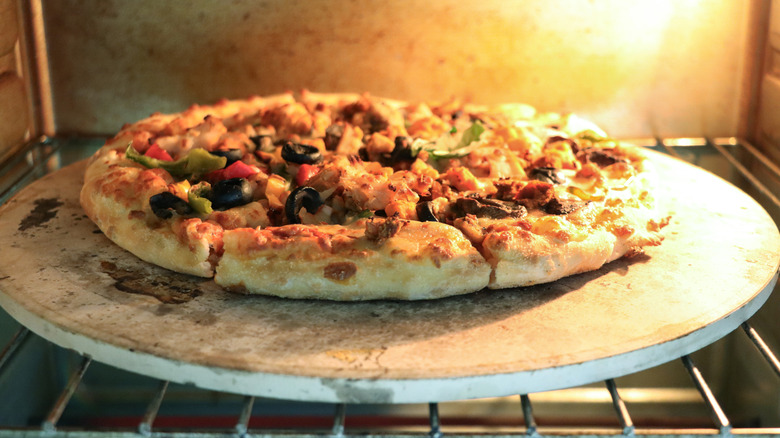
Of course, the closest you can get to true Neapolitan-style pizza at home is by buying a purpose built pizza oven — and if you're a proper pizza enthusiast (or a very nerdy home chef) then it can be a great addition to your roster. But it's not an essential — because while you won't be able to make authentic Neapolitan-style pizza in a home oven, you can still make some seriously delicious pizza with a little preparation.
A pizza stone is a worthwhile investment, for one. Essentially, this is what it says on the tin: a stone for baking pizza. A great deal of the heat in your oven needs to be concentrated on the base to get the results you want (it's why professional pizza ovens have hefty stone floors that pizza chefs slide the dough directly onto.) A pizza stone sits in your oven and pre-heats, making sure that when you slide your pizza in, it gets a super-concentrated blast of that heat, making for a much faster bake — and better pizza.
You should also make sure that you set yourself up by using the right dough — it might not seem like it, but even your flour choice can affect how it ferments, and how it bakes. The Neapolitan way is to use 00 flour, a very fine mill that's perfect for stretching thin: Essential if you want your pizza to cook nice and quickly. Some trial and error might be needed here, but adjust temperature and time to the type of dough you use, let it rest before you stretch it, and you'll find you get better results.