

This Is How Much Stronger You Can Expect Your Cup Of Turkish Coffee To Be Compared To Regular Coffee
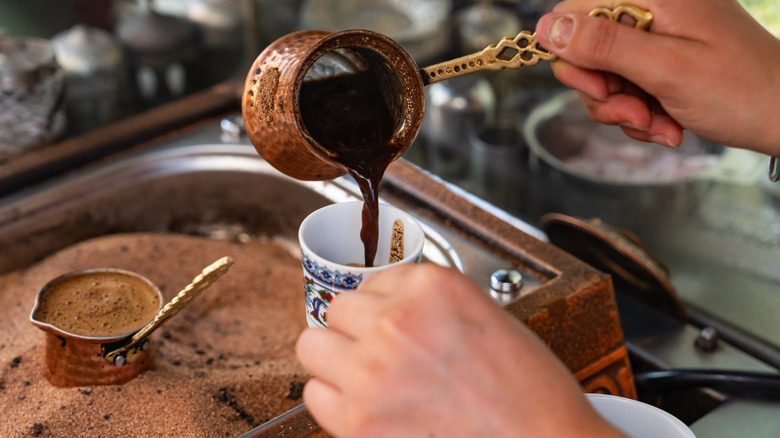
Turkish coffee is an experience that engages all the senses. The beverage is brewed in traditional metallic pots, called "cezve," and poured into small coffee cups called "fincans" that feature beautiful designs along the cups' surface. Turkish coffee has a notably thick consistency, and the flavor is more intense than a typical cup of drip coffee. That might make you think its caffeine content is significantly higher, and while that's not entirely incorrect, there's some nuance to it.
In terms of caffeine concentration per ounce, Turkish coffee is the clear winner with about 20 to 35 milligrams. Compared to the 12 milligrams of caffeine per ounce in a typical American coffee, that may seem like a lot, but no one (at least none we're aware of) is drinking a full mug of Turkish coffee; the standard serving is around 2 to 5 ounces. When you account for the total amount consumed, American coffee usually takes the lead, with a single 8-ounce cup of brewed coffee packing nearly 95 milligrams of caffeine. But Turkish coffee is more than just a source of caffeine.
The robust flavors of Turkish coffee
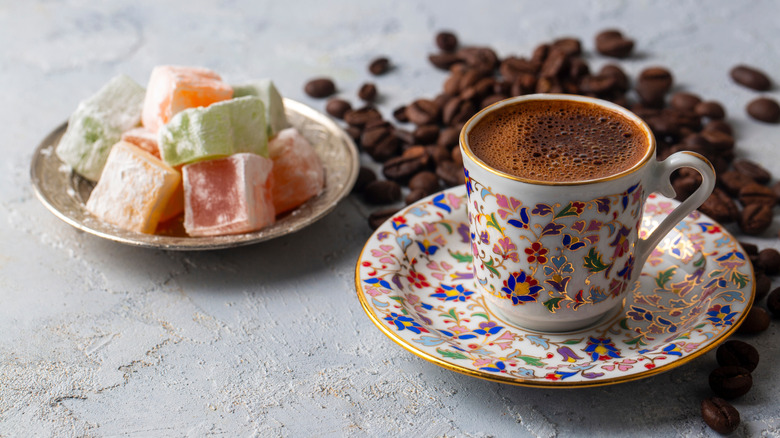
Turkish coffee is a craft and a tradition, designed to be sipped and savored slowly and intentionally. Unlike American coffee culture, it's not so much functional as it is a cultural experience that invites you to slow down and pay attention to its bold aromas and flavors. Taste-wise, it bears similarities to other strong-tasting coffees like Greek coffee. The attuned palate, however, would likely pick up on key differences between Turkish and Greek coffees.
Compared to conventional filter coffee, which tends to be smoother and easier to sip on, Turkish coffee can be bitter since brewing it doesn't involve filtering out the fine coffee grounds. That's why you should never stir Turkish coffee, unless you want to taste grits of coffee grounds in every sip. The unfiltered quality also contributes to Turkish coffee's earthy intensity. It's commonly made with medium or dark-roast arabica beans, ground to a powder finer than espresso. It is then brewed in hot water at higher coffee-to-water ratios than methods like drip or filter coffee, which explains the higher caffeine level per ounce and the drink's velvety mouthfeel. If you prefer it a bit sweeter, make sure to add sugar before you brew the coffee as mixing it in after will kick up the grounds from the bottom of the pot.