

The Type Of Baked Good You Should Never Make In A Convection Oven
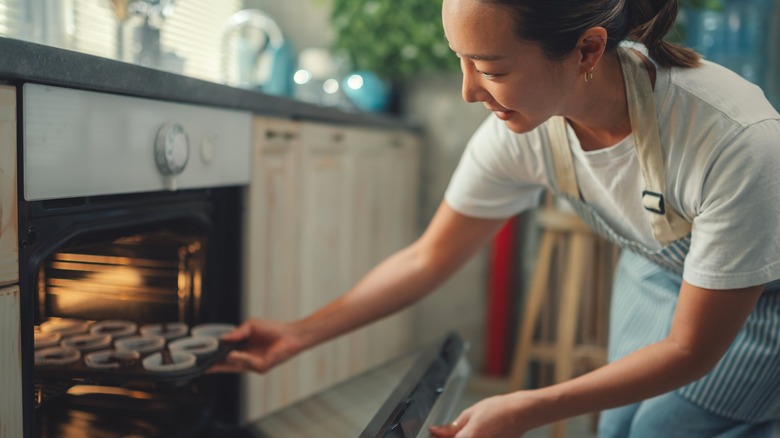
The differences between convection versus regular baking can sometimes seem mysterious. The simple push of a button transforms the appliance you thought you knew well into something, apparently, totally different. But, most of the time, all that convection setting really does is pop on a fan to better circulate all that hot air for theoretically superior temperature regulation; some convection ovens use an additional heating element as well. And that's tops for all your high-stakes turkeys, basic whole roasted chickens, and heartier sweets with dense doughs like chocolate chip cookies. But skip the added blast of heat when baking your more fluid cakes, cupcakes, custards, and soufflés.
Imagine a gentle summer breeze rippling across a pond. That current of warm air is like unseen fingers, tousling the water's surface. The same goes for your thinner, more pourable wet batters, which are liable to set unevenly in some weird shape with that oven fan blowing from a single origin for half an hour or more. This isn't the end of the world if you're topping your treats with a heap of some flaw-obscuring frosting, or if you're committed to the notion that it's really what's inside that counts. But convection cooking can negatively affect the interiors of those sorts of baked goods, too.
More words of confection convection caution
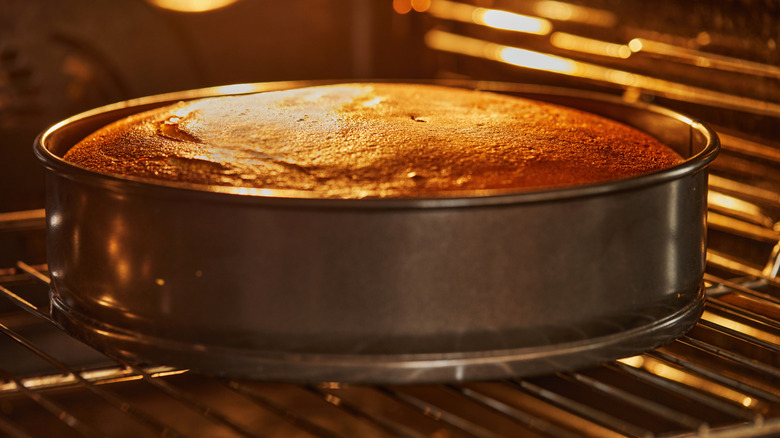
If you're making the same signature flan you perfected 100 batches ago, using your oven's convection setting would likely require a new time and temperature consideration: less in both cases. Now, that could be okay if you've been calibrating your recipes on the convection setting to begin with, but if you've already calculated them down to the minute for the standard baking setting, why start shaking things up now?
Besides maybe making a windblown mess of your more delicate treats, the convection setting's faster, swirling heat is also more dehydrating than the conventional mode. The rapidly rising temp forces out moisture more quickly, too, which can result in dreaded dryness within your otherwise oh-so-carefully mixed baked good ingredients. And it would just be a real bummer to have your beloved oven turn on you right when you need it most. But there's a fairly easy fix. Prioritize the convection setting for immovable feasts like hearty proteins and substantial vegetables, and opt for the conventional bake setting if so much as a blown kiss could disrupt those daintier, wetter bakes.