

Here's How Long You Should Let Your Pie Rest For Bakery-Worthy Slices
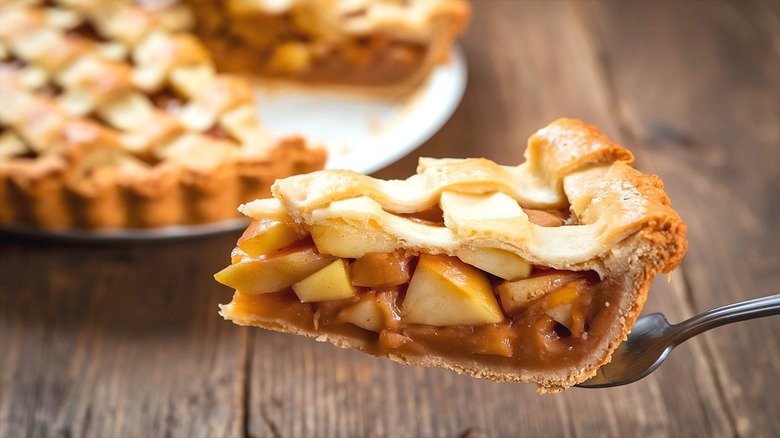
Whether you're making a bakery-worthy blueberry pie or an apple pie with a lattice crust, serving visually appealing slices makes homemade pies all the more enjoyable. Truth be told, no home chef wants to cut into a pie and have the filling ooze out in every direction. But even if you already give your freshly baked pies ample time to rest, how long should you actually wait to cut into your next dessert for the best results?
To guarantee neat, uniform slices, allow fruit-based pies to rest for at least two hours before serving. However, the longer you wait, the easier it may be to cut and serve bakery-worthy slices. While you can certainly say goodbye to runny fruit pies by including more thickening agents in your filling, such as extra cornstarch or flour, giving your pies ample time to rest post-baking produces the best results.
Since most fruit pies already call for a small amount of starch, these specially prepared fillings need ample time to thicken and set. With two or more hours of resting time, the small amount of added starch works to absorb any excess fruit juice that may have accumulated in the oven. If you wait at least four hours or allow your pies to rest undisturbed overnight, the fruit fillings will have enough time to cool and gel, thus producing noteworthy slices. While a two- to four-hour rest might be sufficient for fruit pies, there are some tips to keep in mind for cream- and custard-based varieties.
More guidelines for cutting and serving clean, impressive pie slices
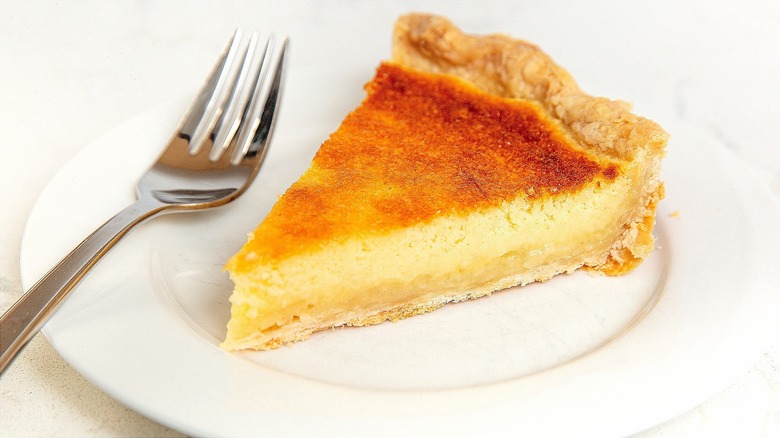
Regardless of whether you're starting from scratch, trying to make the most out of a store-bought pie crust, or preparing your filling with minimal ingredients, the resting time of your next pie depends on the recipe. However, like fruit pies, many other varieties have similar resting recommendations. For example, pies made with a combination of chopped fruit and custard or chess pie, which is primarily composed of sugar, eggs, and cornmeal, should rest at least two hours before serving.
The only difference is, upon the initial resting phase, you can place these varieties in your fridge for an additional one to two hours for firmer slices. But if your pie of choice is strictly custard-based, like pumpkin pie or chocolate cream pie, a long rest in the refrigerator (after the initial cooling phase) yields the best results. Allow cream- and custard-based pies to rest in cold storage for at least 12 hours. The combination of starches, eggs, and all other ingredients needs time to properly meld and solidify before serving.
No-bake pies generally need to chill for at least four hours. Those made with softened cream cheese or prepared whipped cream should be refrigerated immediately after assembly and chilled for longer. Giving room-temperature cream cheese ample time to return to a semi-solid state results in easier-to-cut, well-defined pie slices.