

Follow The 3-3-3-3 Rule For The Perfect Charcuterie Board
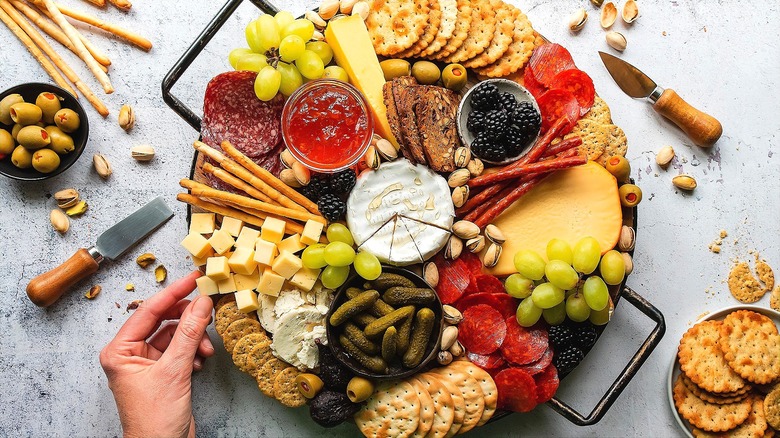
When holidays are near, you may have the urge to host an appetizer-friendly get-together for your closest friends. Apart from serving a bowl of simple whipped feta with crackers, why not also build a vibrant and bountiful charcuterie board for your guests to enjoy?
Fortunately, if you don't know where to start, all you need to do is follow the 3-3-3-3 rule for the best combination of foods: three meats, three cheeses, three starches, and three extras. Better yet, to explain this rule and detail how it can be used time and time again, Chowhound garnered the advice of two charcuterie board experts: Caroline Elston and Brandyce Romer.
According to Romer, author and founder of charcuterie lifestyle brand, If These Boards Could Talk, "The 3-3-3-3 rule is a total confidence booster for beginners. It's like training wheels for your taste buds, just enough structure to help you build something beautiful without overthinking it." Romer believes this simple template helps you create a snack board that is not only cohesive but also balanced.
Elston, co-founder and chief charcuterie officer of Platterful, the nation's first charcuterie subscription kit, adds that "the main idea of this rule is that you want to give people options. You want to give them different flavors, textures, and pairings to explore!" Ultimately, the 3-3-3-3 rule should be used as a springboard, inspiring you to select both classic and unconventional foods for your next show-stopping charcuterie platter.
How to use the 3-3-3-3 rule to enhance your creative side in the kitchen
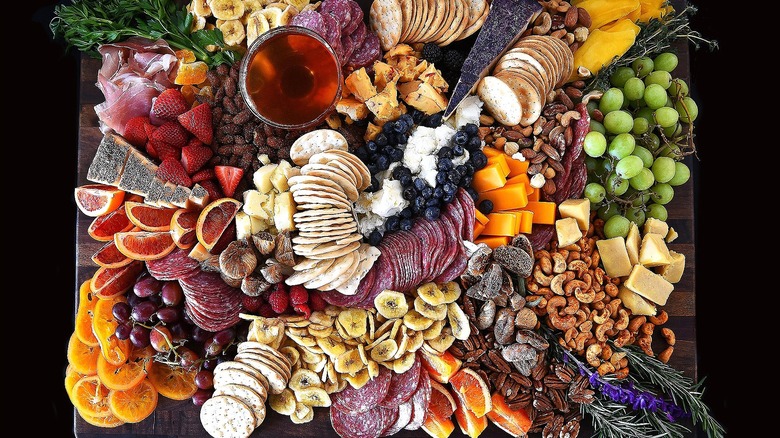
With this new, easy-to-follow setup, you no longer have to worry about the most common charcuterie board mistakes, which primarily involve sticking to the same assortment of ingredients each and every time. For example, Caroline Elston explains, "If you get three different types of sliced salami, you aren't really offering that much diversity. Grab the prosciutto, peppered salami, and a pâté!" Don't be afraid to think outside the box.
Or, if you enjoy fruit, instead of showcasing the usual apple slices or red and green grapes, pick fruits with varying textures and bright colors, such as pomegranate arils, sliced kiwi, or whole strawberries. Once you feel more confident, select ingredients based on your own likes and dislikes, and in the end, showcase a snack board that reflects your own unique personality.
According to Brandyce Romer, "The formula becomes a canvas for creativity, not a constraint." Romer suggests offering artisan cheeses from a local shop and curating your own selection of regional sweet and savory food combinations. Consider adding a drizzle of honey to spicy olives or serve warmed brie with salted pecans and sweet raspberry jam.
Lastly, once you've carefully selected a wide range of sweet and savory ingredients, follow the golden rule for filling in any charcuterie board. Simply place the larger items on the board first, followed by your remaining, smaller accompaniments.