

The Expert-Approved Cooking Methods That Make Your Salmon Tender, Moist And Flaky
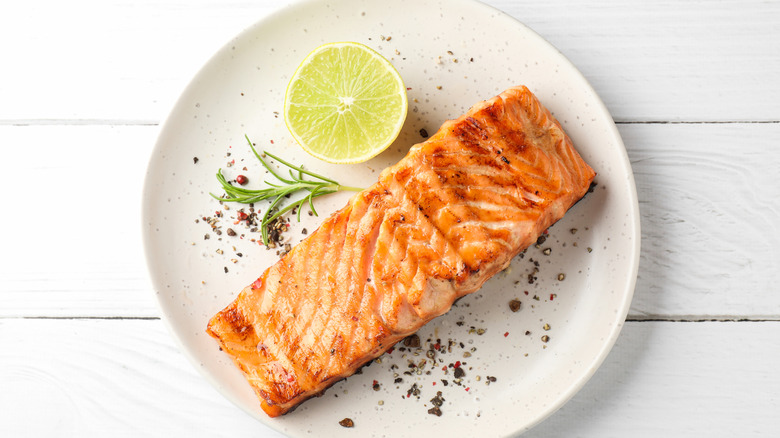
The delights of eating salmon are enhanced by the seafood's versatile appeal. It's flavorful when raw, fried, grilled, baked, and more. But if you have a palate for tender, moist, and flaky bites, there's an expert-approved cooking method that should be on your radar. Chowhound exclusively spoke with Victoriano Lopez, executive chef at La Mar Cocina Peruana's San Francisco location (@lamarsf on Instagram), to figure out how to create the salmon of your dreams. "When cooked, salmon is best prepared medium-rare, skin-side down, allowing for a crispy exterior while maintaining a tender and moist interior, whether in a pan, on a griddle, or over a grill," he told us. It's easy to overcook salmon, which can lose its buttery texture, so the trick is to not go for a well-done finish. Once it achieves 120 degrees Fahrenheit, it's time to take it out and finally enjoy it in its full glory.
This pan-searing or grilling technique will require a thermometer for accuracy, and like every other home cook, watch out for the thermometer mistake you might be making and know how to fix it, or you might risk ruining the dish. Alternatively, the helping hand of a timer can also do wonders. Beyond this reliable method, Lopez further shares other techniques for a succulent, melt-in-your-mouth salmon that tastes like it came straight out of the kitchen of your favorite five-star restaurant.
Achieve the perfect bite with your salmon
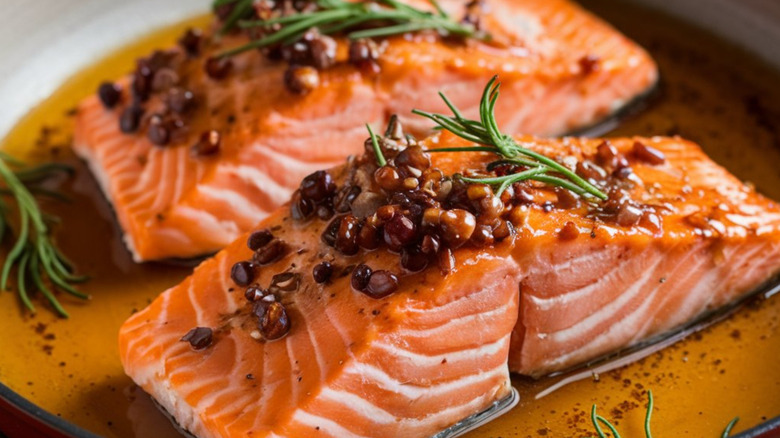
If you're looking for a simple, no-fuss approach, poaching can do the trick. But people tend to make similar mistakes when cooking salmon, specifically for this method, by tossing the fish right in the water, which can dilute its natural flavors. "To preserve the full taste and protein content of the salmon, it is recommended to steam the fish without allowing it to make contact with the water," Victoriano Lopez advises. "This may be achieved by placing the salmon on a plate or arranging it atop a bed of vegetables above the water." And if poaching is your cooking method of choice, here's Lopez's suggestion for the best-tasting seafood: "Use sparkling white wine as the base and enrich the resulting cooking liquid with butter for added flavor and texture," adding that Domaine Carneros Blanc de Noir sparkling wine is an exquisite option. There are also other seasonings that will upgrade your salmon, so don't be afraid to explore diverse flavors.
Watch out for the temperature when poaching if you want to achieve the most desirable finish. But as opposed to pan-searing, you can get away with it being well-done, as cooking it at 140 to 150 degrees Fahrenheit while poaching won't cause it to lose its succulent appeal. If poaching isn't really your style, Lopez shares a great alternative. "Oven-baking salmon yields a golden-brown exterior and a moist interior," he notes. Its hands-free appeal is great for multitaskers who want to use the time to create some delightful sides while waiting.