

These Are The Worst Type Of Apples To Use For Apple Pie
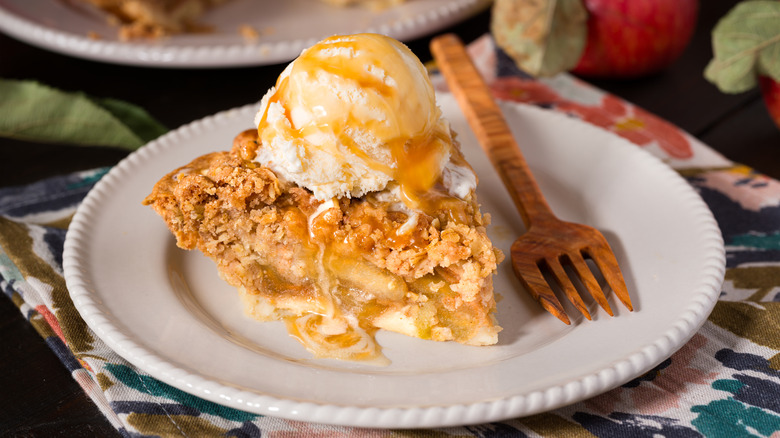
There's nothing like biting into a sweet Honeycrisp apple — but are the same apples we love to eat the right ones for a pie? As it turns out, different varieties have different purposes, and your favorite kind to chop up over your morning oatmeal may not be the best option for baking. Choosing the right type of apple — or, at least, staying away from the worst ones, like Red Delicious — can have a profound effect on the outcome of your bake, potentially taking an otherwise great pie downhill, fast.
Red Delicious apples are super sweet, so you might assume they'd be perfect for a dessert like pie, but they break down far too quickly and can become bland when heated. They also contain less pectin than other varieties, like Granny Smiths, meaning you could end up with a runny (as opposed to rich and robust) pie filling. These characteristics make them terrible candidates for baking.
Besides Red Delicious, using Mutsu and Envy apples will also make for a subpar pie. Like the former, Mutsu apples present a textural problem — they can get a bit grainy in the oven, making them a poor choice for your ideally velvety apple pie filling. Envy apples suffer from a similar issue: Heat causes them to turn mushy.
Avoiding bad apples is paramount to pie perfection
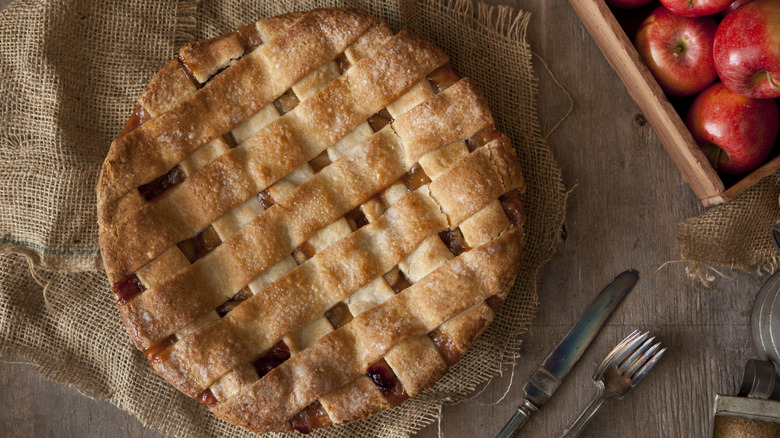
The best apple varieties for pie and other baked goods, meanwhile, exhibit none of those negative qualities. Braeburns and Granny Smiths, for instance, are valued for their tartness and ability to keep their shape when baked. Honeycrisps, one of the most popular apples for eating, are also super beloved for baking thanks to their pleasant, subtly tart sweetness. Of course, you're not limited to a single option. Consider combining different apple varieties to create a more nuanced and layered flavor.
Choosing the wrong type of apple can be especially detrimental, but it isn't the only serious mistake you can make when baking an apple pie. Slicing the apples too thick or too thin can also lead to a less than desirable result. Too-thick apple slices might stay crunchy during the baking process, while too-thin apple slices may overcook and turn to straight-up mush. Aim for slices that are about an ⅛ of an inch thick. Finding a nice, happy medium can help you achieve a tender filling with discernible apple slices in each bite — so long as you steer clear of the worst cultivars.