

The Most Overlooked Kitchen Design Detail That Can Cause Chaos In The Long Run
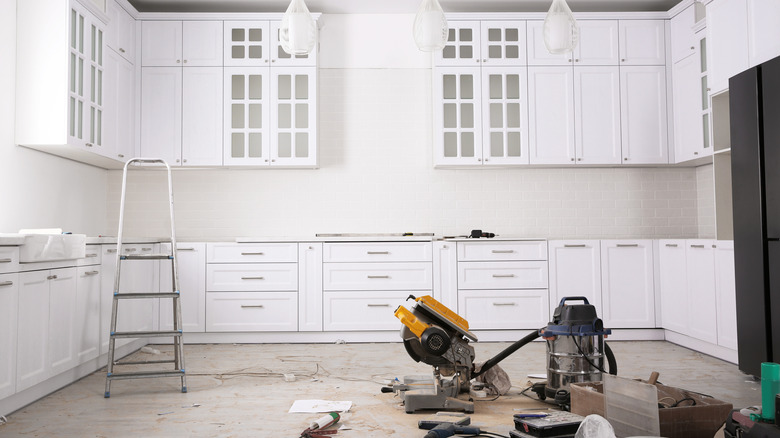
Whether you're just getting new cabinets or stripping everything to the studs and starting over, remodeling a kitchen is always an overwhelming task. Not only is part of your home a construction zone for days or weeks, something as simple as making a cup of coffee becomes an exercise in problem-solving. That's why it's vital to ask certain kitchen design questions before your remodel begins to ensure all that time, money, and strings of inconveniences are worthwhile.
One of the most overlooked details in remodel designs is outlet placement. This is something many of us take for granted in our daily lives, so it can easily slip through the cracks when planning your kitchen. Unfortunately, this can be a costly error, as installing them post-remodel is not only complicated, it can mean shelling out extra bucks for professionals to carefully work around your new backsplash, counters, and wallpaper. If you skip the fix, it means suffering through the daily frustration of never having a plug where your mixer your air fryer needs to be. That's why planning these practical details ahead of time is one of the best ways to save money on a kitchen remodel.
When deciding where to place your outlets, it's best to use The National Electrical code's rules for kitchen outlet installation as a guide. This guide shares what kind of circuit kitchen outlets should be on, which types of outlets are best for wet areas to reduce risk of electric shock, and spacing and placement guidelines to ensure you can easily plug in small appliances without straining cords or overloading your outlets by expanding their capacity with power strips.
Choosing the best outlet placement for your kitchen
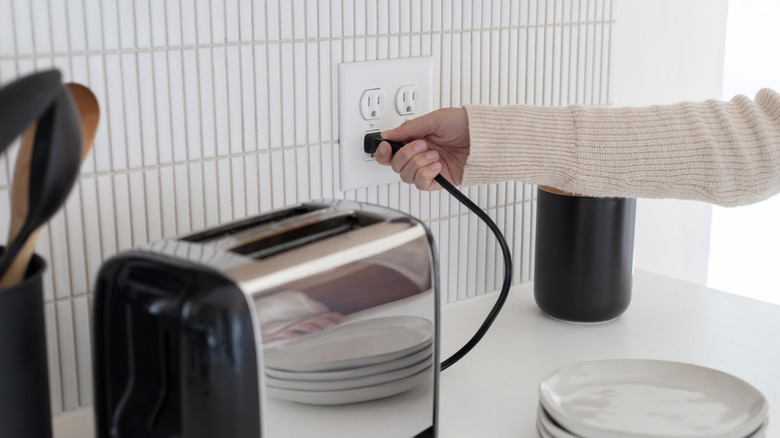
Once you've determined how many outlets you need and how far apart they should be to keep your kitchen up to code, it's time to decide exactly where to put them. Per Martha Stewart's list of her favorite kitchen design tips, it's best to value function and practicality over aesthetics. That means, for example, placing that double outlet in the corner of your kitchen where your coffee maker typically sits, even if it disrupts the pattern of your mosaic tile backsplash. It's simply not practical to have to move your coffee maker to another area of the kitchen each morning for the sake of an uninterrupted aesthetic pattern. Instead, look for outlet covers that blend with your backsplash, or that look like small art pieces to add visual interest.
The single versus double outlet debate is also an important detail to consider. As mentioned, it can be dangerous to expand single outlets with plug-in power strips, so it's both safe and practical to equip frequently used areas with double outlets that allow you to safely plug in up to four appliances at the same time. This may be especially useful in the area between your stove and sink, where most people tend to use food processors, mixers, air fryers, and other small appliances to help them prepare daily meals. Larger outlets are also great for plugging in lighting mounted under your cabinets to increase visibility while you're handling sharp, hot, and slippery food items.