

Turkey's 5,000-Year-Old Bread Is Made From These 3 Ingredients
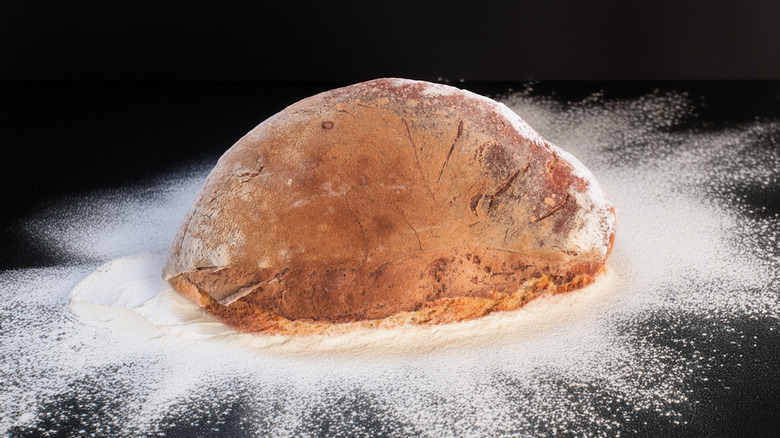
Food and history have always been intertwined. When you're biting into even the simplest piece of bread, a millennium's worth of stories is steeped into each grain. Thanks to archaeological findings, we can connect not only with tales from the past but also with people who walked the Earth before us. Turkey's 5,000-year-old bread takes us back to the Bronze Age, and this long-lost piece of history was made from only three ingredients: Wheat flour crafted from ground emmer, lentils, and a leaf of a plant.
Because of the short ingredient list, you might think this ancient bread is easy to recreate today. Wheat flour is still a common baking ingredient, but true emmer seeds are relict, meaning they're no longer widely available and may be replaced in recipes by other types of farro. Meanwhile, the third plant found in the 5,000-year-old bread remains mysterious, but we do know it was a key ingredient that allowed the dough to rise.
As such, it's impossible to recreate the bread exactly as it was originally made. Still, modern bakers from the Halk Ekmek bakery tried their own spin using Kavilca wheat to substitute for the emmer flour and adding lentils and bulgur, while still trying to deviate from the old recipe as little as possible. The result is a comforting bite with pronounced flavors. It's perhaps the closest we can get to a taste of this 5,000-year-old recipe, offering an experience that not even the oldest restaurants in the world, nor the oldest cookbook with 4,000-year-old recipes, could beat.
The story behind the ancient loaf
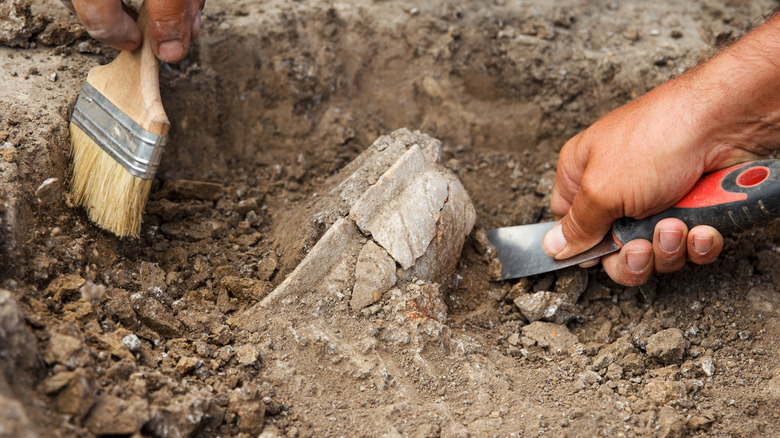
The ancient loaf from 3,300 B.C. wasn't found entirely by chance. Archaeologists have been working on the Küllüoba Mound site since 1996, and many prehistoric finds have since been unearthed, including deposits from the Late Chalcolithic period and remains from the Hellenistic period. But in 2024, archaeologists from the Bilecik Şeyh Edebali University were excavating the Küllüoba Mound site when they discovered the 5,000-year-old loaf.
The bread came from an individual — presumed to be an ancient Hattian — who perhaps made a bad batch and decided to dispose of it by burying it outside their home. However, it's more likely that it reflects an ancient ritual to bring abundance. Regardless of what compelled this baker's actions, burying the significantly burnt bread was how the loaf survived in bigger chunks than usual. And if you want to see this enduring loaf in person, you can find it at Turkey's Eskişehir Archaeological Museum.
Considered one of the most ancient loaves ever excavated, it's still quite young compared to the 8,600-year-old bread found at another archaeological site in Turkey. Experts were able to determine wheat, barley, and pea seeds among the ingredients that brought the older bread to life. Using food not only as sustenance but also as a pleasant treat, a fixture in celebrations, and a cloak of comfort shows the greatness of human invention. Civilization itself is imbued with historical culinary practices — some of which have UNESCO status — documenting how the beauty of food knows no bounds.