

How To Know If It's Time To Toss Your Kitchen Cutting Boards
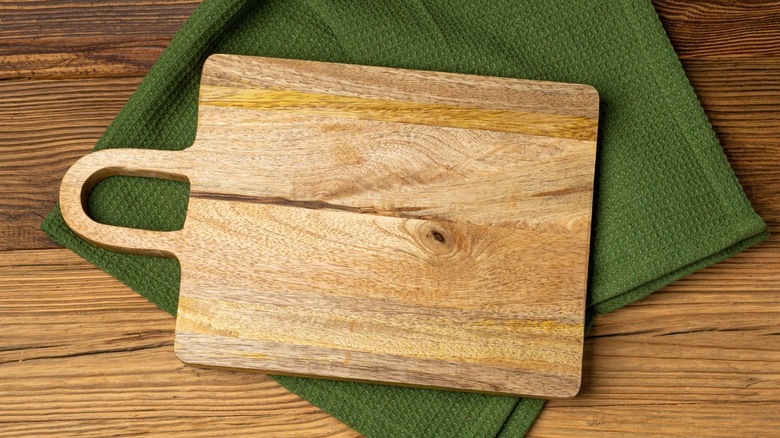
A good cutting board is a kitchen essential, but it's important to know when to call it quits. No matter how much time you spend with a top-tier meal, if the chopping board is inadequate, you'll put yourself and your dinner at risk. There are several things to keep in mind when avoiding cutting board mistakes that pose food safety hazards, but the best way to detect a faulty board is to look for scuffs and grime that don't disappear — no matter how hard you try to clean them.
Whether you prefer a wooden or a rubber cutting board, there will be signs that they're no longer safe for use. Plastic boards should be tossed once they've developed rough, flaky scratches to prevent microplastics from ending up in your food. Similarly, if your wooden cutting boards have discoloration or deep knife grooves that are hard to clean, they can harbor harmful bacteria or even mold. In general, it's best to replace your boards every few years, after the wear and tear sets in, to ensure that they are at an optimal standard.
Tricks that will make your cutting boards last longer
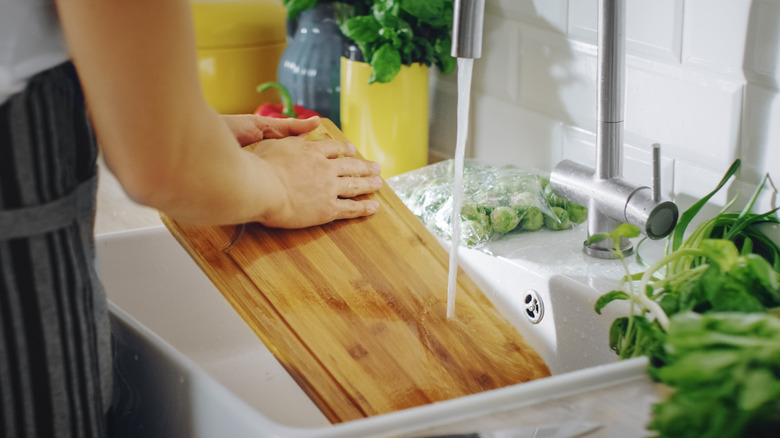
Regardless of material, inadequate cleaning, handling, and storage can increase the risk of foodborne diseases , so it's important to stay on top of our cutting board maintenance. You'll want to know how to properly sanitize your cutting boards so that they last. Many plastic cutting boards can go in the dishwasher, as they can withstand the high heat and strong antibacterial detergent. Wooden cutting boards are more porous, so they need to be hand-washed and oiled to prevent drying out.
If you're an avid home cook, you may notice that your board has developed a smell or even stubborn stains. In this case, you can look at ways to freshen up the board with thorough cleaning solutions rather than discarding it. Lemon juice and kosher salt work well to remove strong odors from wooden cutting boards without damaging the material. To stay on the safe side, be sure to test the solution on a small patch of the board to ensure that it won't cause any damage.
Additionally, a mix of distilled white vinegar diluted with warm water can be sprayed on the board to remove lingering scents. Just be aware that a vinegary scent may linger after the solution has been applied. Otherwise, a solution of baking soda with warm water can rid the board of stubborn stains.