

10 Vintage Cookbooks That Paved The Way For Home Chefs Everywhere
We may receive a commission on purchases made from links.
When someone brings up the word "vintage," what comes to mind? Is it old-school dishware brands like Pyrex or Corningware, or vintage decor trends — some of which we really wish would be left in the past? While these old-fashioned things may go out of style, one vintage item that lives on and seemingly never loses its value is vintage cookbooks. If you're like us, you can close your eyes and see the spines of the vintage cookbooks lining your parents' and grandparents' kitchens — you know, the ones pulled out when someone needs a refresher on how to make a great pie crust or when a throwback party necessitates a show-stopping Jell-O creation? They are beloved for different reasons, be it their age-old, well-tested recipes, organization or writing style, or symbolism.
It's interesting to think that at the time that many vintage cookbooks were published, their authors may not have realized their timelessness or value 20, 50, or even 100 years after their publication. Really, their authors may have been just trying to encapsulate the relevant recipes at the time or provide some guidance on the tenets of keeping an orderly home. Here are some of the cookbooks that are most worth celebrating, which have paved the way for home cooks for generations and remain staples on our shelves even today.
1. The Joy of Cooking
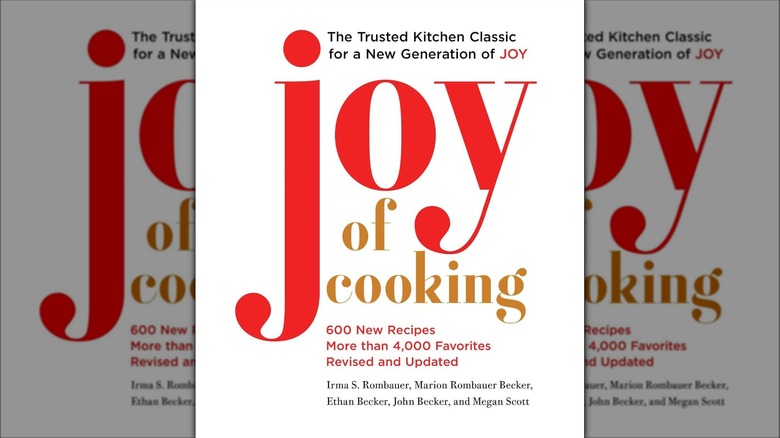
Irma Rombauer probably would have never guessed the role that her cookbook, "The Joy of Cooking," would have had on American home cooks even today. She self-published the first edition of the cookbook in 1931. The cookbook has since turned into a family affair; Marion Rombauer Becker, Rombauer's daughter, revised subsequent editions until 1951. Marion's son, Ethan Becker, revised several more editions until it reached the hands of Ethan's son, John Becker, and his wife, Megan Scott, who recently retested the book's many, many recipes and added nearly 600 more to the book to reflect modern ingredients, cooking methods, and flavors.
The "Joy of Cooking" is essentially a living lexicon of all things home cooking, and also an attempt by Rombauer (and by proxy, her family) to instill a sense of joy and happiness in cooking. The book was first published at the tail end of the Great Depression, following the death of Rombauer's husband. The earliest versions showed evidence of Rombauer's progressiveness when it came to gender roles in the kitchen; she rarely used terms like "housewife" and focused on cooks more generally. She was also progressive in including ingredients that were, at the time, thought of as "exotic." Rombauer encouraged home cooks to experiment with dishes like risotto (called "Italian rice") and utilized inclusive language, thrifty ingredients, and a homespun approach to cooking, especially as modern kitchen conveniences were starting to hit the market. This cookbook remains a must-have for every kitchen, even almost a century after its first publication.
2. Mastering the Art of French Cooking
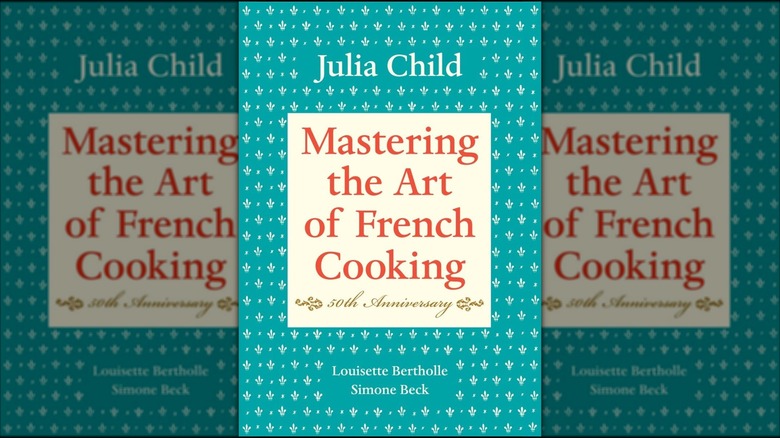
Julia Child needs no introduction, nor does her book, "Mastering the Art of French Cooking," which was initially published in 1961. This classic cookbook offered home cooks a whopping 524 recipes and, more importantly, a deeper look into the methodology, precision, and refinement of French cooking. This book, complete with illustrations, gave a full life-cycle approach to ingredients, from how to select the best produce for a recipe to preparation to plate. The book also took into account how Americans could adapt French approaches to a range of dishes, and also reproduce similar results in an American kitchen as they would in a French one. Another thing that set it apart from other cookbooks was its organization — done based on themes rather than an index of recipes in alphabetical order.
Child's approachable method of writing demystified many American perceptions of French cooking, showing home cooks that they could craft iconic French foods, including show-stopping tarte tatin, slow-cooked coq au vin, and the plethora of sauces that are at the heart of French cooking. Her recipes, even in '60s style, catered to a variety of experience levels and culinary backgrounds, showing American home cooks that they could use French techniques and approaches to refine their style of cooking in their everyday lives. It remains one of the most iconic cookbooks today, and we can guess that if you grew up in a house with Boomers, there's probably a copy lying around somewhere.
3. Mrs. Beeton's Book of Household Management
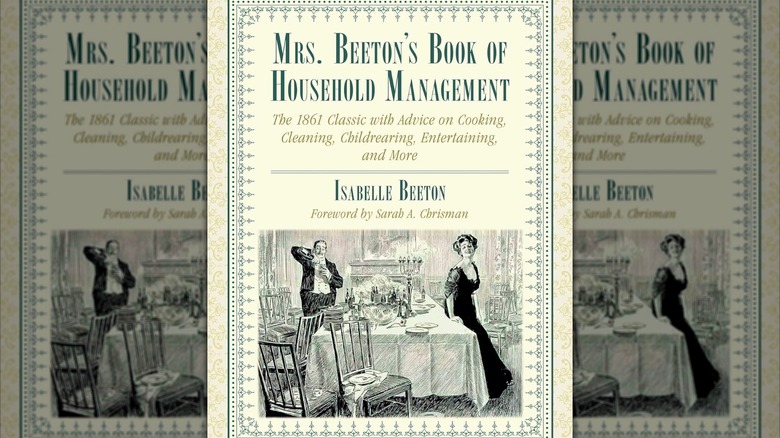
"Mrs. Beeton's Book of Household Management" isn't just a look back into the culinary legacy of the 1860s; it's also a look back at the pioneering role of women within those spaces. The original book was made up of 24 magazine columns published between 1859 and 1861 in "The English Domestic Woman's Magazine" (her husband, Samuel Beeton's, publication). It showcased the role of the Victorian-era woman, who was responsible for everything from tending to livestock and children to overseeing household staff and ensuring the well-being of her family. Isabelle Beeton's writings, while not entirely culinary-focused, also integrate many etiquette-related customs and concerns for a mistress of the house, including how to properly set up a dining table to "general directions for making soups." Beeton was like the British Betty Crocker during the time. Her name indicated that the advice was trustworthy, which may have been why the book sold nearly 60,000 copies in its first year alone.
One of the reasons why this is such an iconic book is because of the era in which it was published. Unlike many other Victorian women, Beeton made a space for herself in the public sphere, eventually becoming the editor of the magazine her work was originally published in. Her work was a practical how-to for Victorian women, spelling out everything they needed to know from the kitchen and beyond. Aside from that, some even credit Beeton for being one of the first authors to include ingredient lists at the forefront of recipes and cooking times, which are essentially must-haves for any modern cookbook.
4. Betty Crocker's Picture Cook Book
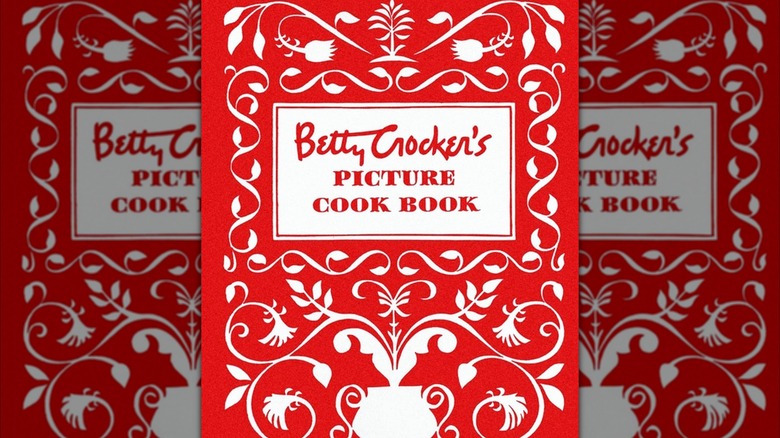
No vintage cookbook list is complete without the "Betty Crocker's Picture Cook Book." Although this book is credited to Betty herself, Betty was actually a fictional character created by her parent company, the Washburn-Crosby Company (which eventually became General Mills), who could answer any number of cooking questions from readers. Her name was first printed on soup mixes in the early 1940s, but it wasn't until 1950 that her most famous cookbook was published, cementing her likeness as a household name.
This book is an impressive lexicon of dishes that were popular at the time, including aspics, Home Front macaroni (fit to wartime rationing), and 12 months of birthday cakes. This was one of the cookbooks that housewives at the time relied on when deciding "What's for dinner?" Not only did it give budget-friendly recipe ideas, but it was also interwoven with home economics and advice for keeping an orderly house. Like many of the cookbooks on this list, it's a time capsule that shows not only the popular recipes at that time, but also the gender and social roles that were cemented in the kitchen. Betty Crocker could advise housewives on everything they needed to know, and in turn, housewives felt that they had a companion walking them through each and every recipe. Although some of its recipes are a little dated (seeing as gelatin-everything has faded out of fashion), others are still worthy of your dinner table, nearly 75 years later.
5. Fannie Farmer 1896 Cook Book
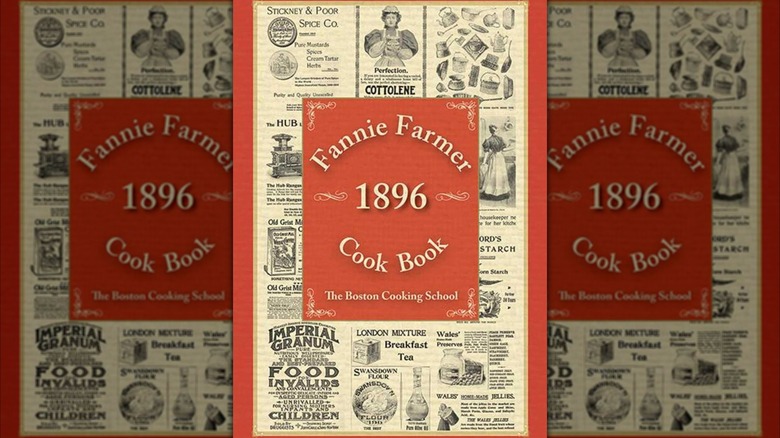
Even the name "Fannie Farmer Cook Book" screams "vintage." This cookbook, published at the turn of the 20th century by The Boston Cooking School and Fannie Farmer herself, may be a lot more relevant today than you may think. For one, it was one of the first cookbooks to use standardized measurements, which made the recipes more accessible to the middle-class home cook. Pinches and dashes were replaced by tablespoons and cups — a concept we all take for granted in the modern age. The book also utilized a very defined methodologies, resulting in easier-to-follow recipes.
Farmer, who both attended the cooking school and ran it for five years, was a pivotal figure in the home economics movement. During her tenure, she helped the school transition into a space fit for teaching middle- and upper-class housewives how to cook (and by proxy, run their homes). It was in these classes that she tested and often retested the recipes featured in the cookbook. Farmer continued revising the cookbooks in the years after the initial publication until her death in 1915. Since then, there have been many, many editions of this cookbook published.
Although the recipes in the initial book are from over a century ago, they remain favorites even today: baking powder biscuits, mac and cheese, mint juleps, chicken soup, and more. And the next time you're digging out your measuring tools for a recipe, you can thank Fannie herself.
6. How To Cook Everything
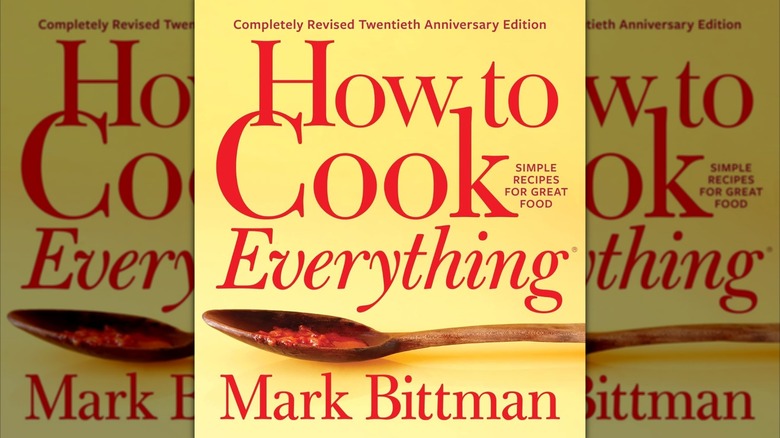
"How to Cook Everything" is up there on the list of cookbooks that everyone has to have. It's so timeless that you may forget that it was initially published 20-plus years ago. The cookbook spawned the creation of others like it — in author Mark Bittman's signature minimalist style — including "How to Bake Everything," "How to Cook Everything: Vegetarian," and "How to Cook Everything Fast." His 1998 cookbook was initially inspired by another on this list: "The Joy of Cooking." Both collective anthologies cover a wide range of recipes, though their approach was slightly different. Bittman was charged with creating a book with pared-down, accessible, and straightforward recipes that made use of the ingredients that many home cooks already had on hand. The recipes weren't pretentious or showy, and neither was Bittman's writing style. Interestingly enough, Bittman wasn't even really a chef before this cookbook; he was a writer.
The name of the book suggests its impact: It taught people how to cook (mostly) everything, from seafood and fried chicken to roasted vegetables and chili. More recent editions, including the one made for the 20th anniversary, delivered on the "everything" component in real time: alternative baking ingredients, international recipes, whole grains, and an emphasis on sustainably caught seafood.
7. The First American Cookbook
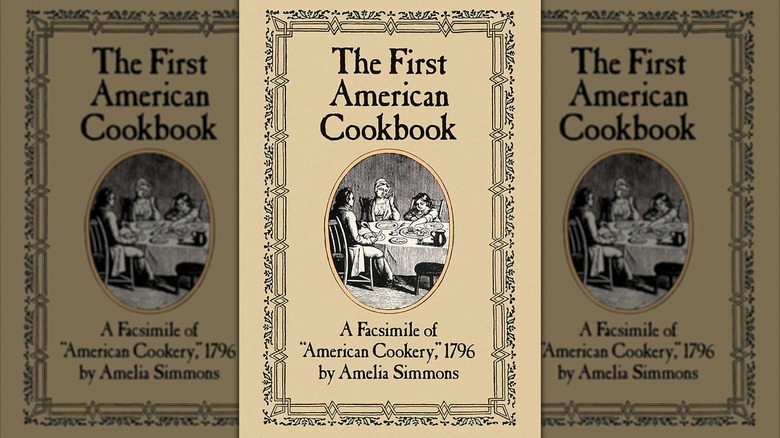
The name "The First American Cookbook" may give you a hint as to why it's on this list. Collectors of historic items may take special interest in it, as it's an exact copy of the "American Cookery" cookbook initially published by Amelia Simmons in 1796. Simmons was a member of the working class when she published this collection of recipes, which highlights ingredients and cooking methods that were an integral part of literally feeding a revolution. Besides this historical context, "The First American Cookbook" is also considered to be one of the first publications of recipes we now consider to be uniquely American, including Indian pudding and johnnycakes. Many also point out that "cookie" and "slaw" made their appearance for the first time in this cookbook, and it contained some of the first written recommendations for using pearlash (the precursor to baking powder).
Sure, many of the recipes in this cookbook may not be relevant to home cooks today (like how to dress and prepare a turtle), but many of the techniques were pertinent and useful for colonial-era home cooks. Not only did the book offer a selection of recipes, but like some of the others on this list, it also gave insight and advice into choosing different proteins and produce — important skills for housewives specifically.
8. The Settlement Cook Book
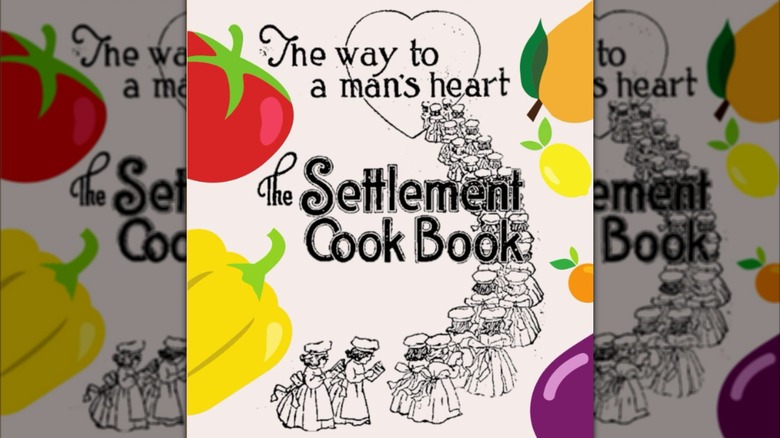
Nowadays, we wouldn't bat an eye at yet another international cookbook. From Thai to Italian, there is no shortage of international cookbooks available for home cooks to reference. But up until the publication of "The Settlement Cook Book" in 1901, this was virtually unheard of. The book was initially published by Elizabeth Kander as a fundraiser for Milwaukee's Settlement House, a social organization that sought to improve living conditions for the poor and immigrant communities that were, at the time, funneling into the United States. It was the fare of these immigrants that informed this cookbook. Kander's recipes utilized affordable and available ingredients spanning beyond just American cuisine. You'll find recipes for grits, matzo ball soup, pickled gefilte fish, and more on its pages. As with other cookbooks at the time, Kander also included some practical tips for housewives, including recommendations for budgeting and household management.
"The Settlement Cookbook" resonated with immigrant (specifically Jewish) women, who were Kander's first audience of readers. The supplemental title, "The Way to a Man's Heart," suggests what kind of message was sent to these women: If they could learn to cook and manage a home, they would be successful, even in a foreign land. Despite the sexist connotations looming around this cookbook, it remained popular for decades, resulting in 40 editions and a whopping two million-plus copies sold.
9. The Moosewood Cookbook
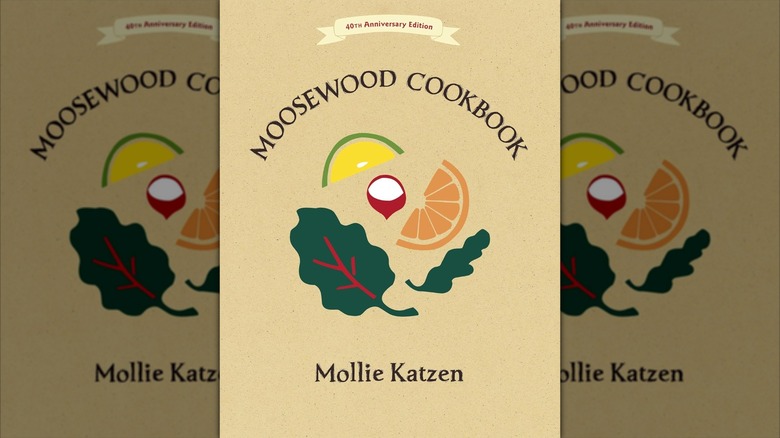
Plant-based eaters don't have to feel excluded from the cookbook scene, and "The Moosewood Cookbook" is proof of that. The book, initially published by Mollie Katzen in 1974, was inspired by the recipes of a small restaurant co-operative located in Ithaca, New York. Although the original was written in a spiral notebook, several years and editions later, it's become one of the most celebrated vegetarian recipe books of all time, receiving accolades from the James Beard Foundation and the International Association of Culinary Professionals (IACP). There is something very homey about this book — which likely has something to do with the handwritten recipes and illustrations — and it caught on quickly, exploding in popularity, with some people calling it the most fundamental vegetarian cookbook made.
Although plant-forward is the name of the game with this cookbook, it didn't just catch on with the crunchy, back-to-the-landers living in the Finger Lakes region; it was also a favorite among Ashkenazi Jews, as many of the recipes catered to their tastes and traditional fare (Katzen herself was raised kosher). While Katzen may not have been able to predict the rise of Impossible Burgers and chik'n nuggets in the 21st century, her cookbook is a testament to the vegetarian shift that predicated these plant-based food technologies.
10. The Good Housekeeping Cookbook
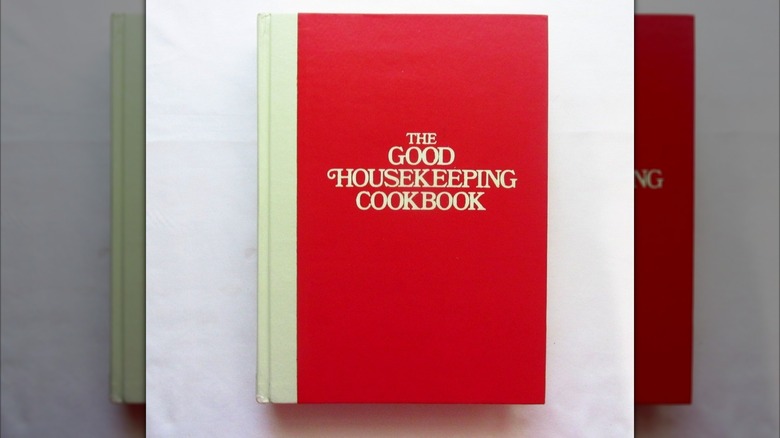
You may be able to close your eyes and remember this behemoth of a cookbook sitting on the cookbook shelf of your childhood home. "The Good Housekeeping Cookbook" remains one of the most popular and well-received cookbooks of all time. Not only is its extensiveness — as it includes 1,000 recipes — noteworthy, but also the name attached to it. The Good Housekeeping Institute has been a trusted name among home cooks since the magazine was created in 1885. Even its earliest versions, including the 1933 printing, focused on from-scratch recipes that satisfied home cooks. Subsequent editions are like culinary time capsules. The 1942 version, for example, included recommendations for wartime rationing, providing recommendations for ingredient alternatives and ways to minimize food waste.
There is a deep sense of nostalgia associated with this cookbook, as it's one that many people report passing down through generations — handwritten notes in the margins as well. Its creation and popularity are a testament to the fact that home cooks wanted to feed their families with reliable, well-tested recipes — a sentiment that surely exists even today.