

Why Is Eggnog A Holiday Drink?
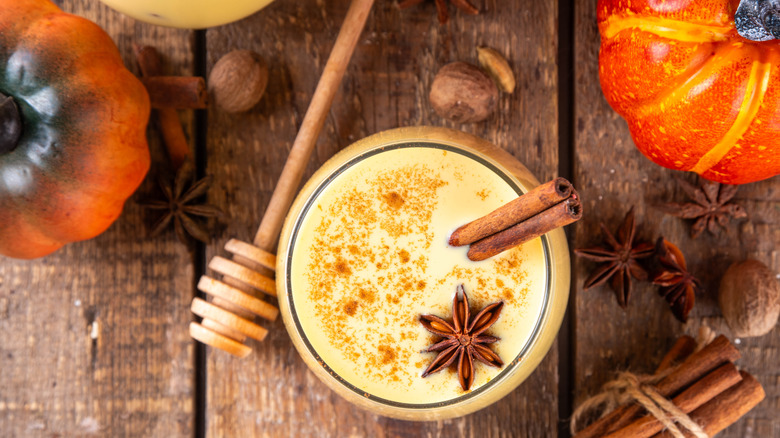
Whether said with love or disdain, eggnog is likely mentioned when talking about the perfect drinks to have by the fireplace during the holidays. Wherever you stand with this custardy drink, it's curious how eggnog got to be so closely related to the Christmas season. While we know that eggnog has been boozy for most of its centuries-long life — having been around since at least the Middle Ages — it's unclear when it became a Christmas favorite. Perhaps eggnog's distinct profile of eggs, cream, and sweet, earthy spices and flavorings, like vanilla and cinnamon, made it so popular, as it matches well with the winter season. Thankfully, other cultures have put their own spin on the holiday favorite for anyone to enjoy.
It's generally accepted eggnog branched off from possets, a warm, milky beverage enjoyed by 13th-century monks who would add eggs and figs. By 1775, it made its way from Britain to the future United States, where it was infused with sherry and popular among aristocrats. Around the 19th century, eggnog had fully aligned with the Christmas season, becoming popular in American colonies, where it was typically made with rum and given to friends on Christmas Day. One theory suggests eggnog is meant to be aged (with alcohol), as reflected in George Washington's supposed family recipe, where it's left in a cool spot for several days. It's reasonable to deduce that aging eggnog would fare better during cooler seasons, as opposed to warmer weather when the dairy and eggs could spoil faster.
Alternatives to classic eggnog
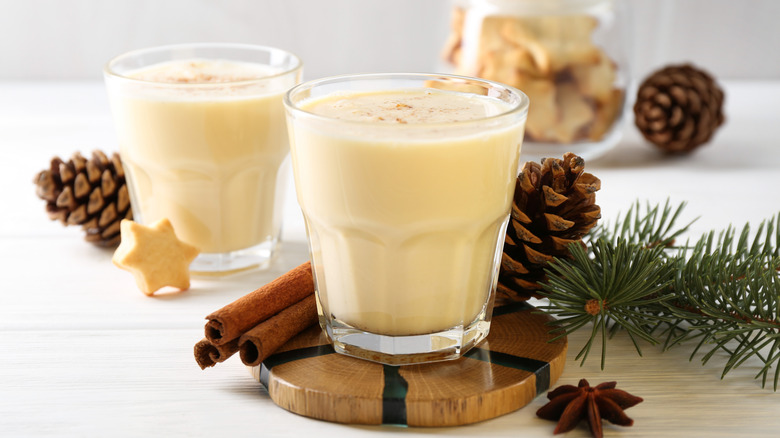
As synonymous as eggnog is with the holidays, it's also incredibly divisive. According to a 2017 Today Show survey, 53% of the show's Twitter, now X, fans disliked eggnog, whereas 47% found it delicious. Those who are anti-eggnog feel it's so thick that it's sludgy, overly sweet, and the idea of drinking a recipe that requires raw eggs is off-putting. On the other hand, supporters believe the definitive eggnog should be like drinking a velvety milkshake. One Redditor said it's too thick and that its nutmeg-heavy spicing tastes like "perfumed Christmas potpourri." Another Redditor said they love it, with other commenters saying eggnog's better than hot cocoa and is best when it's homemade, not store-bought.
Wherever you land, there are options for both sides of the debate. Homemade eggnog mixologists may benefit from separating and fluffing the egg whites before reincorporating them into the nog, as this enhances the drink's creaminess. For a more interesting version, Polish kogel mogel incorporates cocoa powder, honey, marshmallows, and chopped nuts into eggnog for a decadent dessert. However, Puerto Rico's coquito is arguably the perfect creamy holiday cocktail for eggnog haters. In its simplest form, it starts with coconut, condensed, and evaporated milk, while eggs are completely optional and ultimately unnecessary. From there, the flavors are completely customizable, with rum, cinnamon, vanilla extract, and nutmeg being the usual holiday route.