

Keep Pests Out Of Your Kale With This Pesticide-Free Tip
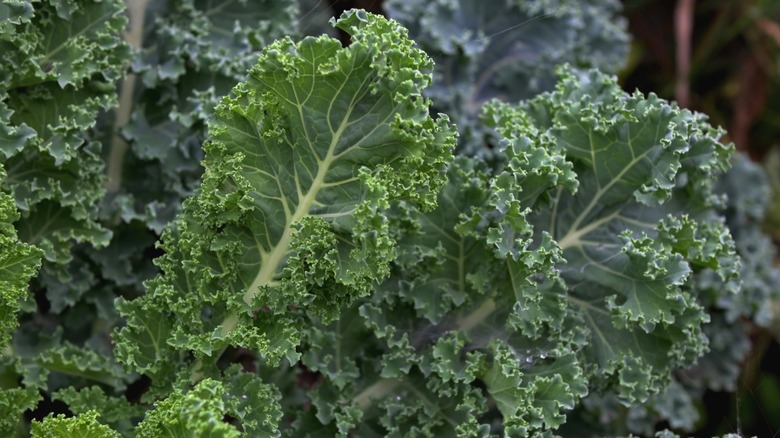
No matter how attentive you are to your kale garden, pests are bound to find their way into your space — which is why knowing how to get rid of them is one of the must-knows for gardeners. There's a hack for getting rid of pests in your vegetable garden — and you don't even need pesticides. Erika Nolan, homestead consultant and creator (@the.holisitic.homestead on Instagram and YouTube), spoke exclusively with Chowhound to share a pesticide-free tip to avoid little critters undoing your hard work.
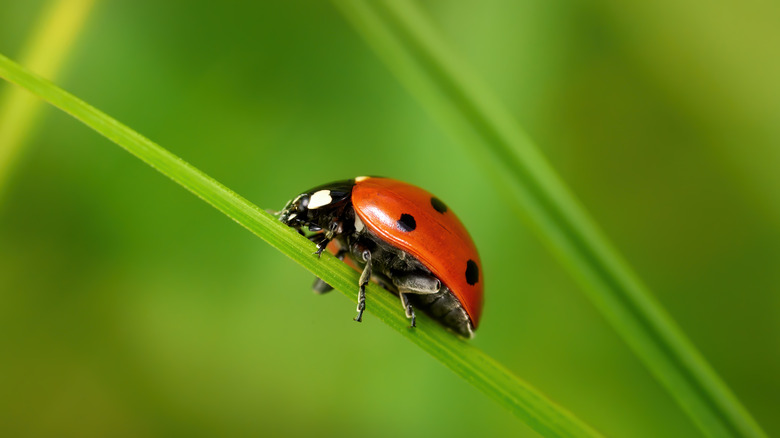
"A true permaculture garden that supports the population of beneficial bugs is the most strategic, and [the] easiest way to manage pests in the garden! Even organic pesticides hurt beneficials," she shares. Ladybugs and common green lacewings are welcome visitors because they eat aphids, which regularly damage kale gardens. By keeping these beneficial bugs around, you can let nature do its job.
Nolan says to identify the different stages of each bug and what they look like, so you don't destroy them thinking they're pests. Some young bugs look nothing like their adult form. For example, you might think a ladybug larva is an unwanted visitor before it reaches its familiar spotted appearance. "This method works because it's the most natural system to take place," Nolan points out. "Even invasive species of insects eventually balance out through the acclimation of native species." This is why, when harmful insects are ruining your vegetable garden, attracting more might be the solution.
How to encourage beneficial bugs to move into your garden
Just like when putting a home up for lease, you'd want to make it desirable for potential tenants to move in. As such, you need to make sure these beneficial bugs believe they can survive in your garden, with ample food and a warm home. Something as simple as adding mulch, which can protect your soil from dust, can make your garden more appealing. Garden weeds, while unsightly and often unwelcome, are a sign that says "House for rent for friendly dwellers" in the bug world, so don't get rid of all of them.
In addition to eating aphids, ladybugs and lacewings also feed on pollen and nectar from flowers. Erika Nolan says, "Plant lots of flowers around your garden always. These can be medicinal flowers like calendula and chamomile or fragrant herbs like dill, tulsi basil, and parsley." This practice is called companion planting, which, aside from providing a desirable home for beneficial bugs, can help kale thrive through added soil nutrients. One of the best vegetable gardening tips to remember if you're a beginner is to plant those with alternating seasonal cycles, so there's a food source for your friendly bugs year-round.