

Want Deeper Flavor In Your Gumbo? Save What's Left On Your Griddle
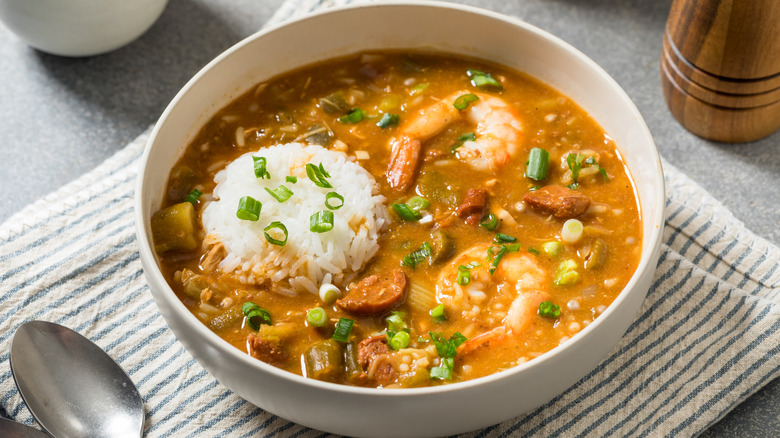
Gumbo is a savory stew that originated in Louisiana. Although there are variations of the dish today, it traditionally is thickened using filé powder or okra, which gives it distinct flavor and texture differences from jambalaya and other dishes. It also involves seafood and meat, such as andouille sausage, which adds to the overall savory profile. While each of these ingredients brings plenty of flavor to gumbo, you can achieve an even richer, deeper flavor by incorporating the drippings and caramelization from the griddle or pan where these items cook.
When you cook a high-fat meat like andouille sausage, it creates drippings. This combination of fat and juices imparts tons of flavor to the meat, so rather than tossing what is lost in the pan, adding the drippings back into the final dish ensures none of this flavor is left out of the gumbo. The heat against the sausage also results in a chemical process called the Maillard reaction, which occurs when heat transforms proteins and sugars into more flavorful, robust versions of their former selves. It's a complex process, but it often leads to semi-seared, borderline-burnt pieces left in the pan.
However, these burnt pieces don't have an acrid, charcoal-like taste — they're intensely flavorful. Caramelization is different from the Maillard reaction because it only transforms sugars, but it results in a similarly deep flavor in foods such as onions. If you're adding onions to the gumbo, make sure to scrape out anything they leave in the pan as well.
Tips for the best fond
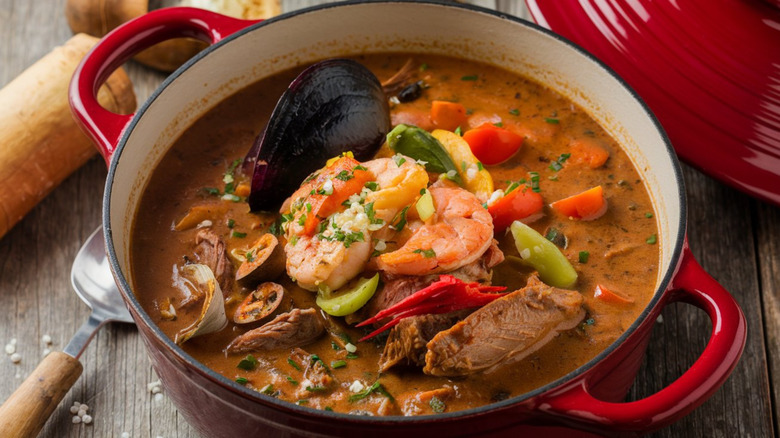
If you have a griddle, you'll be in good shape, as you can easily scrape the fond. However, there's no need to worry if all you have is a skillet and a stovetop. To build the best fond — the word used for those drippings and bits left behind — make sure you use a cast iron or steel pan, or even a Dutch oven, because these bits don't stick well to nonstick pans. Once the meat or vegetables are cooked, immediately turn off the heat, so you don't burn the fond (even before transferring the meat out of the pan).
The easiest way to loosen those bits is through deglazing the pan. Deglazing is the process of splashing liquid into a hot pan to create immediate steam. The steam loosens the food bits from the bottom of the pan, making them much easier to scrape off and add to the gumbo. The deglazing process can be done with water, but for an extra flavor boost, deglaze with broth or wine. To transfer the crispy drippings to the gumbo, use a slotted spatula to scoop the food bits and leave the deglazing liquid behind.
You want to end up with a thick, deeply savory stew to pour over rice. Cooking gumbo requires searing ingredients like meat, seafood, and vegetables, which creates a dreamy flavor combination in your pan as the heat reacts with proteins and sugars. Don't make the rookie gumbo mistake of letting that extra flavor go to waste.