

How Apple Fritters Have Held Their Spot As A Classic Fall Dessert For Over 200 Years
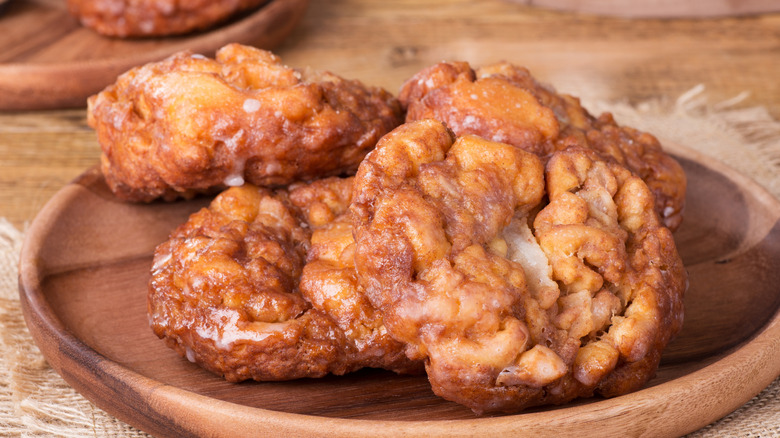
Food trends come and go, and certainly this holds true in the category of baked goods. We all remember the cake pop era. And then there was the cupcake craze of the 2010s, as well as the wild twists on croissants and Cronut hybrids. But while fads cycle in and out of bakery displays, others stubbornly hold down their spot as timeless treats. One of these treats is the apple fritter, which has a far deeper and richer history than you may realize. Fritters are especially delightful in autumn, when apples are at their peak and all things cinnamon and spice are on our minds. Apples were harvested in the fall and didn't stay fresh for long, so early cooks naturally turned them into fritters — a simple treat that quickly became a staple for celebrating the harvest season. And while they are classics year-round, the tradition of using apples in the fall has remained, giving these treats centuries' worth of staying power.
The term fritter simply refers to practically anything dunked in batter and fried in oil or lard, either deep-fried or in a pan. A simple method for making treats over a fire with only scant, affordable ingredients is all you need. Multiple versions of apple fritter recipes appear in many popular cookbooks of the 17th century Colonial era, but their true roots actually date back even further. Early iterations of fried batter stuffed with chopped apples can be traced back to Europe in the 1300s. These rudimentary early fritters evolved into the Colonial-era treats, and eventually the puffy, deep-fried iteration similar to the version we enjoy today.
The history of fritters spans centuries and countries
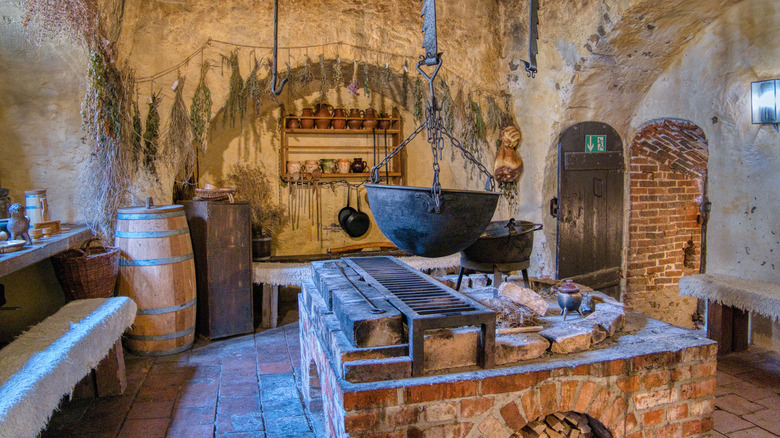
One popular colonial fritter recipe came from the 1767 cookbook "Primitive Cookery" (also known as "The Kitchen Garden Display'd"). Including a very simple recipe using a brown ale mixed with flour, currants, and, of course, diced apples. Other slightly more involved versions exist in other 17th-century cookbooks, such as one beloved by Martha Washington called "Booke of Cookery." This version spiced the dough with cinnamon, cloves, and nutmeg. It also suggested using the Newtown Pippin apple — which is still grown on George Washington's Mount Vernon property today. However, you can use any apple variety ideal for baking, like crisp Fuji, Jonagold, or Honeycrisp.
Across the pond, fritters had been popular in England, Scotland, and Wales for centuries; some mentions also tie the treat to ancient Rome. These historic fritters were the ancestors of the modern donut popular today, but were less of the standard puffy, oversized treat we commonly enjoy. Medieval apple fritters were more akin to small fried pancakes, made as a way to use up apples. In some cookbooks, apples were simply cored and sliced into coin-like rounds, then dipped in batter and fried until they were golden. Fried batter and apples are about as timeless as they come, so it's no surprise that early versions of the modern-day treat exist across many chapters of culinary history.