

Avoid Ordering This Dish Next Time You're At A Seafood Restaurant
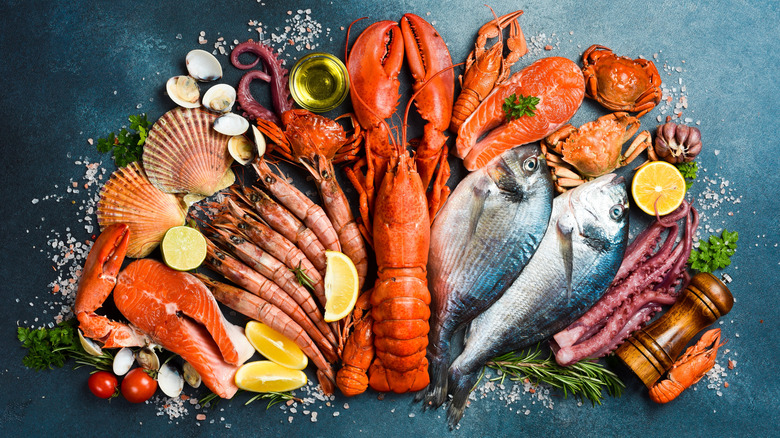
Whether grilled, baked, pan-seared, or even served raw, nothing beats the taste of fresh seafood from your favorite local spot. That is, of course, as long as you know what's on your plate. You don't want to choose something an expert would have warned against; you want the tastiest, freshest food possible. And while red snapper is the fish you might want to avoid ordering in restaurants because of how often it's mislabeled, there's another menu item you'd do well to skip for an entirely different reason.
Kory Foltz, director of culinary at the waterfront Sunseeker Resort in Charlotte Harbor, Florida, revealed in an exclusive chat that there's one type of fish dish he always recommends people steer clear of. "I generally avoid the super-vague 'fish' when it's used in a menu item description — for example, Baja fish tacos with fried fish, shredded cabbage, etc," Foltz told Chowhound. "It's often there because it gives the restaurant a place to move less desirable inventory in a subtle way."
When a menu doesn't name the fish, it's likely because the kitchen is using something older, frozen or inexpensive, which is why it often ends up deep-fried or covered in heavy sauce. Most of the time, it's fish such as pollock, tilapia, or swai because they're cheap, easy to source, and hide well under batter or a thick sauce that masks both texture and flavor. "It's essentially the seafood version of throwing on sunglasses to hide a rough morning," Foltz said.
Always look for dishes that clearly specify the source
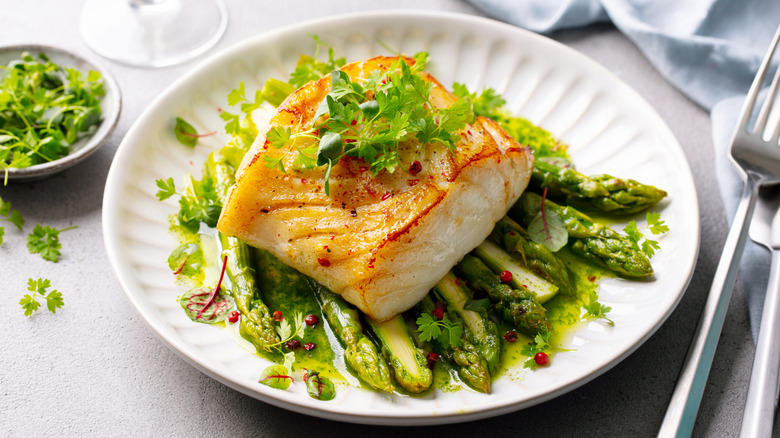
Leaving the origin of the seafood unspecified is one of those red flags at a seafood restaurant you should never ignore. There's a massive difference between salmon sourced from a well-regarded region like Alaska or Norway and a generic fillet from an unspecified location that raises questions about freshness and flavor.
According to Kory Foltz, restaurants that can confidently name the fish species and its source are usually the ones you can trust. This is particularly valid for coastal places where the catch changes weekly and the menu reflects whatever comes in that day. "In those cases, 'market fish' becomes a feature, not a smokescreen," Foltz emphasized.
When asked if there's a satisfying choice for restaurant guests tempted to order a fish that isn't labeled by source or species, Foltz revealed that there's still a smart alternative. "Go with a menu item showcasing or calling out the species of fish, or order a whole fish where you can see the fish in its entirety for yourself," he said. If ordering a whole fish isn't something that you typically do, maybe this is the perfect opportunity to finally learn how to eat a whole fish like a true food connoisseur. "It's much harder to disguise a tired product when the fish shows up on the table looking like an actual fish," Foltz concluded.