

What To Know Before Going To A BYOB Restaurant For The First Time
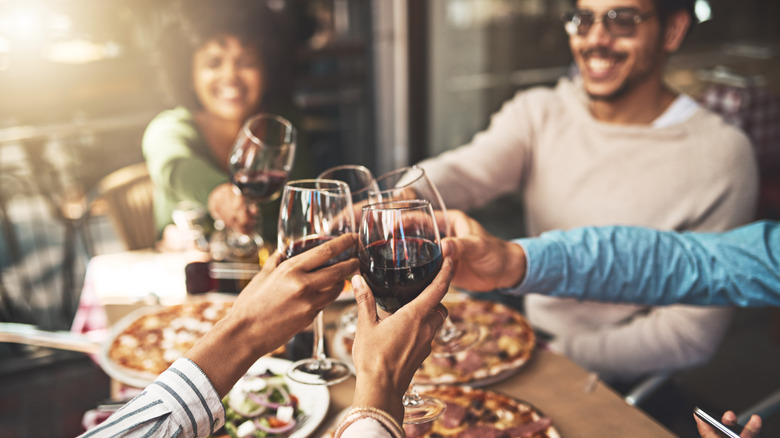
If you happen to find yourself in a BYOB — an abbreviation for "bring your own booze/beverage/bottle/Barolo," and so on — congratulations on likely saving a huge chunk of the evening's potential costs. A BYOB restaurant allows customers to bring their own drinks instead of selling them on-site at famously high markups. Some spots might offer the boon because they can't or don't want to obtain a liquor license, they'd rather skip that bit of inventory management, or maybe they're owned by eccentric millionaires who aren't concerned with profit-driving alcohol sales. There are plenty of rules for how all this has to work on the business side, and a few tips for consumers, too.
First of all, check the restaurant's policy before you start uncorking those pours. If they charge more than a nominal corkage fee, for example, that budget pinot grigio might start looking a little more expensive after all. Some places might also limit what you can bring, allowing beer and wine, but not the hard stuff. Others, however, might actually sell mixers specifically so you can have some Coke with your rum or cranberry juice with your vodka. With so many canned cocktails on the market, the category creates a kind of gray area, so you might want to call and ask about them in advance.
How to BYOB, from limited to permissive
The libations most likely allowed at a BYOB establishment are beer and wine. And if a restaurant lets you bring these beverages, it's almost certainly going to have the tools to get them open. Screw tops and twist-offs will obviously eliminate any potential roadblocks.
Restaurants that do allow proper spirits are incredibly unlikely to also have all the tools that make up a functioning bar, so expect to be whipping up simple mixed drinks rather than elaborate cocktails. You could bring your own martini kit, but you would, unfortunately, come off as That Guy, and you could end up having to sip it out of a wine glass or even a plastic cup. Stick to juices and sodas, and be sure to use caution when measuring proportions without a jigger. The ounce and a half of booze that typically goes into your gin and tonic might not look like much at first sight, so you should take extra care to pace yourself. The most important rule at any BYOB is not to overdo it. The best guests also tip on what would have been the full cost of the item. A server will likely have to clear away your used materials, after all, not to mention abide your tipsy behind.