

The Vintage Beef Dinner From The 1960s That Gave Bland Celery A Purpose
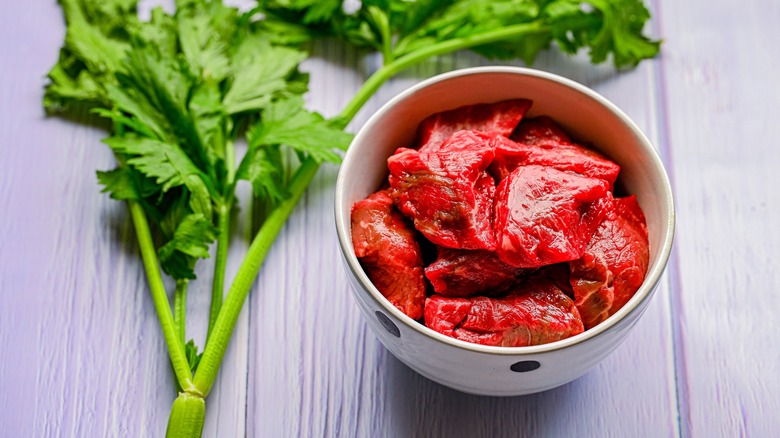
Various iterations of beef and celery stir fry, a dish popularized in the 1960s, can still be enjoyed today, whether it's at a restaurant or homemade. The origins of this beef and celery skillet can be connoted as an Americanized version of a Chinese food classic: chop suey. This dish's name means an assortment of pieces, and often refers to stir-fry dishes made of ingredients that need to be used up, including under-appreciated vegetables like celery. When simmered with chunks of beef and served in a soy sauce base, the final result is quite delicious, boasting interesting texture and subtle refinement.
Considering that this dish's main components are inspired by Chinese cuisine, it may leave you considering other Chinese-American classics. For example, you may wonder how chow mein is different from chop suey. The main distinction is the inclusion of noodles in the former, though some variations of chop suey happen to incorporate noodles as well. This is not the only example of a dish that has shifted due to the influence of Chinese cuisine — the same goes for the Irish-Chinese invention, "Spice Bags," which are essentially french fries mixed with chili, chicken, onions, and peppers.
Understood as a fridge clear-out dish, you could compare this meal to a shipwreck casserole (which is made from leftover ingredients as well). This meal is considered to be a retro favorite, with many feeling nostalgic about its influence back in the day, commonly served up for dinner over 60 years ago. What makes this recipe even more appealing is the fact that the ingredients and preparation are very simple. It's also cost-effective if you're looking for a practical, yet interesting meal on a budget.
Make your own version at home

Comprised of ingredients available at nearly every grocery store, you'll have no trouble making your own version of this meal. You'll simply need beef, celery, and onion, at its most basic. Meanwhile, many recipes include a plethora of different herbs, spices, and other flavor-boosting components like soy sauce, so it's very customizable as well. If you have vegetarians to consider, you can always swap the classic beef with tofu or tempeh in order to accommodate different dietary needs.
This dish is prepared by first browning the meat in a little oil. You'll add your soy sauce as well as salt and pepper once the meat has browned. Once you're satisfied with the appearance of your other ingredients after they've cooked down for a bit, it's ready to enjoy. Some recipes call for other components like baby corn and carrots. Many suggest serving the mixture over fluffy white rice, cauliflower rice, or other grains. You may even include elements like bean sprouts or mix in cornstarch to help thicken the sauce up.
Much of this meal can be adjusted based on your personal tastes, though if you want a bit more certainty, many recipes offer specific proportions. This dish can be made in a singular pan with minimal prep dishes — so you won't be spending all evening on cleanup. When thinking of cookware, you don't need to specifically use a wok, though this style of pan may make it easier to evenly cook the ingredients concurrently. If you don't have one on hand, a large frying pan or skillet will do.