

How To Check Where Your Meat Products Really Came From
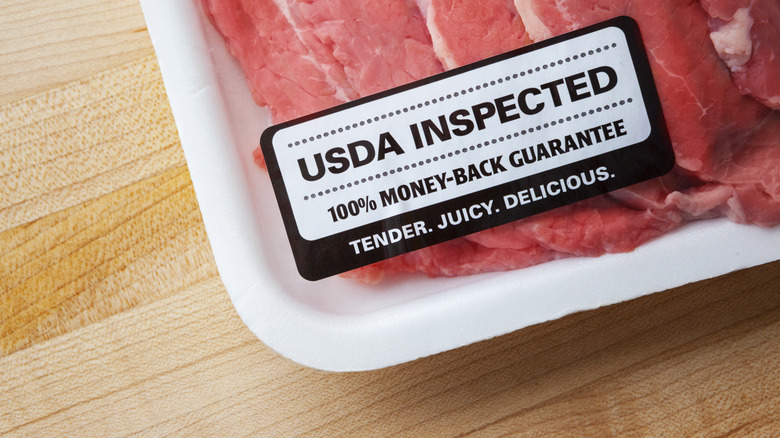
It often takes a little time in the grocery store trying to figure out exactly where things came from and what they may contain. Sometimes it's as easy as reading the ingredients list on the back of a bottle, but meat is not as straightforward. So how can we know where meat came from and what kind of conditions it was raised in? There are a few things you should be looking for when checking the label on packaged meat. The first one is an EST or establishment number. This number is assigned to the plant where the product was produced and is usually found inside the USDA mark of inspection sticker. With the EST number you can then use the online Meat, Poultry and Egg Product Inspection (MPI) Directory to find out exactly where and under what kind of conditions your meat was processed.
Though some meat labels have stickers that say produced in the USA, you might be surprised to find out that this is often not the case. This regulation has one glaring loophole that up until now has allowed meat companies to take advantage of sourcing cheaper meat from further afield and marketing it as local. The label is permitted to be used so long as the meat in question has been packaged in the United States, meaning meats from other countries can be shipped to slaughterhouses in the U.S. and then packaged and labelled as "Made in the USA". What this means is if meat has a "Made in the USA" sticker along with an EST number, it may only mean that the meat in question was packaged in the United States. To really know where your meat comes from, you need to look more closely at the USDA label and see what it says under the "country of origin."
Changes to regulations in 2026
The good news is that come January 1, 2026, there will be a much anticipated new regulation around the "Made in the USA" label that will require it to only be used for meat that comes from animals that were born, raised, and slaughtered within the United States. This change in regulations will be a big win for not only consumers but also farmers who can now market their locally raised meat as such, without the interference of misleading marketing from other companies. So starting in 2026, a combination of the "Made in the USA" sticker along with a USDA approved sticker with an EST number will ensure that consumers can know for sure if their meat was raised in the United States and exactly where it was processed and packaged.
Other ways to make sure you are getting the best meat possible is to consider shopping at grocery chains with the highest quality meat departments, or to find a local butcher that you can trust. Understanding the differences between grass-fed versus organic beef, and cage-free and free range eggs can also help you make better choices in the grocery store.