

What's The Difference Between A Cookie Sheet, A Baking Sheet And A Sheet Pan
We may receive a commission on purchases made from links.
If you're an avid baker, you probably have a dozen different kinds of pans hiding in your kitchen drawers and cabinets. For the rest of us, though, a few standard oven-safe trays seem to do the trick most of the time. So when we hear the terms cookie sheet, baking sheet, and sheet pan — and that they don't all mean the same thing — it's only natural to feel a little confused. Thankfully, Chowhound consulted expert baker Janina O'Leary, co-founder and executive pastry chef of George's Donuts & Merriment (@georgessf on Instagram) in San Francisco, California, to clear up what distinguishes these baking instruments.
According to O'Leary, the difference mainly comes down to the shape and design of the tray, specifically its rim or edge. "A cookie sheet is typically rimless (or with a very small rim). It allows cookies to slide off easily," she explains. On the other hand, she says, "A baking sheet or sheet pan has rims on all sides and is more versatile and great for cookies, roasted veggies, and sheet-pan meals." So while you can use the terms "sheet pan" and "baking sheet" interchangeably, a cookie sheet is a slightly different story. They're often insulated, which comes with pros and cons, and should really only be used for baking cookies or biscuits, since they can't contain oil the way a rimmed baking sheet can. If you're only going to keep one kind of baking tray in your kitchen, a sheet pan (aka baking sheet) is the more versatile option.
What to look for in a sheet pan
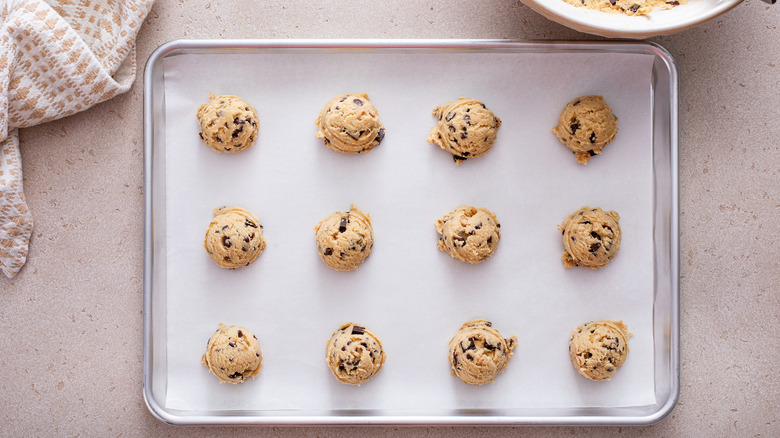
Now that we've established what sets baking sheets (or sheet pans) apart from cookie sheets, we need to talk about what sets a good baking sheet apart from the crowd. When it comes to the best material for baking sheets, expert Janina O'Leary advises, "Look for aluminum or aluminized steel, which heats evenly and resists warping." Surprisingly, the color of your baking sheet is also an important factor in its usefulness. "Light-colored pans prevent over-browning," O'Leary explains, while darker ones absorb more heat, potentially burning the bottom of your baked goods if you're not careful.
O'Leary assures us that cookies will bake just as well on a baking sheet as they will on a cookie sheet. "What matters more is even heat distribution, pan color, and proper spacing on the pan," she says. To ensure even heat distribution, O'Leary suggests lining a baking pan with parchment paper (not wax paper!). Stay away from foil, too, as she says "it draws in more heat and brings dark browning on the bottom, which creates an uneven bake."
Whether you're shopping for only a few sheet pans, or a combination of baking sheets and cookie sheets, O'Leary has a few recommendations for brands to buy. "Some reliable brands for home baking include Nordic Ware Naturals, USA Pan, and Vollrath," she says. Nordic Ware Naturals' three-piece baking sheet set is $41, while two sheet pans from USA Pan will run you almost $50 and a three-pack of sheet pans from Vollrath is $60; cookie sheets from each brand are either slightly more costly or about the same price depending on how many you buy.