

Why You Use Parchment Paper (Never Aluminum Foil) For Lining Baking Pans
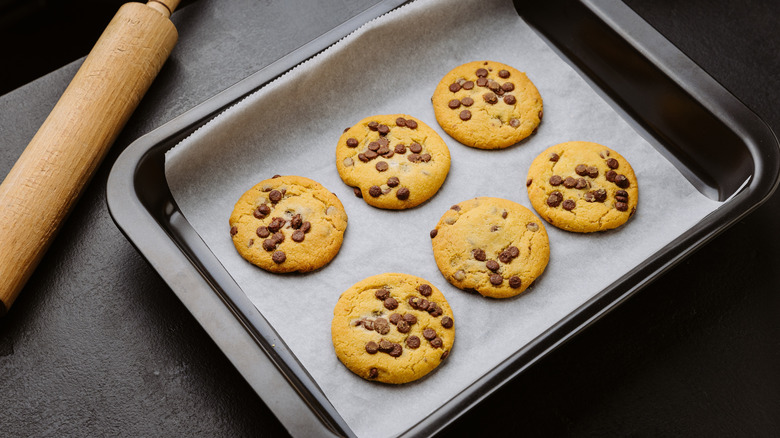
Whether you're baking a cake or broiling a delicious piece of salmon, it makes sense to cover up your baking pan to save yourself from the hard work of scrubbing the pan clean. While lining your baking pans is usually a smart idea, it's important to stick to parchment paper — not aluminum foil — when you're baking. Kristina Lavallee, owner of The Cake Girl, talked exclusively with Chowhound about why parchment paper is her go-to baking pan liner.
"Parchment paper is one of my favorite tools — it keeps cakes from sticking, helps release them cleanly, and makes cleanup easy," says Lavallee. While she prefers parchment paper for lining pans, she isn't totally anti-aluminum foil; she says the shiny stuff does have its place in baking: "It's great for wrapping cakes to protect them from over-baking or catching drips, but it's not ideal as a nonstick liner for delicate batters." Lavallee also says that using aluminum foil with certain ingredients — such as citrus flavors — can lend a metallic flavor to your end product. Additionally, Lavallee says it's important to choose your parchment paper brand carefully. "Some cheaper parchment brands have a heavier silicone coating, which can prevent the bottom from browning as nicely — that's why I always use high-quality, food-grade parchment meant for baking."
More parchment paper tips to simplify your baking
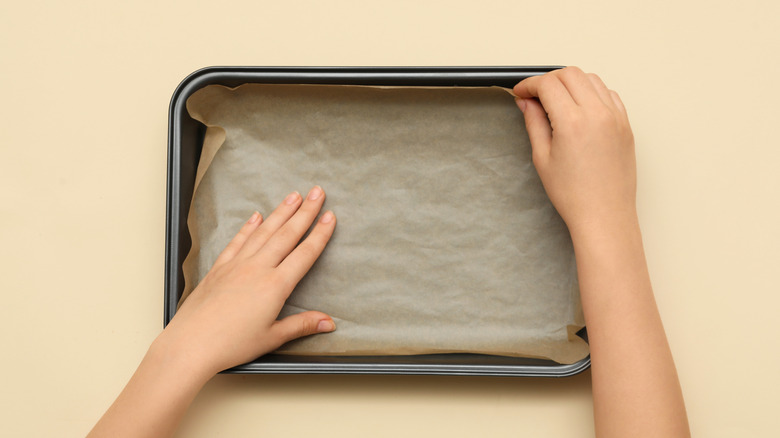
Kristina Lavallee isn't the only pro chef who is a big fan of lining baking pans with parchment paper; Martha Stewart is also on board. One of the culinary maven's go-to parchment paper tips is to crumple it before you use it to line a pan since this can result in a better fit. Lavallee agrees that great-fitting paper is key: "If the parchment doesn't sit flat, batter can creep underneath and bake unevenly." Another way to create a great fit (if you're using a square pan) is to simply cross two pieces of parchment paper to create a base that makes it easy for you to pop your finished product out of the pan.
An important note to keep in mind, however, is that parchment paper is flammable (even though it's typically safe to use up to 420 degrees Fahrenheit). Trim away any excess parchment paper from the edge of your pan both for safety and airflow; Lavallee says that when parchment paper hangs over the edge of the pan, it can block heat and negatively affect browning.
While Lavallee is generally a fan of parchment paper, she says that it sometimes makes sense to remove the liner halfway through the cooking process or forgo a liner altogether (even though this means you have to put a bit of elbow grease into the cleanup process). "For desserts that need crisp or caramelized edges (like brownies or shortbread), parchment can soften those edges a bit," she says. "When I want that crisp finish, I'll lightly butter the sides of the pan or remove the parchment halfway through baking."