

The Secret To Fluffy Omelets? A Pinch Of This Pantry Staple
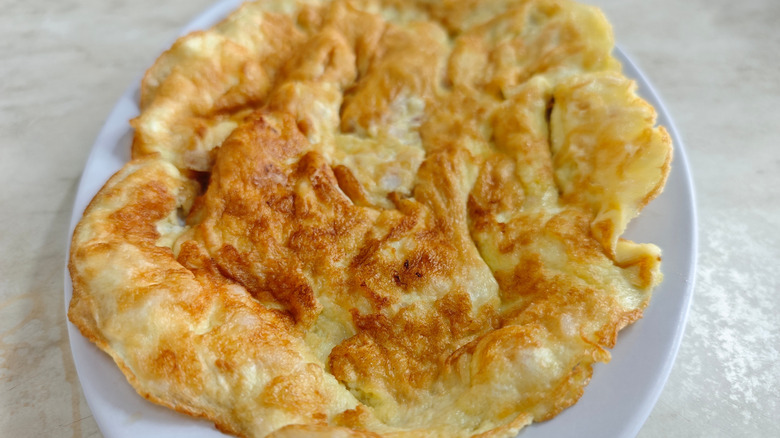
There is a certain kind of omelet that looks like it comes from a parallel universe. It sits on the plate with a polite wobble, the kind of wobble that suggests hidden lift and backstage drama. Diners cut into it and watch steam drift out like a soft cloud that forgot its sky. Most home kitchens often struggle with this question of how to make an omelet. They get the practical omelet, the weekday omelet, the shrugging omelet that cooks up flat and obedient. But the old kitchens of another era knew a trick. It lived in a yellow tin that sat between the cinnamon and the cornstarch, a pantry workhorse that nobody questioned. Baking powder. A simple pinch of it turns eggs into something that behaves like it just discovered air travel.
The science is not complicated. Heat, moisture, and baking powder start talking to each other the moment they meet. That conversation creates tiny gas pockets inside the eggs. Those pockets grow, stretch, and lift until the omelet feels lighter than common sense. It is an old trick from retro cookbooks that promised drama without fuss. The modern kitchen somehow forgot it, swept away by gadgets that blink and beep. Yet the pantry staple waits patiently, ready to prove that fluff comes from chemistry, not mystique.
The thrill arrives when the omelet rises in your favorite cooking pan with that confident swell. It looks like a pillow of breakfast ambition. The moment it slides onto the plate, it carries the vibe of a diner fantasy, the kind where cooks flip omelets with an ease that borders on athletic pride. That is the magic at play and it hides in a teaspoon.
How to coax the lift out of your eggs
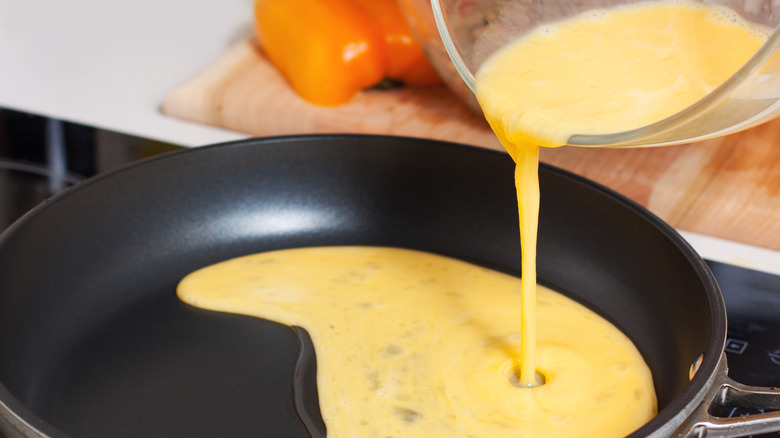
Start with the basics. Beat the eggs for about a minute, until they lose all memory of structure. They need to become one smooth bright mixture that welcomes every add-in. A tiny pinch of baking powder enters the bowl next. Not a spoonful or a handful, just a whisper. More is not better. Too much baking powder turns eggs into a chaotic foam that tastes like a chemistry experiment. A touch is enough to wake up the lift without hijacking the flavor. As the mixture hits a warm pan, the baking powder begins its quiet performance. Bubbles form. The omelet rises. There is no gadget that can imitate this kind of ascent.
Once the lift begins, treat the omelet like a fragile celebrity. No aggressive spatulas. No impatient flipping. Let the edges set at their own pace. Tilt the pan so the uncooked egg flows into the warm spots. The omelet climbs higher as the bubbles expand. In a minute or two, it reaches its peak. Fold it with care and watch it puff slightly as if it is taking a proud breath. The texture becomes tender, airy, and strangely buoyant. Mix-ins like cheese or herbs sink inside like passengers on a soft hot air balloon.
The final bite is a reminder that kitchen miracles do not always involve cooking with uncommon spices and expensive tools. Fluff often hides in the simplest ingredient. Baking powder sits quietly on the pantry shelf, waiting to give breakfast its moment of theater. All it needs is a bowl of eggs and a cook who believes in the lift.