

How To Master Meringue: Why Slow And Steady Makes All The Difference
We may receive a commission on purchases made from links.
If you've ever thrown your hands up in despair while trying to get the perfect stiff peaks for a meringue, you're not alone. Meringue can be temperamental, to say the least — even the weather can make a difference. So Chowhound spoke exclusively to Samantha Merritt, baker and founder of Sugar Spun Run, and Sally McKenney, founder of Sally's Baking Addiction and author of New York Times bestselling cookbook "Sally's Baking 101," to get the lowdown on creating stable, delicious meringue.
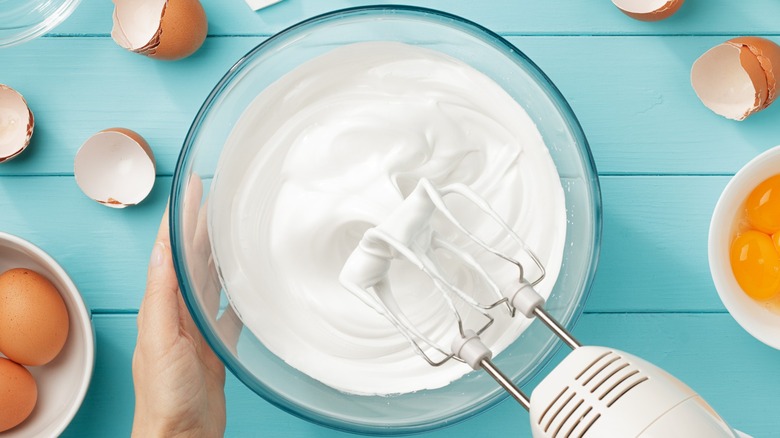
The key to creating great meringue? Timing. Start the process low and slow. Merritt agrees. "I've found that beating the meringue more slowly at first does help to encourage a more stable structure," she says. But you don't want to keep your mixer at a low speed throughout the entire meringue-making process. You can increase the speed once you've added all your sugar and the mixture no longer feels grainy (usually around the soft peaks stage, according to Merritt). But Merritt warns that if you increase the speed prematurely, you can introduce too much air faster than you build structure, which weakens your meringue.
Set yourself up for success with these meringue-making tips
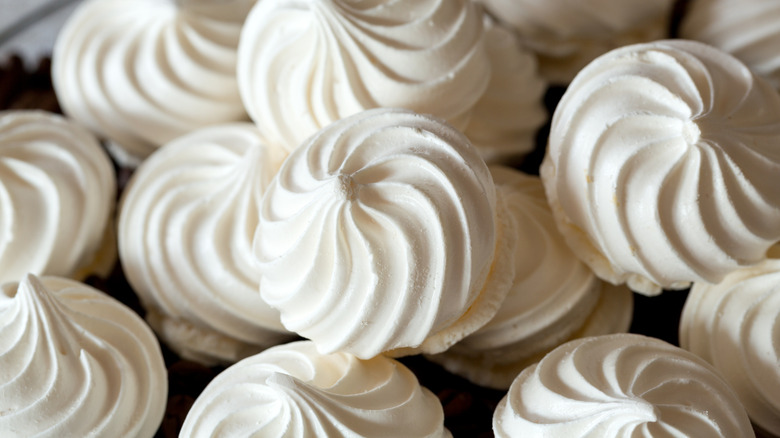
Before you even begin the whipping process, it's key that you take a few steps to increase the likelihood of creating meringue with a cloud-like consistency and stiff white peaks (a tall order, for sure). Taking some time to choose the right materials can make all the difference in whether your hard work pays off. "Choose glass or metal mixing bowls (avoid plastic, rubber, or silicone, which can harbor invisible oils that can inhibit the egg whites from whipping properly)," Samantha Merritt recommends.
But Sally McKenney points out that you also need to be mindful of how you treat your eggs. "It's easier to separate eggs when they are cold because warm egg yolks are much more likely to break," she says. Then give them a bit of time to warm up after you separate them. "Egg whites whip up much better — stiffer and glossier — when they are room temperature," McKenney says. Of course, if you don't mind the extra work of separating warm egg yolks from whites, some pro chefs swear the secret to fluffier egg whites is to set your eggs out on the counter the night before so you can work with room-temperature ingredients from the start.
And unless you're in the mood for a serious arm workout, choose an electric or stand mixer, as the low-and-slow process requires time. Even the timing of your baking day is important. If you can swing it, wait for a dry day to whip up a meringue. Humidity can stifle the gorgeous stiff peaks you're looking for.
Avoid baking disaster with these beginner meringue mistakes
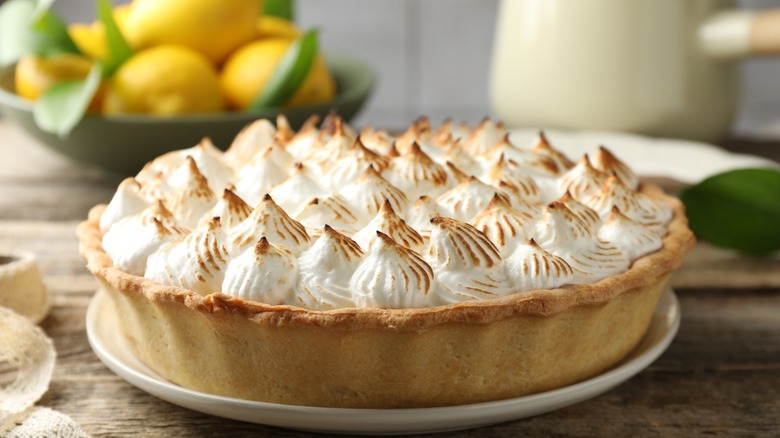
We've all had a meringue fall flat despite our best efforts, and being aware of common meringue mistakes, whether you're baking up crispy meringue cookies or topping a pie, can help you increase the likelihood of getting the pillowy texture you want. In addition to making sure both your bowl and beaters are totally dry and free from grease, take extra care to make sure your egg whites are totally yolk-free. Separate each egg into a small bowl, one at a time, before setting the yolks aside and adding the whites to your meringue bowl. That way, if you break a yolk, you can just toss that one egg instead of the whole batch — or worse, trying to whip the meringue anyway to no avail.
And take it slow when adding sugar and cream of tartar. It can be tempting to dump them in one go, but take your time to achieve a light and fluffy texture. Knowing when to stop is also key, as overbeating meringue can negatively affect texture. "In most cases, it's done when it's reached stiff peaks, which means you can flip the bowl (or the beater/whisk attachment) upside down and it won't fall out, and the peaks will hold shape," says Sally McKenney.