

Does Filtered Water Make A Difference In Sourdough Bread?
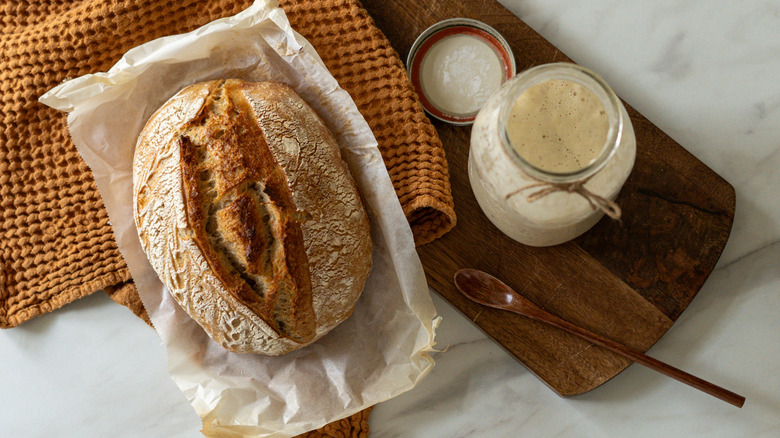
If you are among the legions of people who took up baking sourdough bread during the pandemic, at some point you have probably wondered what common mistakes could kill your sourdough starter, what kind of flour is best, and if the type of water you use matters. Specifically, will using filtered water make a difference? Chowhound spoke with Nathan Myhrvold, founder of Modernist Cuisine and co-author of "Modernist Bread at Home," to find out. "Unless your water supply has a foul odor or some other major contaminant, buying filtered or distilled water is not worth the investment," he says.
Some baking books and experts claim that bread rises better and offers superior flavor when dough is made using filtered, distilled, or deionized water, so Myhrvold and his team tested this idea by making the same recipe for a poolish starter with five different types of H2O. "The results of the experiment, shown after about 16 hours of fermentation, were intriguing," says Myhrvold. "The poolish made using tap water was the slowest to ferment. The poolishes made using filtered and distilled water fermented fastest and at about the same speed." Even though the poolishes fermented at different rates, they all ended up ripening well enough for use in dough.
How to know if your water is negatively impacting your bread
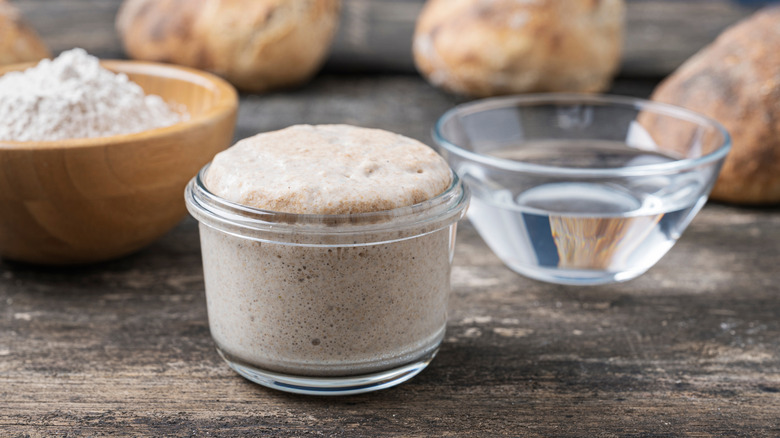
Of course, there are always are exceptions, and Nathan Myhrvold says there are some signs to watch out for that might mean your water is negatively impacting your bread. "If your dough seems unusually slow to rise, produces off flavors, or consistently underperforms despite using the same ingredients and process, your tap water could be the culprit," he says. (Before blaming water for a slow rise, however, make sure you are not making this kneading mistake that will stop bread from rising.) "Most municipal tap water in the U.S. is safe for baking", says Myhrvold, "but in rare cases — especially if you're on a well system or have particularly hard water — dissolved minerals or contaminants can slightly alter fermentation rates or flavor."
If your baked sourdough bread ends up tasting faintly bitter, Myhrvold says this can be a sign your water contains high levels of chlorine or chloramine. A smell of chlorine or chemicals coming from your faucet indicates that the level of disinfectants in the water may be so high that yeast will not be able to grow. This is the only instance he recommends using filtered water — either from a refrigerator filter, charcoal filter, or countertop unit — which get rid of most of the chlorine and heavy metals that would impact your loaves. "You can also fill a pitcher of tap water and let it sit uncovered for 24 hours," advises Myhrvold, as this allows chlorine to dissipate naturally. "Avoid using distilled or deionized water," he says, "as yeast and bacteria actually benefit from trace minerals that support healthy fermentation."