

4 Easy Fixes For Runny Pumpkin Pie
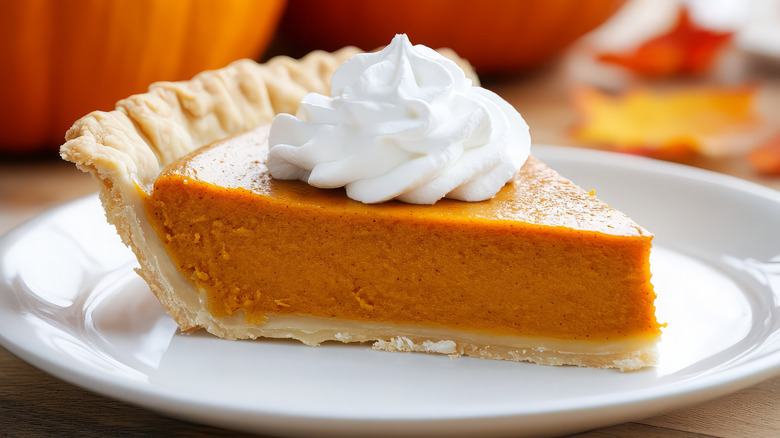
If fall colors make you think of pumpkin pie, now is the perfect time to bake one if you haven't already. Store-bought pumpkin pies can be hit or miss, and you'll find plenty of occasions throughout the season to add this fall favorite to your menu, not to mention enthusiastic eaters. Many home bakers find the pie's filling particularly intimidating since it demands a perfect mix of squash, warm spices, sweetness, and creaminess. But getting this iconic dessert's flavors right is easier than you might think; it's the texture that's tricky. While runny pumpkin pie can still taste good, it's no fun to serve or eat.
Fortunately, there are several ways to ensure your pumpkin pie filling sets without drying out or splitting. In general, this involves reducing moisture and adding thickening agents to create a pumpkin pie that's delicate and moist but still cuts into a clean slice without running. And if you're wondering what drink to pair with your perfect slice of pie, try making a simple four-ingredient pumpkin pie martini.
Reduce moisture in the filling by cooking the pumpkin puree
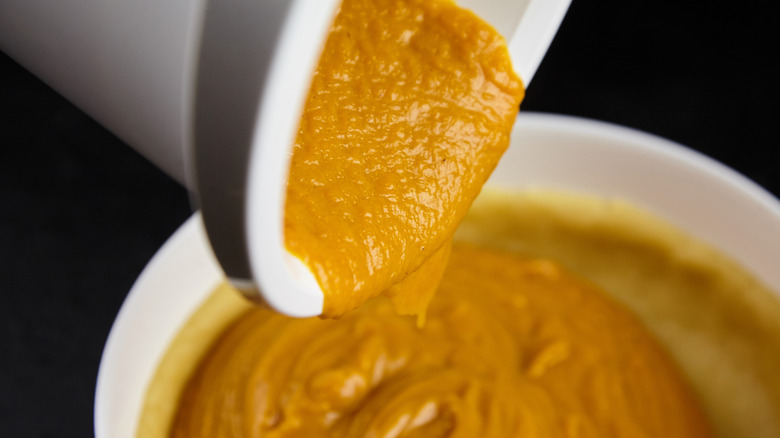
Pumpkin pie starts with pumpkin puree, and whether you're using canned or fresh pumpkin, cooking it is key. Introducing heat removes moisture and helps concentrate flavors. If you're using canned puree, you can either heat on the stovetop to help thicken it or spread it out on a baking sheet and pop it in the oven at 400 degrees Fahrenheit for a few minutes to bake off some of the moisture and concentrate its flavor. When using fresh pumpkin, roast it in chunks until it's soft enough to peel and blend it into a puree. Keep in mind that fresh pumpkin contains more water and needs to be roasted for a long time before it's suitable for pie filling. You can also continue to remove moisture from fresh pumpkin puree by heating it on the stovetop after blending.
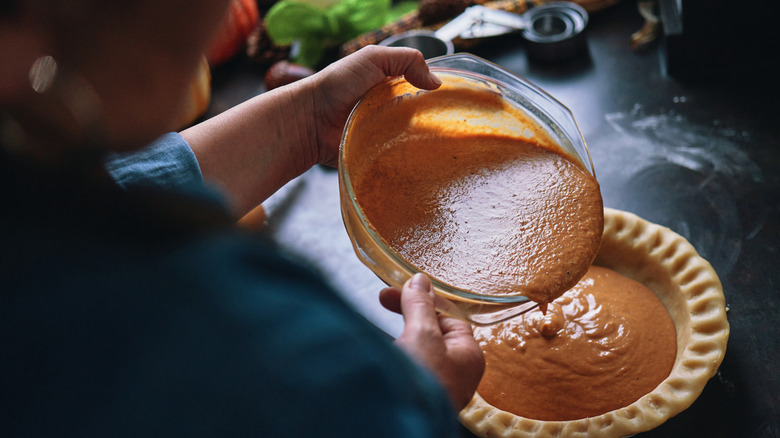
You can even add sugar and spices from the recipe to the puree before you cook it down to further intensify the pumpkin flavors. The heat blooms the spices, releasing their oils and deepening their aromas so the resulting pie is richer and more flavorful. Just remember, the filling continues to cook down in the oven, so it should still retain a thick liquid consistency that you can pour into the shell when the pie is assembled.
Add cornstarch and other thickening ingredients
Cornstarch has several hidden strengths, one of which is its ability to save runny dishes, including pumpkin pie. Many recipes call for it, but if yours doesn't and you're concerned that the pumpkin filling won't fully set during the bake, adding cornstarch can help. Use up to 1 tablespoon for a 9-inch pie, but be careful: adding too much can give the filling a gummy texture. And keep in mind that cornstarch isn't your only line of defense against a runny filling.
Another easy way to thicken pumpkin pie filling is by using cream cheese. You can replace all or some of the cream in your pie with cream cheese, which is firmer and helps hold the filling together, drastically reducing the risk of a runny pie. It's slightly harder to mix in, especially when it's cold, so you can pop it in the microwave for a minute before incorporating it into the pumpkin puree. For the quickest, most hassle-free substitution, you can use pumpkin spice pudding mix to make a no-bake pumpkin pie.
Eggs are crucial for a perfectly set pumpkin pie
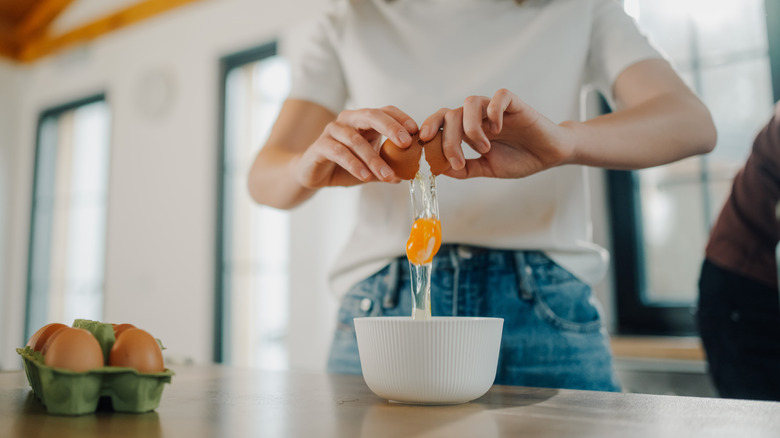
Traditionally, eggs are the key ingredient that binds pumpkin pie filling into a custardy texture. Gentle cooking helps set the eggs properly, which is why it's best to bake pumpkin pie at a mellow 350 degrees Fahrenheit for at least 30 minutes rather than trying to rush the process at a higher temperature. To ensure the crust cooks through and is crispy, consider lining the pie tin with just the pastry and baking only the crust at a slightly higher temperature before adding the pumpkin filling and lowering the temperature.
If the pumpkin pie filling regularly comes out too runny, try adding an extra egg to give it more structure and a denser texture. If you're concerned about throwing off the recipe's proportions, you can simply add the yolk instead of the entire egg (some recipes call for additional yolks for a richer, creamier result). Avoid adding extra egg whites, though, as they add moisture and can make the filling looser.
Firm up your pie filling with heat and cold
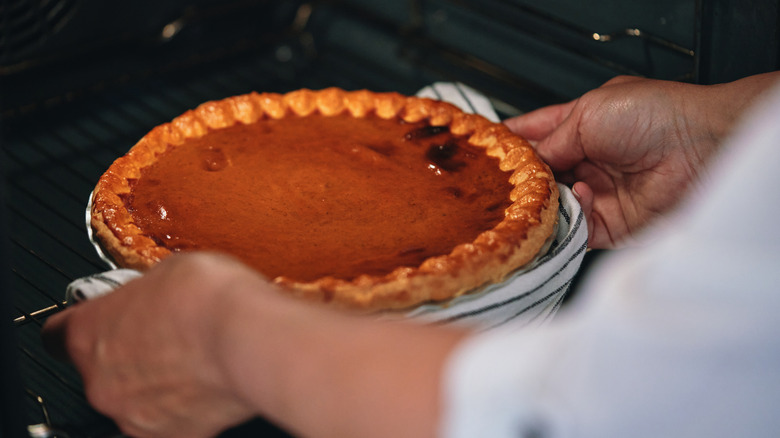
Two of the simplest last-minute fixes for runny pumpkin pie are heat and cold — specifically, giving the pie a little more time in the oven or refrigerator. Because pies bake from the outside in, the center may remain soft even when the outer edges are set. Allowing it to bake slightly longer helps the eggs finish setting for an even, custard-like texture. To avoid overcooking, make sure the filling's temperature near the center doesn't exceed 175 degrees Fahrenheit.
Cooling is just as important for achieving the perfect texture. Let the pie rest at room temperature after baking to allow the filling to finish setting. Then, refrigerate it to fully firm up the custard and deepen the flavors. If you can, chill the pie overnight for the best results, though even a few hours in the fridge will help fix slight runniness and give you a smooth, creamy pumpkin pie.