

Prime Rib Vs Standing Rib Roast: The Subtle Difference You Need To Know
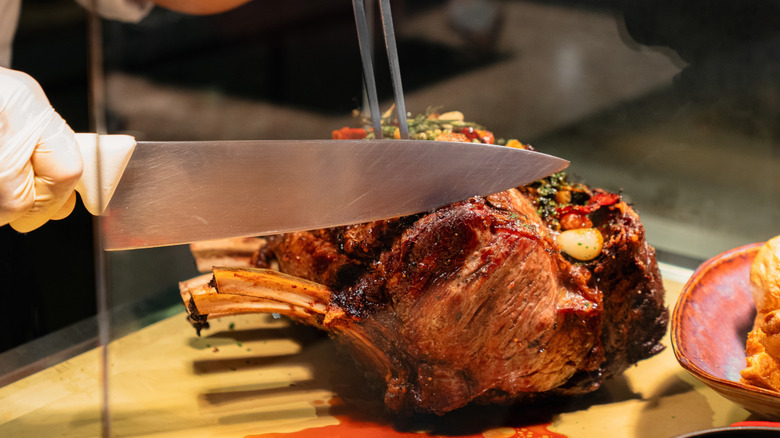
Eating a huge cut of beef rib roast that's cooked juicy, tender, and perhaps a little rare, is a special culinary experience that can often feel festive. It is also a gourmet option at finer restaurants, which use the best techniques to achieve the perfect prime rib. However, there is a subtle difference between a prime rib roast and a rib roast, and more specifically, a standing rib roast.
The prime rib is specifically sourced from a section cut from ribs six to 12 of a cow's primal rib section, and a standing rib roast is a type of prime rib that is cooked bone-in — resting on its bones in an upright position. Prime rib and standing rib roast are sourced from the same part of a cow, called the primal section, which is located between the shoulder and loin. The word "prime" in this case refers to the cut originating from the superior rib section of the animal, not the USDA grade.
There are also two cuts of prime rib available for purchase. The "first cut" is sourced from the back loin end, which is smaller and more tender. The "second cut," from the frontal chuck end, is larger, fattier, more flavorful, and less tender. A standing rib roast is sold and cooked with the bones attached to the meat.
Buying and cooking prime rib
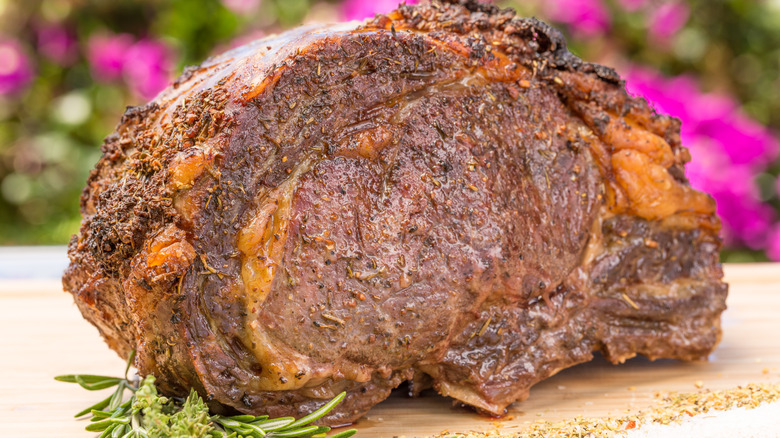
Preparing the perfect rib roast is achievable at home when you know the proper techniques, as well as which mistakes to avoid when cooking prime rib. A prime rib is a desirable cut, especially the chuck end, because of its marbling and fat content. Boneless prime rib is generally more expensive because it requires more work from the butcher. Other factors affecting price include whether the beef is aged, which increases the cost and grade.
You will probably need to make a special trip to a butcher for a bone-in standing rib roast, which is sold by the bone. The most convenient way to purchase a standing rib roast is by finding one that has been tied into a neat cylindrical shape with butchers' twine — this helps the meat stay intact and cook evenly. Choosing a size depends on the number of people being served, as each bone will typically feed about two people.
Standing rib roasts are also leaner than prime rib, and the cooking times and techniques for each may vary. Properly cooking meat with the bones in will ensure more moisture is retained, may impart more flavor, and the cut will help guide the server when cutting the meat into pieces. Knowing the ins and outs of the variety of rib roasts will help guide your next exploration of beef cooking. Choose the cut that works best for you.