

Kerrygold Butter Didn't Originate In Ireland: Where It Launched In 1962
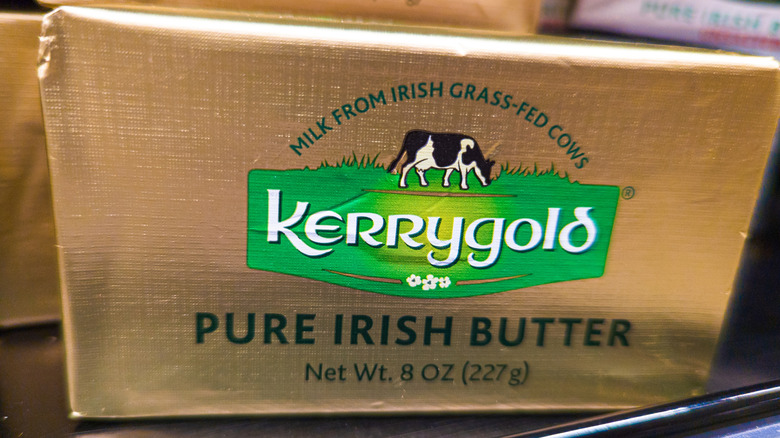
With its distinctive gold packaging featuring a cow grazing on bright green grass, Kerrygold butter is a standout on the butter shelf. But what's inside the package has helped it become the second-best-selling butter brand in the United States, behind only Land O'Lakes. You would assume this butter, which is touted as coming from the milk of Irish cows, was a best seller in Ireland before it hit the shelves elsewhere. But it turns out that British consumers were the first ones who got to purchase the butter.
Back in 1962, a newly-created Irish dairy board shuffled through 60 name suggestions for a new butter, including options like Leprechaun, Tub-o-gold, and Buttercup before landing on Kerrygold; the Kerry highlands are among the highest mountains in Ireland. Kerrygold launched in the United Kingdom that same year, with the hope that consumers would develop a taste for an Irish butter made of high quality, natural ingredients.
The sticks of butter indeed stuck, and by 1965, Kerrygold was being exported to around 20 countries, including those in the Middle East, Caribbean, and Asia. It wasn't until 1973 that Kerrygold actually went on sale in Ireland, 11 years after the butter brand was available in the U.K. It didn't hit the shelves in America until much later, starting with one pallet of butter that was shipped to the U.S. in 1999, though Kerrygold cheese actually launched in America first.
What is different about Irish butter?
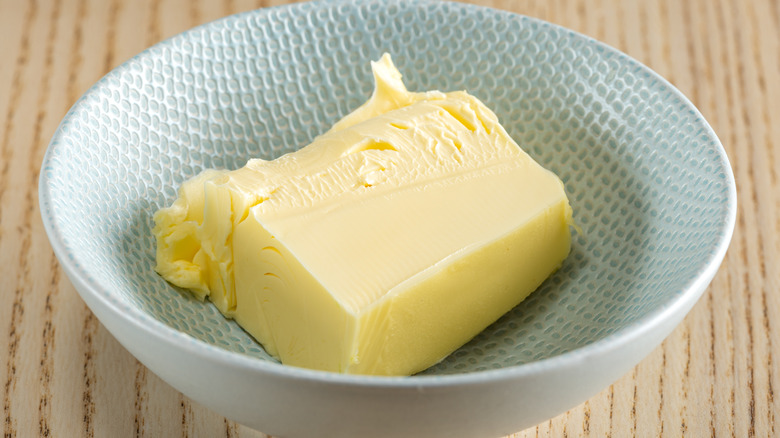
If you're confused about the difference between Irish, American, and European butter, it comes down to fat content, and what the cows eat, such as fresh grass vs. feed made from corn and soy. Irish butter, such as Kerrygold, is said to have about 82% butterfat (European butter can sometimes have even more butterfat than that). American butter typically has about 80% butterfat, with the rest of the ingredients composed of water and milk solids. The higher the amount of butterfat, the less there is of water and other products, which gives the butter a creamier texture and richer flavor.
Ireland is famous for its green hills and rainfall, and the conditions are ideal for cows, who get to munch on lush grass for most of the year. This diet gives the cow's milk a distinctive sweet flavor and a golden hue, which is thanks to the extra beta carotene in the local grass. If you're a fan of spreading this creamy butter on a loaf of bread, you shouldn't think it's a waste to use Irish butter for cooking or baking, as it can have some tasty benefits. The little bit of extra fat that Kerrygold butter has can make pie crusts flakier and cookies deliciously rich and buttery. Don't let the cost stop you, as Kerrygold isn't your only option for creamy Irish butter; there's also a Costco butter that doubles as a Kerrygold dupe but has a lower price tag.