

You Can Totally Make Matcha With Cold Water, But Should You?
We may receive a commission on purchases made from links.
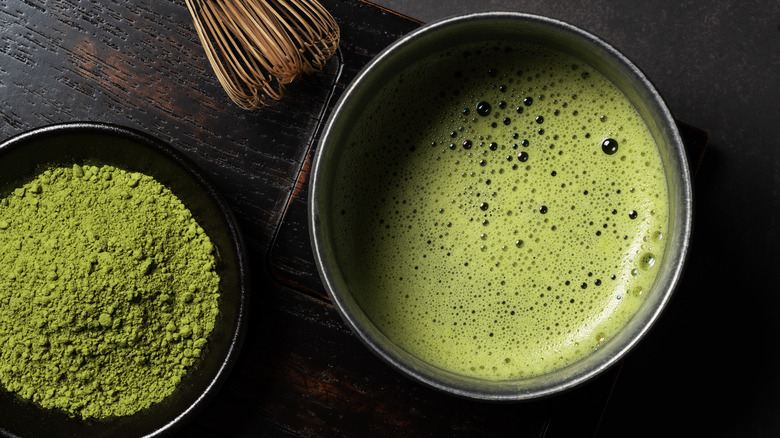
A freshly spun cup of matcha is like a particularly verdant, caffeinated breath of fresh air. The green tea-derived powder's earthiness is inimitably satisfying when it's made just right. But "just right" can vary from preparation to preparation, and even challenge the conventional practice of making it with hot water alone. To get some insight on the best ways to make matcha, Chowhound spoke with Remy Morimoto Park, founder of Frauth Matcha and creator of the blog Veggiekins. He exclusively told us that in most cases, mixing the power in hot water is the best choice. "I personally prefer whisking with hot water as it results in a much frothier, creamier experience, but it can be prepared with cold water too," Park said. "I find the downsides [with using cold water] are that the preparation can take a bit longer and that the result is not quite as creamy and frothy."
That, of course, all makes perfect sense. Powders such as these dissolve better in hot water because the increased temperatures keep all of the molecules moving, enabling them to mix together and melt very quickly. You've probably noticed a similar principle if you've ever introduced cocoa powder to stovetop hot chocolate when the dairy's still tepid; it begins to clump, rather than seamlessly incorporate. The fixes are similar in either case.
Smoothing over cold water-clumped matcha
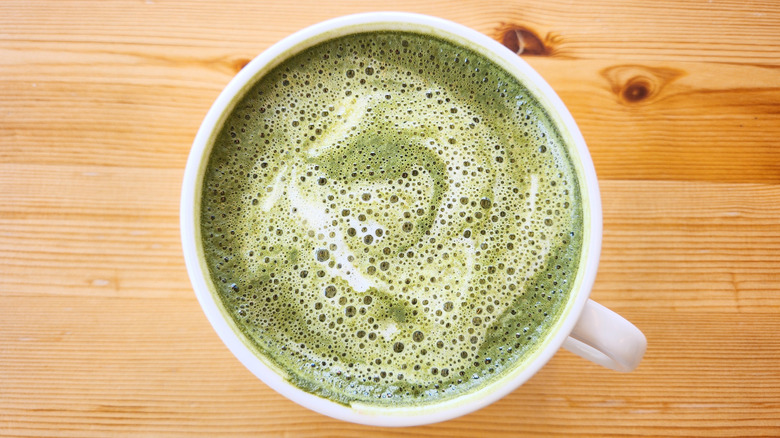
If powdery clumps make you reflexively begin to stir, you're already on the right track, according to Remy Morimoto Park. Imagine that you're running late for work in the morning, and heating up that matcha water is the thing that'll tick you over the edge. You can go ahead and skip that step, provided you've still got time to put in a little extra elbow grease. "The process is primarily the same, but you may need to whisk a little bit longer in order to achieve the same level of frothiness and to ensure all the clumps have been successfully broken down," Park said.
You can also break out a magic wand, such as it is, with something like Zulay Kitchen's powerful milk frother. Its promised agitation intensity is right there in the name, and, naturally, you needn't limit its application to dairy alone. Even just a minute of using this tool in a cup of matcha should buzz all of those big, bad clumps straight out of existence. Then, once you've mastered making matcha with hot and cold water alike, you can start experimenting with new adaptations on this drink, like the matcha latte that tastes like spring.