

Stop Cluttering Your Fridge With Bulky Containers: Start Storing Liquids Like This
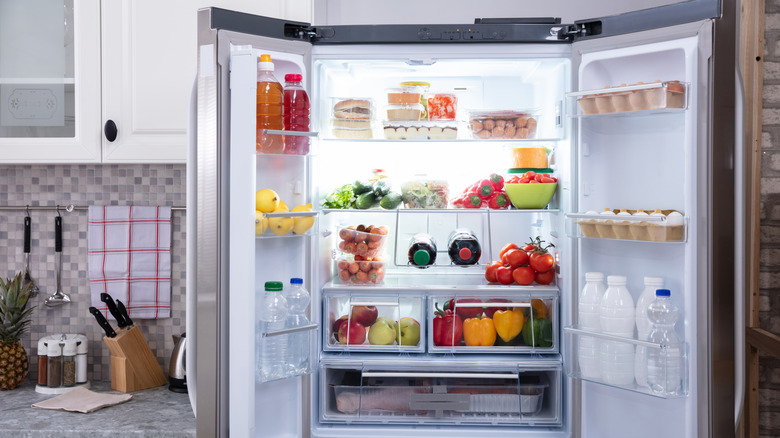
In terms of keeping your home tidy and organized, the kitchen presents a unique challenge, as keeping it clean is crucial for food safety and functionality. However, the kitchen is also the most active space in many homes, meaning that it's rarely in a perfect state of neatness and organization, but rather constantly fluctuating in cycles of cooking and cleaning up. That means creating an efficient space with the right storage solutions is key to corralling the chaos and enjoying a stress-free cooking environment.
Though most people picture pantries and cabinets when they think of kitchen organization, your refrigerator is a worthwhile spot to start. Doing things like storing your strawberries in Mason jars not only keeps things fresher for longer, it saves space in your fridge so you can use it more efficiently. This is especially true when it comes to beverages. Different brands package milk, juice, and soda in containers that vary wildly in size and shape, from cardboard cartons to bulbous bottles, and bulky jugs that make it difficult to fit all of your favorite drinks neatly in the limited space inside your fridge.
Decanting drinks and other liquids into airtight uniform containers just like you do with snacks in your pantry quickly solves this problem, as containers like Weck and Mason jars are made to sit in neat, uniform rows next to each other. Doing this also means you'll be able to see all the liquids in your fridge at a glance, with much less need to shove things aside, which is a slippery slope to disorganization. However, there are some tips to keep in mind when repackaging your refrigerated liquids.
Do's and don'ts of decanting liquids into uniform containers
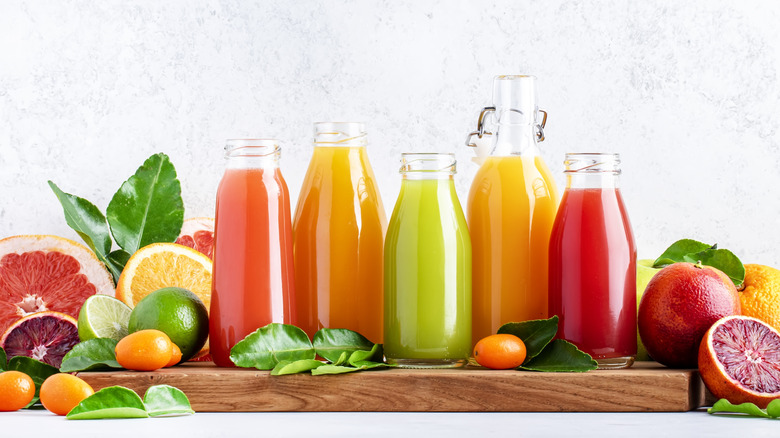
Before you run out and purchase a bunch of Weck jars from Williams Sonoma or Mason jars in different sizes, it's important to assess your personal needs. For instance, if you frequently make homemade batches of refreshing Egyptian-style lemonade or vanilla-infused iced tea, you likely already have a favorite style of beverage container on hand. In this case, try to choose jars or bottles that are as similar to these favorite vessels as possible. If you're using jars, many jar brands offer lids with built-in pour spouts, which may be useful not only for storing juice and milk, but also broth or bisque.
Something else to consider is the types of beverages you consume. For instance, glass containers may keep your milk fresh longer because they offer UV protection and better insulation, but decanting carbonated beverages will just cause them to go flat. If you frequently enjoy soda or seltzer, it's best to leave them in the original packaging. Milk — both dairy and plant-based — and juice, however, can be safely stored in glass containers, especially the kind with a silicone flange on the lid for an extra tight seal.
The final thing to think about when putting your liquids in uniform containers is labeling. A good label means the difference between pouring yourself a glass of apple juice versus similarly colored chicken stock. Vinyl sticker labels are fairly sturdy, and peel off cleanly when they need to be replaced. It's also important to note expiration dates on your repackaged liquids to keep track of freshness.