

The Simple Swap To Get Your Omelets To Turn Out Like Martha Stewart's

There's no denying Martha Stewart's authority in the kitchen. The celebrity chef and media mogul has authored more than 100 cookbooks and hosted several cooking and homemaking television series, so when she offers tips, people tend to listen. Whether she's advising cooks to add bouillon to deepen the flavor of a dish or suggesting hosts avoid serving snacks at parties, Stewart is full of helpful advice for every skill level. No recipe is too simple for her to improve, as demonstrated by her tip for making the perfect omelet.
Made from beaten eggs cooked in a pan and folded into a custardy blanket, omelets are about as bare-bones a dish as you'll find. But the recipe's simplicity masks how difficult it can be to perfect, which is where Martha Stewart comes in: Rather than using regular butter, which has a lower smoke point and a tendency to burn, Stewart uses more versatile and heat-tolerant clarified butter to grease her pans when she cooks omelets.
While other oils can also handle high heat, clarified butter is preferred for its flavor, which is why many cooks use clarified butter for simmering and sautéing. Although it doesn't contain the tasty milk proteins found in regular or browned butter, it still retains a rich, buttery taste that enhances the creamy texture of eggs. She shared the trick in an episode of her series "Martha Stewart's Cooking School," which is now available on YouTube.
More omelet tips from Martha Stewart
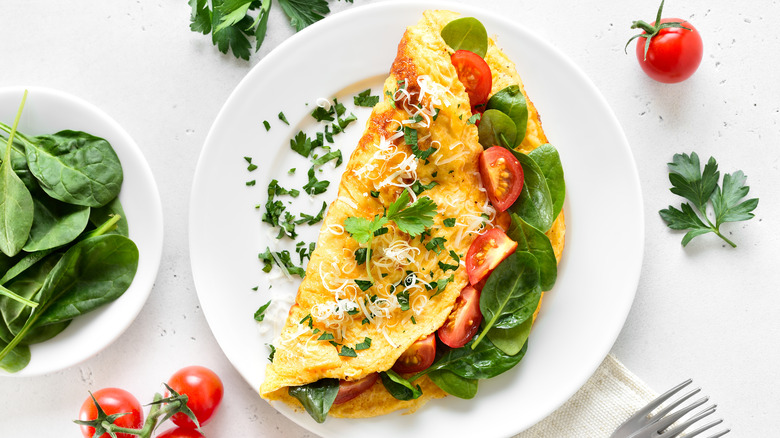
Stewart's clarified butter swap isn't her only secret to delicious omelets. In the traditional French style, she uses three eggs, which she brings to room temperature to help them cook more quickly and evenly. After pouring the eggs into the pan, she suggests stirring them gently with a fork to create a fluffy, sliky texture essential for a good omelet.
The eggs shouldn't take long to cook, and you should remove them from the heat before they are fully set, as they will continue cooking off the stove. The omelet shouldn't have any runny parts, but it also shouldn't be completely solid. Instead, it should have a custardy consistency like the inside of a crème brûlée.
When it comes to fillings, Stewart keeps it simple. She recommends freshly chopped fines herbes, a mix of fresh herbs such as parsley, chervil, tarragon, and chives. The goal of Stewart's omelet is to let the eggs shine, and these aromatic herbs add a fresh burst of flavor that elevates the rich taste of the eggs without competing with them. For serving, Stewart advises using a warm plate to keep the omelet fresh and hot longer.