

Yes, Jalapeños Aren't As Spicy As You Remember. Here's What's Happening
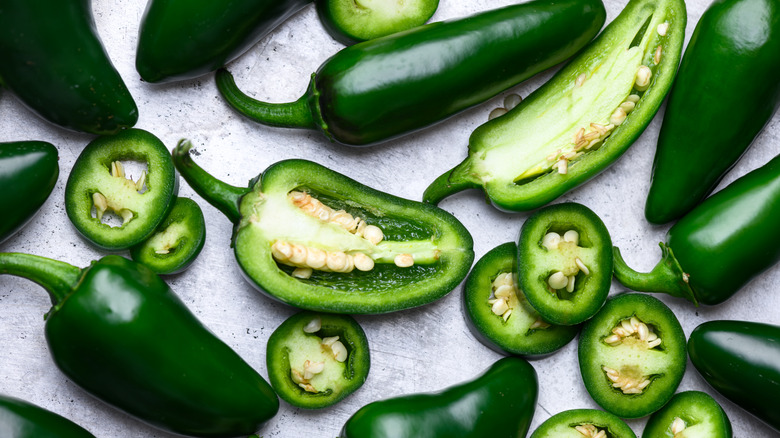
For some people, no meal is complete without a kick of heat. Jalapeños are a go-to choice for many, whether used as a core ingredient in a classic, five-ingredient pico de gallo or muddled into a spicy iteration of the perfect margarita. Their herbaceous notes, versatility, and moderate (yet satisfying) spice level are a handful of reasons why jalapeños are particularly sought after and savored. That said, those with a well-tuned palate (and old enough to remember) may have noticed that the fresh jalapeños from their local grocery stores don't carry the same kick as they did in past decades. Even when you look for the visual cues to identify the hotter pepper, chances are the heat level is not up to the standards that you were previously familiar with. If that's the case, it's not just you who feels that way. The food critic and writer, Brian Reinhart, on an episode of the podcast The Sporkful, also described a decline in the spice levels of store-bought jalapeños. Host Willa Paskin delved into the science behind why.
For starters, there are many varieties of jalapeños, each affording varying spice levels. In the 1980s, as Mexican cuisine grew in popularity among American consumers, so did the range of spice levels demanded, not only in restaurant food but also in packaged consumables like store-bought salsa. However, it was hard to predict how hot a jalapeño was going to be. To address that, producers began growing jalapeños that are consistently mild-tasting so that manufacturers can use them as a base spice level for their products and build upon them further for spicier versions.
How were mild jalapeños made?
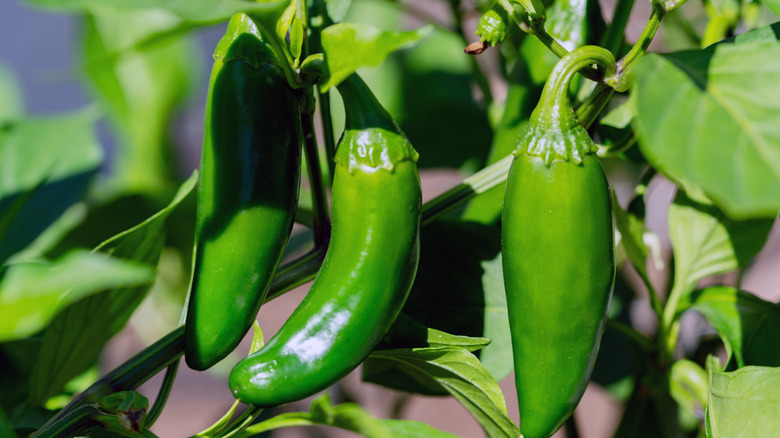
Jalapeños typically rank lower on the Scoville scale — a measure of how much capsaicin, the spice-causing compound, is in peppers — than other chiles like serranos. However, they can still pack a punch, especially for those who are more sensitive to spice. Due to that, brands needed a solution to cater to the diverse range of customers unfamiliar with and unaccustomed to the varying levels of heat from jalapeños. As a result, a milder version of this classic chile pepper was created — one that is more accessible to the palates of those desiring the peppery notes of jalapeños without too much of the accompanying burn.
The person who rescued these brands seeking milder jalapeño peppers was plant biologist and chile expert, Dr. Benigno Villalon. In the 1970s, his ingenuity for cross-breeding different peppers to create a virus-resistant bell pepper resulted in the fortuitous production of a low-heat jalapeño instead. However, in addition to the lack of heat, this version was also missing the signature flavor of jalapeños, sending Dr. Villalon back to the experimental fields of Texas A&M to develop a pepper that retained the characteristic flavors without the robust heat. Finally, in the early '80s, the "TAM (alluding to the origins of its inception) Jalapeño" came to be. This was a pepper that checked the boxes on flavor, mild heat, and bug resistance, meeting the industry standards and demands for each criterion. With food processing plants determining which crops dominate production, these large, mild peppers became the norm in grocery stores as well, explaining the mildness of today's jalapeños.