

One Of The Biggest Egg Recalls In History Affected Over 550 Million Eggs
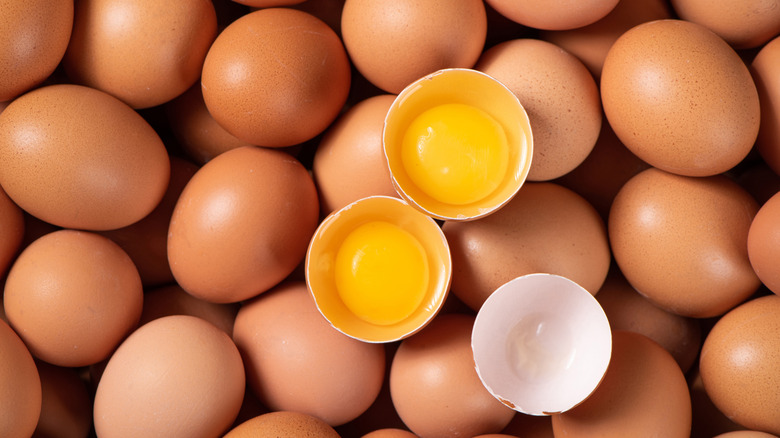
Whether it's fried, scrambled, poached, or boiled — pretty much everyone likes eggs in some form. Now, obviously, eggs are a breakfast staple, but they're also versatile enough to be part of a spaghetti carbonara, an easily customizable egg bake, or a hot bowl of ramen. Eggs are everywhere, so maybe that's why it's such a big deal when something gets in the way of our ability to purchase our beloved eggs. Sure, cost is one thing, but it becomes even more problematic — and frankly, dangerous — when there's an egg recall. That's exactly what happened in a 2010 salmonella outbreak. This was one of the biggest food recalls in U.S. history, affecting approximately 550 million eggs in 14 states.
The salmonella was traced to two farms in Iowa — Wright County Egg and Hillandale Farms — both of which were owned by DeCoster Egg Farms and Quality Egg LLC. Illness related to salmonella affected 1,900 people, and the company eventually was fined nearly $7 million in federal court and placed on probation for three years. Both of the company's owners were sentenced to three months in prison, fined $100,000 each, and forced to pay more than $83,000 in restitution.
Quality Egg disregarded the dangers of salmonella
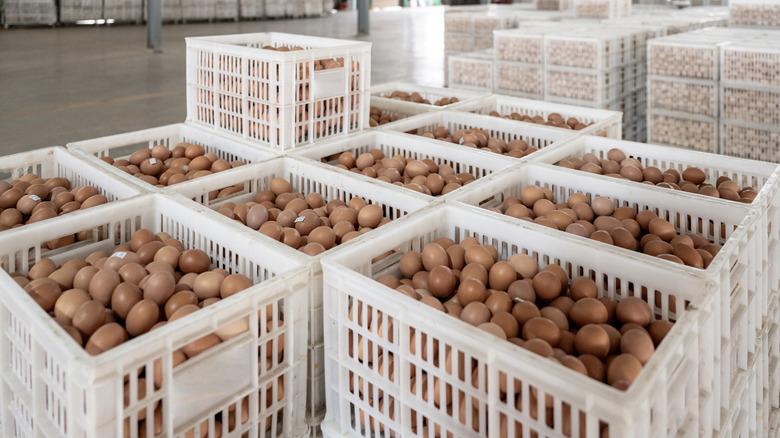
The top executives at DeCoster Egg Farm and Quality Egg facing criminal charges was obviously a big deal. And it wasn't just a one-time occurrence that got them in trouble. According to the Department of Justice, the companies had been disregarding food safety practices and misleading customers for years. Quality Egg was found to have falsified documents and pleaded guilty to bribing a USDA inspector to release eggs that didn't meet quality standards. All of this was so serious because food contaminated with salmonella can lead to serious food poisoning and, on rare occasions, even death.
Salmonella can be found most commonly in raw meat and seafood, raw or undercooked eggs, unpasteurized dairy products, and contaminated fruits and vegetables. Thankfully, nobody was reported to have died because of the recalled eggs, but the nearly 2,000 who experienced illness likely had symptoms including abdominal cramps, diarrhea, and fever, which may begin 12 to 72 hours after consuming the contaminated food or drink. While it's fortunate that most cases of salmonella poisoning don't lead to death, it's far from a pleasant experience. With that said, be sure to pay close attention to what's in your fridge, freezer, or pantry the next time you hear about a salmonella recall, and always dispose of recalled eggs classified at the highest risk level.