

The Best Way To Know If Your Garden Onions Are Ready For Harvest
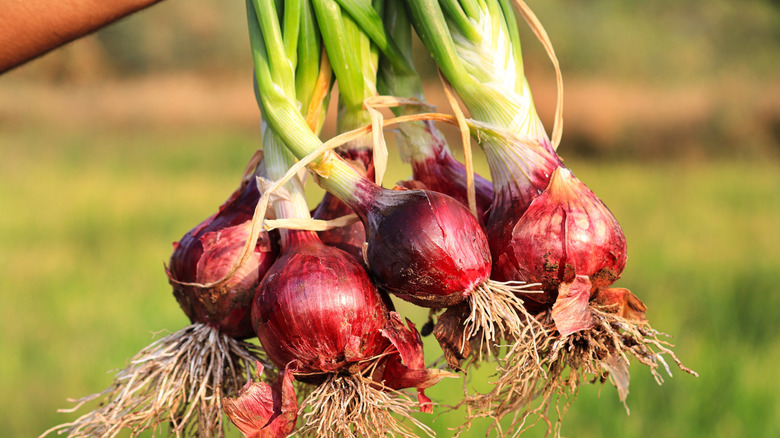
Onions are one of the most versatile veggies. Whether sliced and added to a fresh Greek salad, caramelized in butter and transformed into a rich French onion soup, or even dipped in batter and fried into golden, crispy rings, they basically fit everywhere. And never mind how easy it is to turn onions into a craveable side dish with a little help from your grill. That said, cooking with onions is simple. Growing them and knowing when to harvest them – considering the bulbs form underground — is a whole different story.
Italian-Canadian creator, garden coach, and consultant The Young Nonno, spoke exclusively with Chowhound and explained the best indicator that your onions are ready to harvest is when the tops or stems naturally fall over. "When they do this, the plant has stopped growing," he said. "Make sure the flower pod was removed earlier in the season so that the energy can go into the bulb growth."
Most onions are usually ready to harvest sometime between late July and September. You'll know they're nearing the harvest stage once they grow about 13 leaves, though some varieties may have fewer leaves when they're ready. However, to check the bulbs beforehand to avoid harvesting them too early, The Young Nonno shared a simple trick. "Gently remove an inch of soil from around the base of the plant," he advised. This way you can safely check the plant and easily replace the soil if it needs more time.
Smaller bulbs are perfectly edible, though patience is a virtue
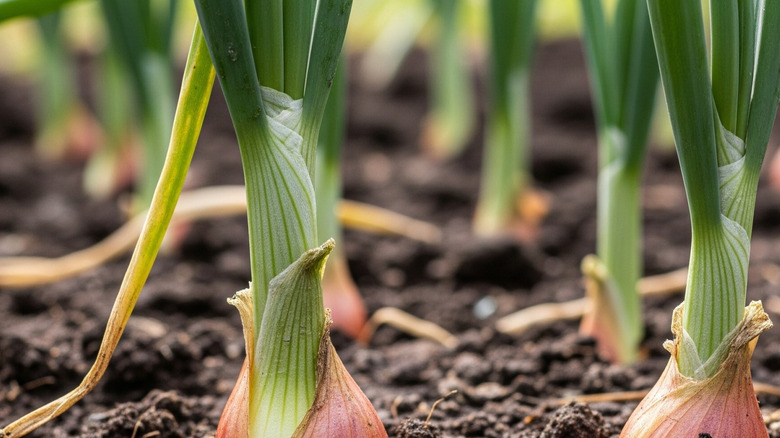
Apart from how satisfying it is, growing a vegetable garden might actually save you money. However, that largely depends on how you maintain it, and more importantly, on the timing of your harvest. Harvesting onions too early doesn't really affect their edibility. In fact, you can pull them from the ground at any stage of their growth, but it could shorten their storage life in addition to altering their flavor. But you can enjoy them right away by using the young bulbs as spring onions and the tops as green onions.
When asked about the consequences of harvesting too early, The Young Nonno noted that it can limit the bulbs' growth because they won't have enough time to fully form and mature. "The risk of harvesting too early is an undersized bulb — still completely edible (stalks too)," he disclosed, "but maybe not as big as you hoped for."
On the other hand, harvesting too late has its drawbacks and can result in split or rotten bulbs. "Leaving onions in the soil for longer than two weeks after the tops have fallen over can increase the risks of rot, mold, and disease — especially in wet conditions," The Young Nonno explained. "Sometimes the onion will start to regrow, which isn't what you want."
Curing onions after harvest is essential for extending their shelf life
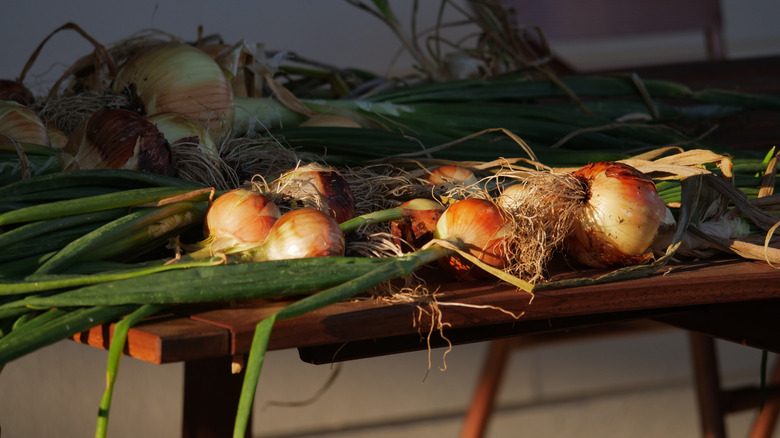
While not all onions require curing, most common varieties do. If they're not cured, they will turn soft, mushy, and last only for a couple of weeks before they go bad. To cure onions properly, you need to spread the onions out in one layer in a warm, dry, and ventilated area, without direct sunlight. "After harvest," The Young Nonno explained, "they can be hung or laid out to finish curing for another week or so." But you can leave the curing onions alone for up to six weeks.
When it comes to how gardeners should prepare onions for curing, The Young Nonno highlighted the importance of letting them begin the process while still in the soil. "Allow onions to begin curing in the ground," The Young Nonno advised. "After the tops have fallen over, leaving them in the soil for one to two weeks allows the stalks to dry and papery skin to form — but," he warned, "make sure the weather forecast calls for dry conditions."
They may look and taste similar, but onion types do differ. Even though it highly depends on the cultivar, if cured properly, homegrown onions can remain fresh for as long as 10 months. "Curing properly ensures successful, long-term storage," The Young Nonno concluded.