

What To Know About Buying Beef Tallow From Costco
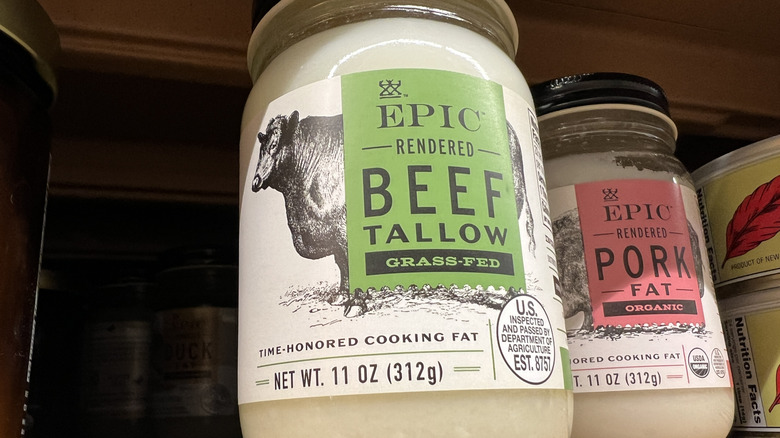
Costco members who regularly use beef tallow have reason to cheer now that Costco outlets (at least in the Midwest and Southeast) have started stocking the versatile fat. Kettle & Fire beef tallow is available in a two-pack of 14-ounce jars for $17.89. While this is quite pricey when compared to other cooking fats, such as olive oil (you can get about ½ gallon of Kirkland Signature organic extra virgin olive oil for about the same), beef tallow is kind of the "in thing" at the moment. Before the rise of vegetable and seed oils, however, beef tallow and pork lard were the primary fats in most households. The current trend is more of a comeback.
There are several factors behind the resurgence of cooking fat that's slowly rendered from leftover sections of beef. The Kettle & Fire beef tallow at Costco contains no additives and is therefore pure fat. This makes it a clean, albeit calorie-dense, ingredient. The high smoke point makes it perfect for frying and searing, and the single-ingredient nature has proponents of beef tallow even claiming it's good for the skin (Kettle & Fire doesn't recommend using its product for skincare). It also works well for seasoning cast iron cookware, though at this price, be careful of how you use this premium cooking fat. While it certainly amps up flavor in a wide variety of dishes, and it's good to use as part of a broader range of cooking fats, beef tallow has its pros and cons and may not be the kitchen panacea that many claim it to be. Don't throw out all your other oils just yet.
Is beef tallow worth the extra cost?
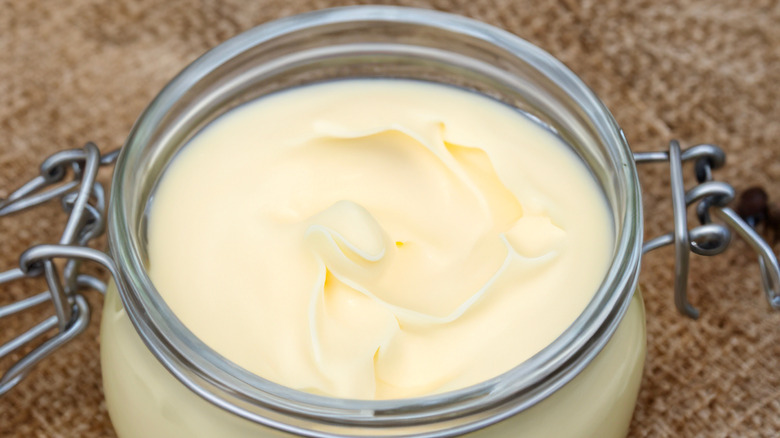
There's no escaping the fact that switching to beef tallow increases the cost of groceries significantly, especially if it's used as the primary cooking fat. One reason for beef tallow's sudden spike in popularity is people moving away from seed oils — which have long been the primary cooking fat for most households — for health reasons. The question of which type of cooking fat is healthier remains nuanced, complex, and highly debated. While chemically refined seed oils are best avoided, animal fat, which has a higher proportion of saturated fat, doesn't have a clean health chit either. In fact, McDonald's stopped using beef tallow in the 1990s and switched to vegetable oil for frying — a move that was considered pro-health at the time.
Health aspects aside, there are lots of ways to cook with beef tallow, plus it beats out most other fats when it comes to adding flavor. Its light beefy notes add depth to dishes and the high smoke point means you can cook without fear of it breaking down and adding an unpleasant tang. It also blends seamlessly into most cuisines; you can use it in a stir fry, for roasted vegetables, making pie crusts, and even a rich sauce or roux. However, given its fat content and hefty price, it's best to keep beef tallow for when you really want that flavor boost — as one would a high-end butter or imported cheese.