

How Jacques Pépin Keeps His Vinaigrette From Clumping

The art of dressing salad is perhaps a little more complex than you might think. Almost every cuisine has its own techniques when it comes to this simple act, whether you're using a herby dressing like zhoug (a Yemeni specialty that's great for bringing zest and brightness to almost any dish) or keeping things simple and coating your salad in olive oil, salt, and lemon. But one of the most popular dressings — and one of the most versatile — is the simple French vinaigrette. This basic emulsion of acid, fat, mustard, and a little seasoning is all you really need to bring out the absolute best in your greens, and with a few high-quality ingredients, you'll have yourself a salad to die for in no time.
To make the best vinaigrette, there are a few simple tips and tricks to follow — and for those, we turn to none other than Jacques Pépin, who shared some helpful advice on TikTok. The vinaigrette in question is a distinctively French dressing, and when it comes to French food, Pépin is a true guru. For vinaigrette, he advises on making your dressing nice and loose — keeping the emulsion very light, and even letting the dressing separate. This will allow the dressing to coat all the leaves of the salad nicely whilst preventing clumping, a problem that would leave you with a thick, sticky salad, not a lovely crunchy bite.
Use a ratio of 4:1 for the best vinaigrette
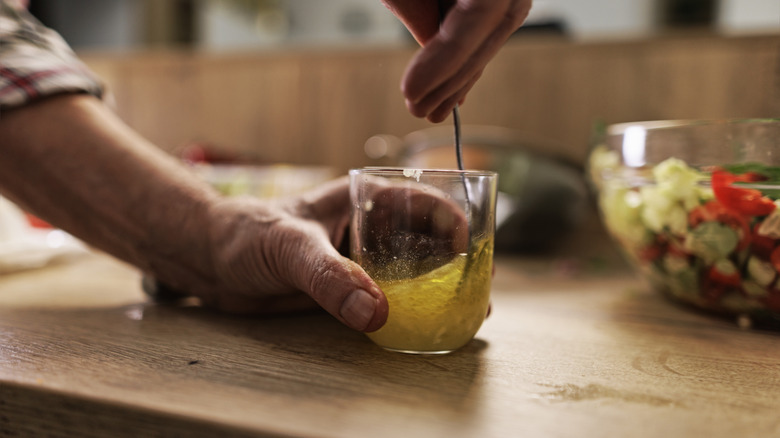
To make sure your vinaigrette walks the fine line between cohesive and too thick, a reliable ratio is all you need. Aim for a ratio of 4:1, oil to acid, which will ensure your final product brings sharpness and brightness to your salad while remaining just cohesive enough to give your leaves a nice glossy coating.
The four parts of oil here should ideally be extra virgin olive oil, which will add some fruity complexity to your dressing and round out the sharpness of the mustard. It might seem like a lot of oil, but that's what you need to get that nice glossy coating. Of course, if you want to switch things up, you could also use a mixture of neutral and flavored oils like walnut or even sesame oil, each of which will impart its own unique flavor to the dressing. For a super savory twist, you could even incorporate some bacon grease into the mix for a complex, subtly smoky dressing.
For the acid, choose something bright to keep the vinaigrette balanced, but still packed with flavor. Sherry vinegar is a great option here, as are red wine and champagne vinegar. Lemon juice (Ina Garten's vinaigrette acid of choice) will give you a slightly sharper result, but it is great if you want a vibrant, punchy dressing. The order you add your ingredients matters here — make sure you get the salt, pepper, acid, and mustard nicely incorporated before streaming in your oil — while whisking — to make sure that everything comes together properly.
Pépin's trick for preventing clumping
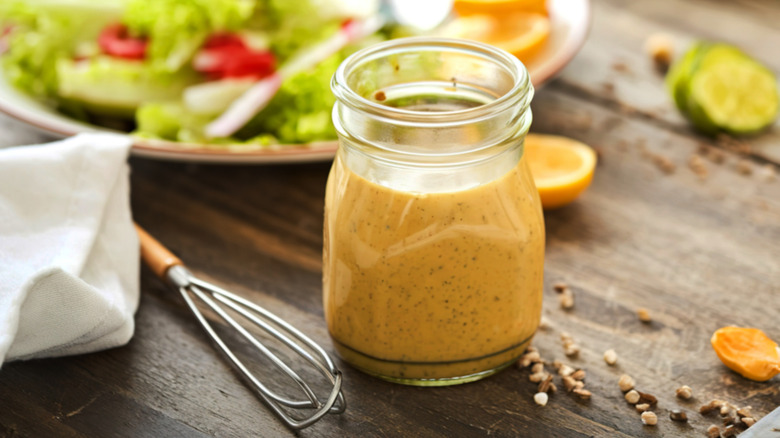
Jacques Pépin is particularly clear on one thing when making vinaigrette: You don't want to end up with mayonnaise. This will happen if you let your ingredients get too homogenized or if you use too much oil, which will result in the mixture thickening up into a delicious sauce — but not one ideal for dressing a light, refreshing green salad. Thick, creamy dressings might be great for salads with a bit more body to them (commonplace in the United States but less popular in Pépin's home country of France). By avoiding overmixing and letting the dressing naturally separate, you get a dressing that distributes more evenly and stays light, complementing the greens rather than overwhelming them. You're aiming for a light gloss, rather than a heavy coating.
If you use a light touch with your dressing, you'll end up with a salad that actually tastes like, well, salad — not just the sauce you put on it. It's a simple example of one of the most important principles in cooking — balance is everything. The oil gives body, the acid brightness, and the mustard a little creaminess and zing. For convenience's sake, you don't even need to use a bowl, or a whisk — just whack all your ingredients into a jar (or a measuring cup, another classic method beloved by Ina Garten) and give them a shake just before you dress your salad — that way, you have an easy way of storing your dressing for the next time you use it.