

Prevent Pantry Chaos Forever With This Open-Container Rule
We may receive a commission on purchases made from links.
You find a new recipe, go out and buy everything you need for it, come back, follow the recipe perfectly, and the dish is a smashing success. Great! Now you're left with a recipe's worth of open jars and ingredients with varying expiry dates. Plus, you don't really feel like cooking the same thing again. Repeat this process a few times, and soon the pantry is a chaotic rabbithole you want to avoid. Nobody really enjoys it, but an effective assessment, cleanout, and restocking of the pantry is essential to avoid wastage and to make the most of those ingredients you've spent hard-earned money on. Fortunately, it doesn't have to always be this chaotic.
Chowhound got an exclusive with Jay Kumar, executive chef and owner of LORE in Park Slope, Brooklyn. The restaurant, which was awarded the Michelin Guide Bib Gourmand for 2024 to 2025, serves up Indian cuisine for a global palate. As someone who handles an astounding range of ingredients on a daily basis, Kumar dropped some valuable tips on how home pantries could learn from their professional counterparts. His first tip — label ingredients as soon as they are opened.
"Most restaurant kitchens rely on labeling products accordingly by expiration date to ensure food safety and freshness, and we use those items first. When an ingredient is opened, we will usually label the date it was prepared or opened and when we should use it by or discard," he explains, before delving into more pantry organization tips. To put his labeling tip into practice, consider picking a simple Nelko wireless label maker.
Pantry stocking lessons from a professional kitchen
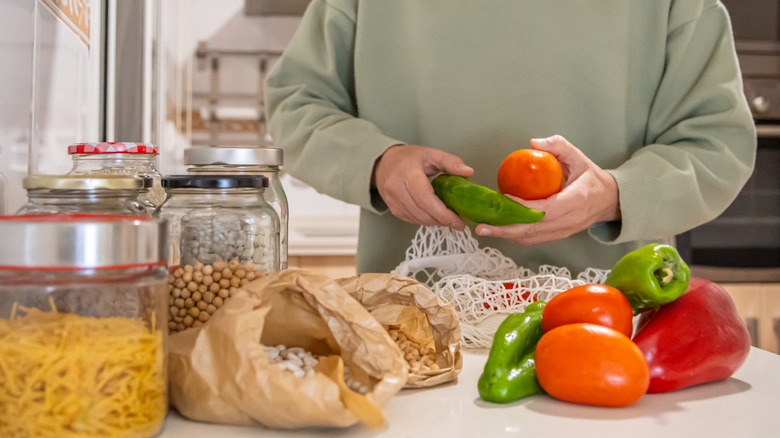
Pantry organization depends on two essential factors — stocking up and using up. "Older food inventory should always be used before newer stock to try and eliminate as much waste as we can and make the products we do have last as long as possible," says Jay Kumar. "For your family's kitchen, I would suggest moving older products to the front of your fridge or pantry when unloading your groceries."
When it comes to using up open ingredients, take inspiration from how grocery stores deal with expired food — take note of the ingredients whose best-by or expiry dates are approaching and put them in the "clearance section." At home, this translates to, as Kumar suggests, putting them up front (or even on the kitchen counter) so that you remember to use them up and can even plan your next few meals around the ingredients to be finished.
The other aspect of avoiding pantry chaos, stocking up, is equally important. Keep in mind that there are certain foods that don't expire, while some surprising pantry staples don't last as long as you think — nuts, spices, and even olive oil, for instance. "We always try to order carefully and buy ingredients at a usable volume, and design menus that allow for certain ingredients to be used across multiple dishes to avoid food waste as much as possible," reaffirms Kumar. Being prudent when shopping and meal planning can actually reduce a ton of wastage.
Categorize your pantry items to minimize waste and reduce prep time
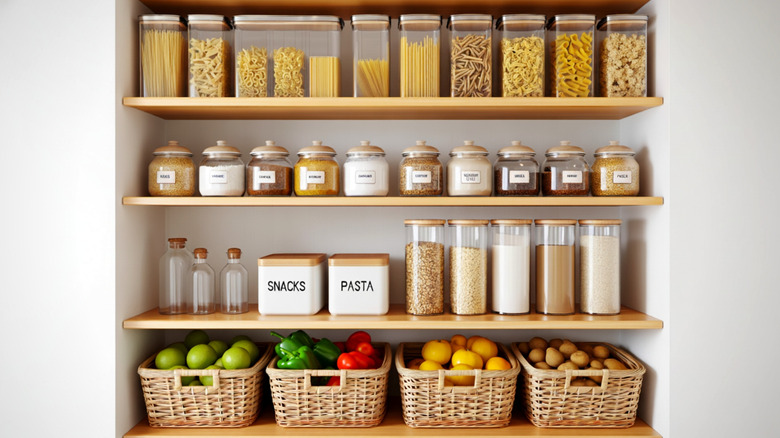
While labeling can help quickly tell you how much time a certain ingredient has without having to squint and read the fine print on the packaging, you first have to know where the ingredient is in your pantry. Jay Kumar has a simple solution for this. "Grouping together similar items like dairy, condiments, or snacks can make this rotation easier as well as keep things organized," he explains. Therefore, your pantry items can essentially be arranged as follows — from left to right on the basis of category, and then using the depth of the pantry shelf to organize on the basis of urgency to use.
Per Kumar, unopened shelf-stable items should also be kept separate from open items, with the latter in more easily accessible spots. "I would start by dedicating a small bin or section of a shelf labeled 'Opened' for items like rice, pasta, nuts, or flour that have been opened but aren't finished yet. Keep unopened backups grouped together, either in another bin or a separate part of the shelf. This will also help you avoid purchasing items you already have," he says.
Finally, to easily find ingredients and keep your pantry looking consistent, consider using a set of transparent, airtight containers like these Kemethy pantry organization canisters that even come with reusable labels. "Anything that you can stack always helps maximize shelf space and keep the kitchen organized," adds Kumar. Every bit of pantry real estate counts!