

4 Reasons Your Cookies Could Be Coming Out Flat
We may receive a commission on purchases made from links.
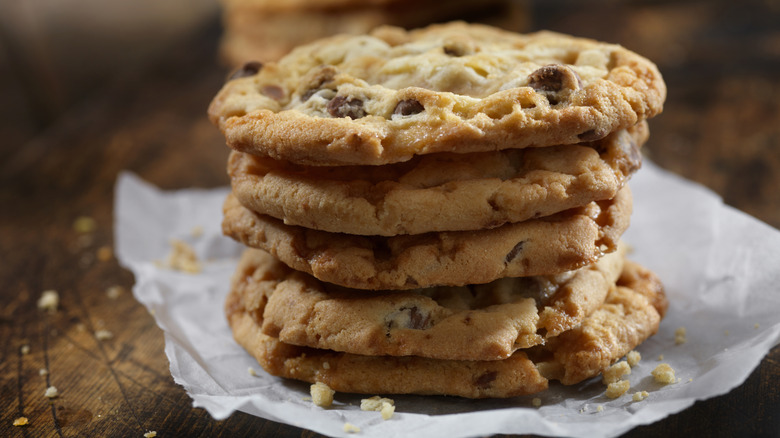
For such a simple dessert, cookies can sure be finicky. Small changes in ingredient amounts, baking temperature, dough ball size, and more can all transform the flavor and texture of your surely mouthwatering circular confection. Of course, everyone has their own preferences: Some want their cookies hardly baked in the center while others are firmly on team crispy cookie (and so on). We even acknowledge that for some, a thin, flat disc is far superior to a mound of tall, soft cookie dough.
But, if that's not your goal, we've got your back with four solutions to fix your flat cookies exclusively shared with Chowhound by expert Vaughn Vreeland, the supervising video producer for NYT Cooking who literally wrote the book — "Cookies: The Best Recipes for the Perfect Anytime Treat" — on the classic dessert. Turns out, there are several reasons your cookies can turn out flat, ranging from ingredients — Vreeland says, "Every ingredient in a cookie contributes a great deal to its structure and texture," after all — to some more technical aspects of baking. Most of all, don't panic; learning from your common cookie-baking mistakes is the best way to make better cookies in the end.
An excess of white sugar
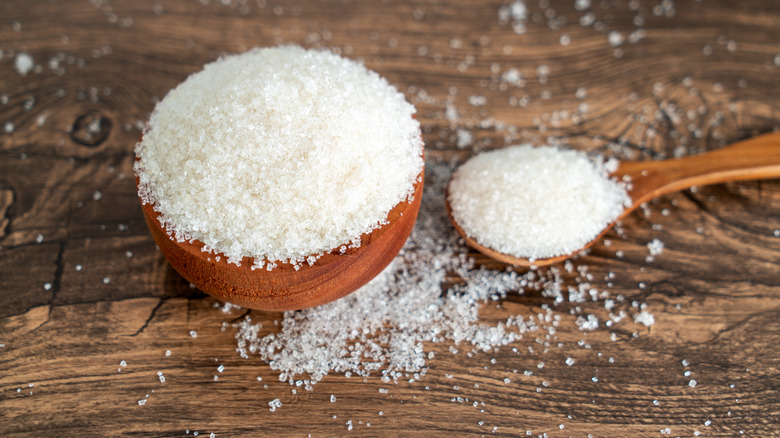
Again, not all cookie recipes are created equal, but there are some ingredients that are pretty common. One of those is sugar. Of course, sugar is there to sweeten your cookies to that perfect addictive level, but it also does a lot more than that in forming the texture of your cookie, plus its exact functions actually depend on the type of sugar you're using.
Many recipes call for both granulated sugar, which Vaughn Vreeland says helps cookies to spread out, and brown sugar, which he says helps create chewiness. Putting that all together, the cookie expert's first word of advice when it comes to thin cookies makes a lot of sense: "Too much white sugar in a recipe could be the issue." Pull back on the granulated stuff, maybe add a bit more brown sugar, and your ratios should even out (aka, your cookies should get a little taller).
Forgetting to chill the dough
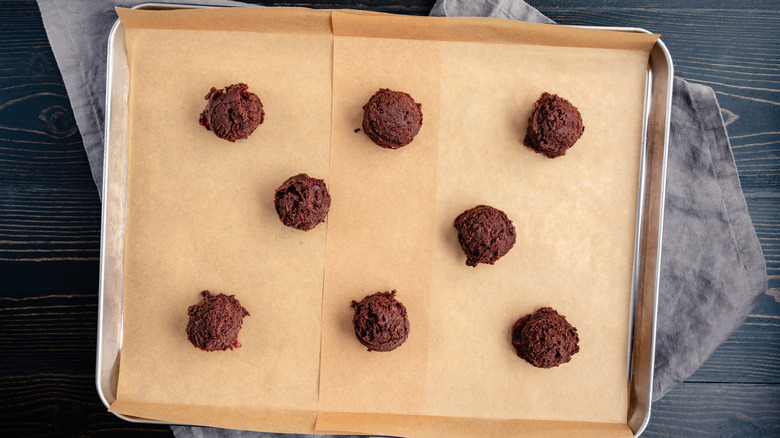
Ah, the classic case of running out of patience halfway through a bake. We know the hour-long-plus chilling time many recipes mandate for your dough might feel eternal and a little unnecessary; aren't you about to put it in a hot oven anyway? Why make it cold first? But Vaughn Vreeland says the temperature swap is an absolutely essential piece of the equation when it comes to getting properly voluptuous cookies.
"If using a liquid fat, like melted butter, and you don't chill the dough before baking, [your cookies] could turn out like pancakes," Vreeland warns. That little break time in the fridge helps your dough stiffen up so it can better hold its shape while it's in the oven. As an added bonus, some cooking gurus say that letting your cookie dough rest in the fridge for a while can also improve its flavor, much like letting meat marinate.
Overcrowding the cookie sheet
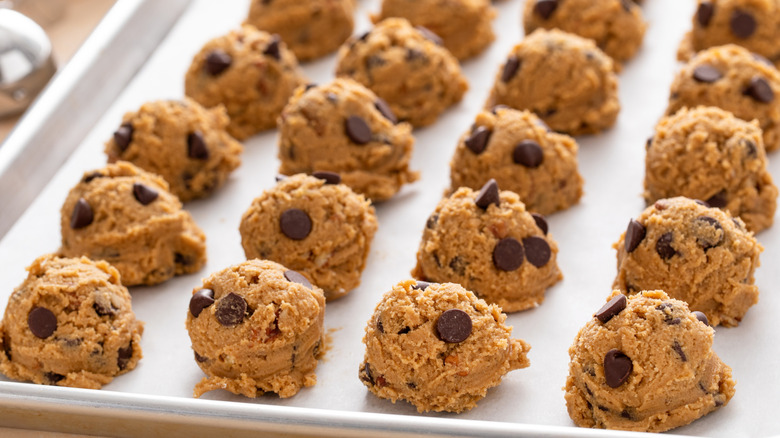
File this tip under "things that are easy to forget" when it comes to proper baking technique. Luckily, we have Vaughn Vreeland to guide us. Although it's sometimes tempting to squeeze all the dough onto one sheet so you don't have to rip off parchment paper for another pan, there are some issues that arise.
First, your neatly rolled balls of dough more than likely conglomerate into "one giant cookie mass," as Vreeland calls it, spreading out so far that the edges of each cookie merge together. Beyond that, Vreeland says closely spaced cookies may cause the pan to heat up faster than usual, melting the fats and causing them to go limp and flat. In short, to avoid the one-giant-pancake-cookie situation, proper spacing is the name of the game.
Expired leavener
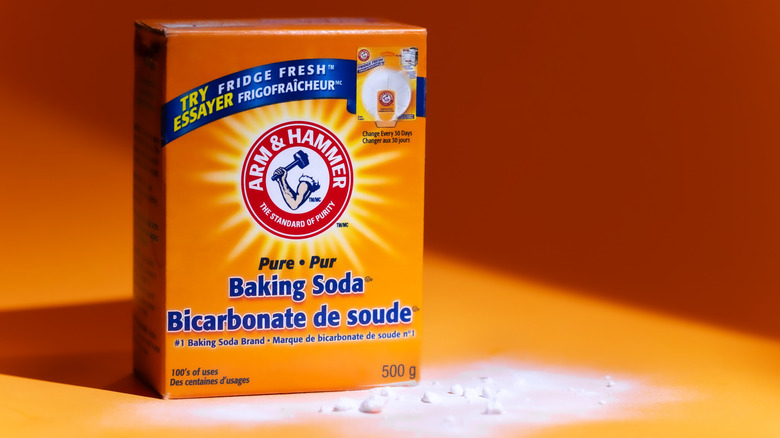
When we're talking about flat cookies, it makes sense that we should take a moment to consider the ingredient most responsible for helping them rise: Your recipe's leavener, whether that's baking soda, baking powder, or a mixture of both. "Make sure to check that your leavener, like baking soda or baking powder, is fresh and relatively within the sell-by date," Vaughn Vreeland recommends.
In general, while neither baking soda or baking powder carry a risk of spoiling in a way that's a danger to your health, there is a point at which it becomes less potent, making it harder for your bakes to rise. When they're sealed, both baking soda and baking powder can last two to three years before reaching this point. Once opened, both types of leavener stay good for around six months as long as you store them properly in a cool, dry place, such as your pantry. If you still have some after that, repurpose the excess creatively and use baking soda to clean your kitchen.