

Raising Cane's Was Expected To Fail: How The Chicken-Finger-Only Empire Beat The Odds
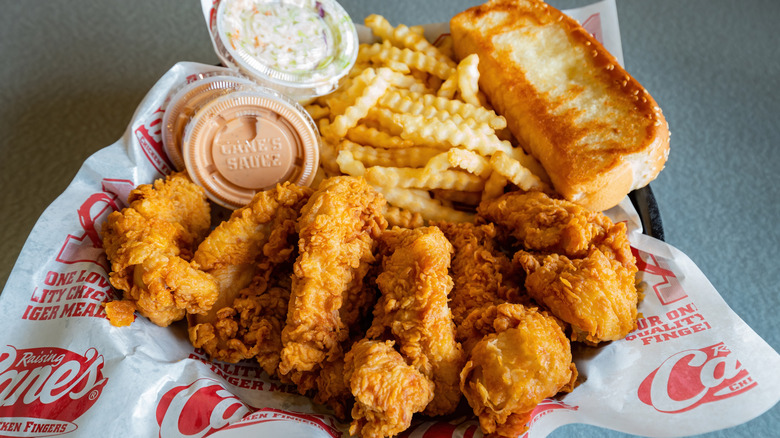
Imagine a pitch by a 20-something-year-old, whose big business idea was to open a joint that only served chicken fingers. Does that sound like something that would have a cult following as a billion-dollar brand? If the chimes of doubt sound, you're not alone. But that's how the story of Raising Cane's Chicken Fingers began — when Todd Graves pitched the idea to, not only his college business professor, but also several investors. Everyone he approached told him his idea would never work, but he and his longtime friend, Craig Silvey, overcame the odds, and as of 2025, Graves is America's richest restaurateur.
Graves' road to success began in the mid-1990s when he and Silvey presented a business plan for a chicken-finger restaurant as part of a college course. The plan received a C-, with the professor emphasizing that a restaurant only focused on chicken fingers would never work. Steadfast with determination, they moved on to bank loan investors who gave a similar headshake, rejecting the proposal. Impressively, Graves and Silvey didn't let this deter them as they moved forward, using the funds Graves' put together through jobs at an oil refinery and as an Alaskan fisherman. Finally securing a loan from the Small Business Administration, Graves and Silvey opened the first Raising Cane's location in Baton Rouge, Louisiana, in 1996. Since then, the fast food brand has expanded internationally with more than 800 locations.
Despite adversity, Raising Cane's continues to be a success
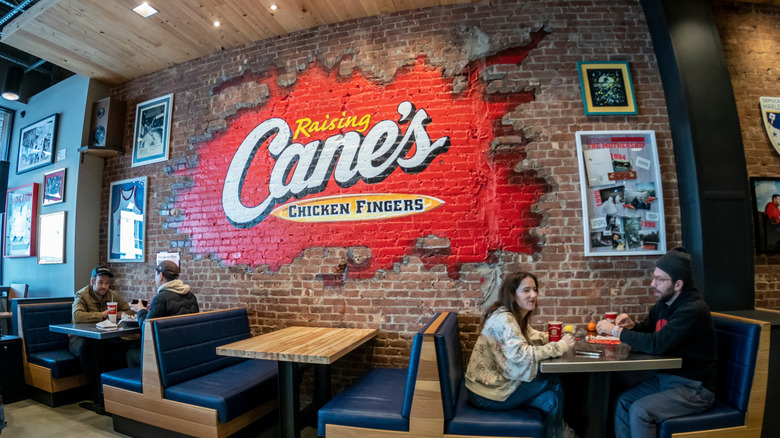
Raising Cane's success came from a laser-focused menu, popular chicken-finger recipe, and sourcing the best chicken. The only cut of chicken Raising Cane's uses is the tenderloin. As successful as Raising Cane's has been, it didn't happen without overcoming significant challenges. When Hurricane Katrina struck Louisiana in 2005, it caused widespread destruction. The Category 5 hurricane's floods heavily affected many businesses, including 21 of Raising Cane's 28 locations. Graves worked quickly, gathering unaffected team members to act as clean-up crews while operating his less-affected stores, creating chicken fingers under a boil-water notice.
In 2020, COVID affected Raising Cane's similarly, as it did to other businesses. However, a culture of transparency, Graves' appreciation for workers and patrons, and the company's inherent gumption helped Raising Cane's go from being down 30% (due to the loss of in-house diners) to being up 10%.
Certainly, Raising Cane's is a company worthy of its fan base and is among the best fast food chicken tenders out there. Given its popularity, anyone hankering for a meal from the chicken-finger chain should know when to go to Raising Cane's to avoid the rush. This is during off-peak hours, such as before 11 a.m. and between 2 p.m. to 6 p.m.