

The Flavor-Packed Science Behind Why We Love The Sweet Heat Of Spicy Candy
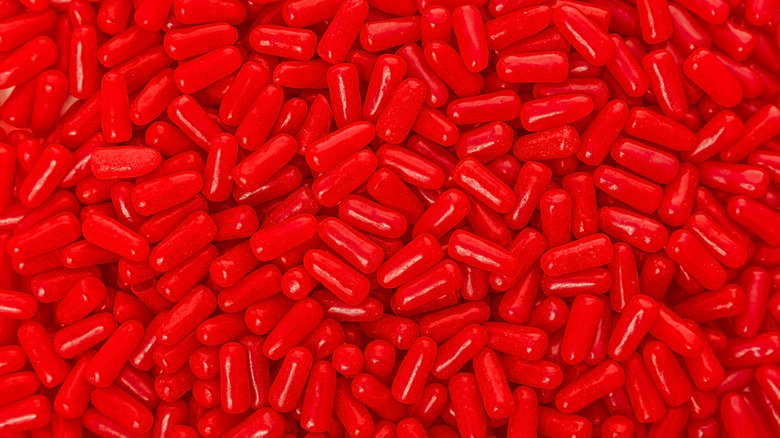
Spicy candy occupies a special place in the candy world. From Hot Tamales to chili-filled tamarind candies, there are plenty of options that will give a spicy sweet kick to your taste buds. But what exactly is it about spicy candy that makes us go back for more time and time again? Kantha Shelke, PhD, senior lecturer on food safety regulations at Johns Hopkins University and founder and principal at the food science and research firm Corvus Blue, LLC, recently shared some useful insights on the subject with Chowhound. As a food scientist, Shelke understands well the science behind why certain foods are irresistible to our taste buds. When it comes to the sweet heat of spicy candy, her opinion is very clear. She says, "Hot and sweet candy is a brilliant dance with the senses!"
It turns out it has a lot to do with the contrasting sensations we get from these sweet and spicy treats. "The capsaicin or piperine (from the chili or black pepper) activates pain receptors (TRPV1) that create the burning sensation in the mouth," Shelke explains. "Concurrently, the sugar in the candy stimulates a completely different set of taste receptors. The brain now has to process both simultaneously, and the sweetness blunts the heat perception just as the capsaicin and piperine tone down the sweetness in the mouth." In other words, sweet and spicy candy activates contrasting taste buds that balance each other out.
A coating of sugar on the tongue can also help dull the full effects of capsaicin and piperine. "Consequently," Shelke says of this "barrier," "the heat becomes tolerable and even enjoyable by allowing one to taste the pepper's nuanced flavors — fruity, smoky, floral — rather than just feeling the heat-associated pain."
Not everyone is a fan of the spicy sweet combination

If you've ever wondered why some people love the combination of sweet and spicy while others want nothing to do with it, there is a scientific reason behind that as well. "This variation is a combination of both nature and nurture," Kantha Shelke says. "Biology sets the baseline sensitivity, but experience determines like or dislike." Humans are equipped with taste receptor genes and receptors that are sensitive to things like capsaicin, the chemical compound that makes chili peppers taste hot and spicy. These receptors influence how intensely we experience flavors, whether they are sweet or hot. Because we all have different variations in these receptors, those perceptions will vary from person to person.
Consider cilantro. This unassuming herb is quite polarizing, with people either loving it or hating it. Even notable chefs like Julia Child and Ina Garten weren't shy about their dislike for the stuff. But, as Shelke explains, science is actually behind this phenomenon as well. A specific olfactory receptor gene makes some people interpret the taste of the herb as citrusy and fresh, while people with a variant in that gene perceive it as metallic or soapy. It's no one's fault for not liking cilantro; it's simply biology. The same holds true for spicy candy.
But repeated exposure can change this. "Sweet-spicy preference is heavily shaped by whether you grew up tasting [foods such as] Mexican chamoy, Thai sweet chile, or Indian sweet and spicy chutneys," says Shelke. "Repeated exposure also desensitizes pain receptors and makes heat more enjoyable than for someone who is experiencing it for the first time."
Flavors you can count on
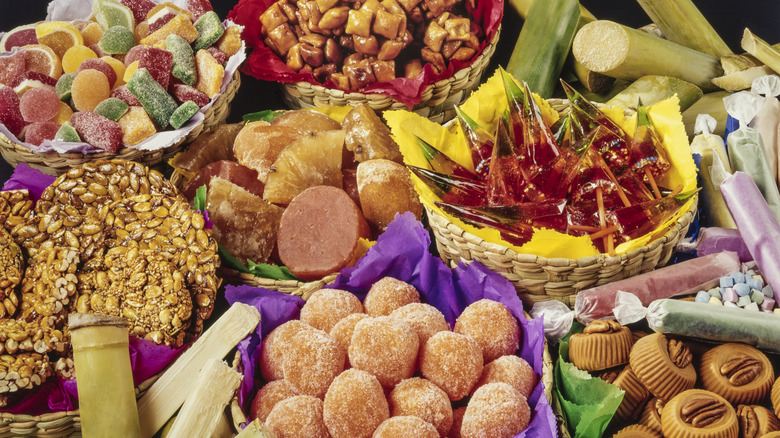
Sweet and spicy comes in lots of forms, like a sweet and spicy chicken dish that will make your mouth water, but when it comes to candy, there are some tried and true flavor combinations that you can count on. "The classics in the confectionery aisle tend to be chile-tamarind, chile-mango, chile-watermelon, and chile-chocolate," says Kantha Shelke. "All of these stem from Mexican and Latin American candy traditions."
Mexican candy is extremely popular thanks to its intoxicating flavor profile. If you haven't tried it, there are some really great options that are well worth your time. According to Shelke, the flavor combinations of Mexican and Latin American candies are complementary. "People like them because the fruit's natural acidity and aromatic compounds enhance rather than drown the capsaicin, while sweetness provides sensory relief."
And as much as science can explain the success of these flavor combinations, there is a historical component that makes these pairings far from random. "They have deep culinary roots in Mesoamerican cuisine, where the sweet-spicy balance has been perfected over centuries," says Shelke. "Similarly, Indian and Thai cuisines perfected the sweet-sour-spicy trinity over millennia. These bold, contrasting flavors combat heat-induced appetite suppression and provide sensory stimulation in tropical climates where subtle flavors can feel flat."