

How To Make Tea Using Whole Cinnamon Sticks
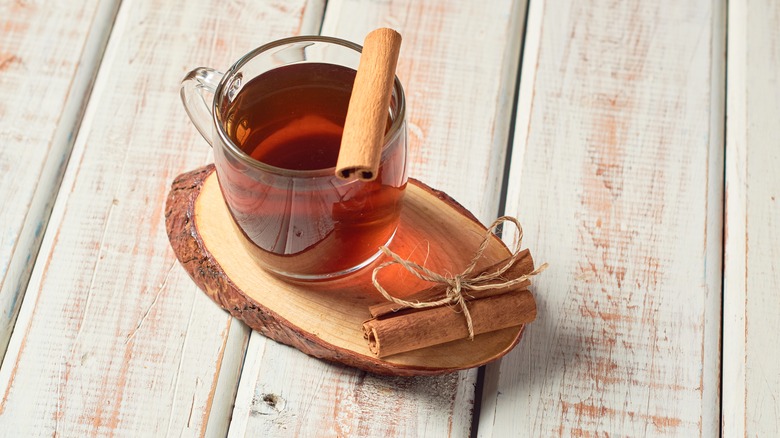
As the temperatures drop, a cozy cup of hot tea infused with seasonal spices becomes an integral part of both a warming kickstart to the morning and an evening wind-down ritual after a long day. From preparing a caffeine-free golden latte to whipping up an easy, four-ingredient cinnamon syrup, there are multiple ways to incorporate the coveted seasonal spice, cinnamon, into your beverages. This includes a simple tea using whole cinnamon sticks. Every sip of the brew delivers the sweet and spicy notes that make cinnamon a beloved spice featured in seasonal recipes, like cinnamon rolls and creamy bowls of slow cooker apple-cinnamon oatmeal.
To make a simple cinnamon tea for one, all you need is one cinnamon stick — which, of course, you can adjust based on how strong of a cinnamon flavor you desire — 1 cup of water, and your choice of sweetener to balance the spice if it seems a bit overpowering. Once the water comes to a boil, add the cinnamon stick and reduce the heat to a gentle boil so that all the essence from the spice infuses into the liquid. The longer the steeping period, the stronger the cinnamon flavor, but about 15 minutes is a good duration. You can make your tea more exciting by also incorporating other warming spices like nutmeg, ginger, cloves, or cardamom. Or, you could brighten up your sip with fresh lemon. For folks who still opt for chilled tea on a cold winter evening, you can very much serve your cinnamon brew iced as well.
Benefits of cinnamon and which type to use for the tea
Cinnamon is a prized spice in Ayurvedic medicine for its purported anti-inflammatory properties, ability to regulate blood sugar levels, and digestive benefits, among other health-supporting functions. Cinnamon's beneficial properties that have been studied and celebrated in ancient Ayurvedic and Chinese medicine are also being supported and acknowledged using the scientific methods of our day and age – a nod to the valuable wisdom of those who preceded us.
There are a variety of ways to add this beneficial spice to your culinary creations, and making tea is possibly one of the easiest methods which requires less than a handful of ingredients. Keep in mind that not all cinnamon is created equally, though, and there are two main types, Cassia and Ceylon, both of which share some similarities and notable differences.
For a more delicate flavor in your tea, Ceylon cinnamon, which is a variety native to Sri Lanka, would be the ideal choice. However, this type of cinnamon might be harder to come by unless you shop at a specialty or international market, and it can be more expensive. Cassia cinnamon, on the other hand, originates in regions along Southeast Asia, and is more commonly available in conventional grocery stores. It features a bolder, spicier flavor profile due to larger levels of the compound cinnamaldehyde. Cassia cinnamon also contains higher amounts of coumarin, which can be toxic if consumed in large quantities. The differences in the taste of each type are attributed to varying concentrations of their composite compounds and essential oils, so pick the right variety based on the flavor you want in your cinnamon tea.