

The Key To A Well-Mixed Chopped Salad? It Starts With Your Knife
We may receive a commission on purchases made from links.
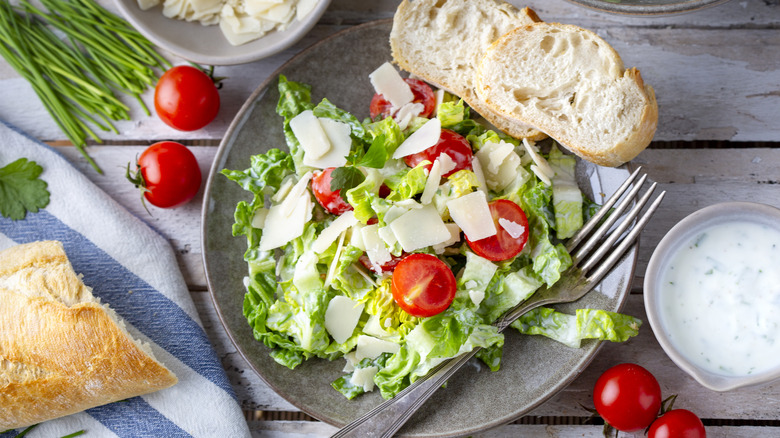
A dinner party wouldn't be complete without a fresh and crispy salad. When it comes to perfect salads, there's more than one reason restaurant salads are better than yours. Sure, they use the best ingredients, but there's some proper preparation you need to consider. You can level up your salad game by chilling the salad plates or bowls before serving, but how do you get your chopped salad to remain perfectly firm and crunchy without ruining the greens? It all starts with the knife.
For some expert advice on the subject, we reached out to Clem Haxby, nutritionist, chef, and culinary director of the book, "The Salad Project: How to Build Unlimited Salads" for a Chowhound exclusive. Haxby says "a good knife makes all the difference. You want clean cuts so the ingredients stay crisp and don't bruise." You need a sharp, trustworthy knife because not only does a dull knife bruise your lettuce, turning it an unappetizing brown, but you're much more likely to cut yourself with a dull knife since they're unwieldy and harder to control. Instead of cutting directly through the lettuce, you have to use much more pressure, which can often lead to mistakes — such as a blade slipping off its target to cut into a finger. Plus, you get uniform cuts that mix easily into the salad with a sharp knife. But what kind of knives should you use for your chopped salad, and how do you keep them good and sharp?
Expert advice on the best knives for your salad (and how to keep them sharp)
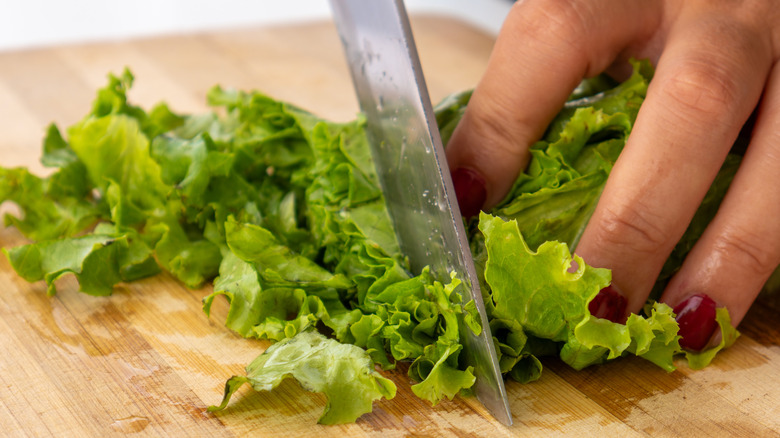
Clem Haxby says "a sharp chef's knife or santoku is ideal — it gives you control and precision for uniform pieces, and they have size on their side, which helps hugely." Santoku knives, such as the Cutluxe 7-inch santoku knife, are essentially the Japanese version of the all-purpose chef's knife. Santoku's are generally a bit smaller than typical chef's knives, running about 7 inches and shorter. They're great for chopping, and their precision blades also make them ideal for julienning. Because the blades are particularly wide, they can be used to easily gather ingredients from the cutting board to toss into your salad. Chef's knives are standard in American kitchens and typically have longer, curved blades that make them great for chopping veggies and mincing ingredients with a rocking motion. Either make great knives for a chopped salad, so consider what else you may use them for before purchasing.
For his last bit of salad preparation advice, Haxby says to "sharpen before use and avoid serrated knives; they tear rather than slice, which can make greens wilt." Sharpening your knives isn't just something you do every few months, it should be done after every other use. You can also give them a quick hone before using them for almost anything. There are some great knife sharpeners for home chefs, though some are more complex than others. The Sharp Pebble precision adjust knife sharpener is super easy to use; you can adjust the angles for different knives and the ergonomic handle adds a safety element that saves you from unwanted cuts on your person. Once you start approaching your chopped salad with a sharp blade, the extra time put in comes through in the flavor and crispness of the salad.