

The Common Mistake Ruining Your Homemade Soft Pretzels Texture (And How To Fix It For Good)
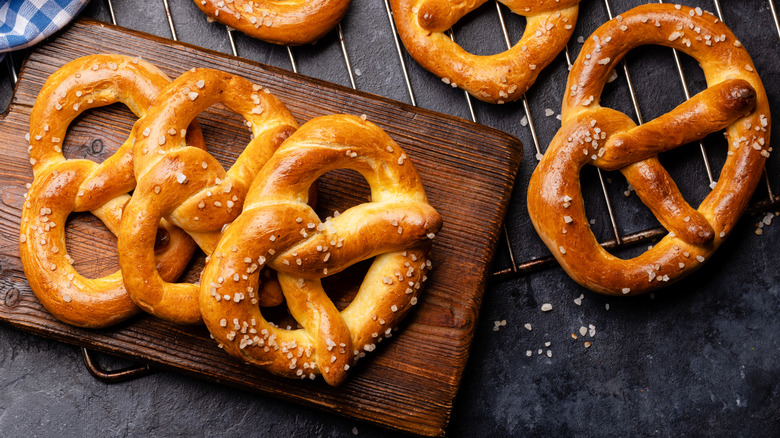
When most of us think of soft pretzels, images of sports stadiums, amusement parks, and various oktoberfests that take place every year immediately come to mind. Though enjoying a hot pretzel has definitely become synonymous with special outings, you don't have to wait until your next baseball game or trip to the mall to enjoy one. Making pretzels at home is straightforward, though it does involve some maneuvering with rolling, twisting, and boiling. Chowhound spoke with Michelle Doll Olson, senior culinary manager at HelloFresh (which has a Pretzel Day homemade pretzel kit inspired by The Office), to find out what trips people up the most when making homemade soft pretzels. Surprisingly, she says it has to do with how much flour is used on the rolling surface.
"When you're rolling out the dough to form the pretzel, some people will sprinkle flour on the surface," Doll Olson exclusively told us. "This can make the dough slide around instead of being tacky enough to get purchase on the table and let itself be stretched." It makes sense that most people (especially bread makers) would intuitively sprinkle generous amounts of flour on the surface where the dough is rolled, but soft pretzels are one instance where this can actually backfire. Too much flour can result in dough that is too dry, resulting in pretzels that have a stiff texture.
How to properly work with pretzel dough
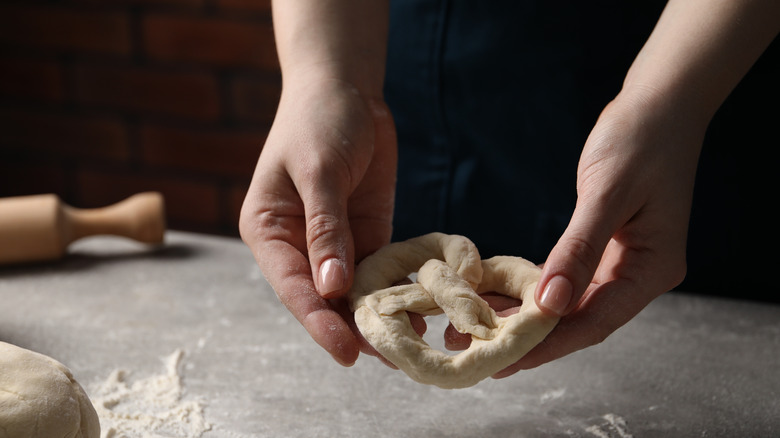
When rolling pretzel dough, Michelle Doll Olson says patience is key. "If the dough isn't stretching, give it a few minutes to calm down," she says. "If it's sticking to your hands, add a little flour. It's very dependent on the humidity of the day." Because humidity is an important factor that affects dough hydration, it's better to feel things out when making pretzel dough instead of religiously following recipes. For example, when pretzel dough is folded, it should leave no crumbs on your hands. It should also have a stretchy and springlike texture, indicating that gluten development is complete. This makes your baked pretzels come out both chewy and soft, not stiff and dry.
Once you've got your pretzel dough ready to go, you're ready to shape it into pretzels. Doll Olson says not to take this step too seriously since practice makes perfect. "The shaping of pretzels gets easier with each one," she assures. "We've all seen the mall pretzels being made. They are so fast! The muscle memory is amazing."
Before folded pretzels go in the oven to bake, they need to be placed in a baking soda and water bath for 20 to 30 seconds. This alkaline dip ensures that the crust congeals, preventing it from baking like bread and instead creating the brown, chewy pretzel crust we love when it comes out of the oven. For even browner, bolder pretzels, try this baking soda hack. It's guaranteed to give you bakery-style pretzels without ever having to leave home.