

What Makes One Vintage Wine A Collector's Treasure While Another Flops
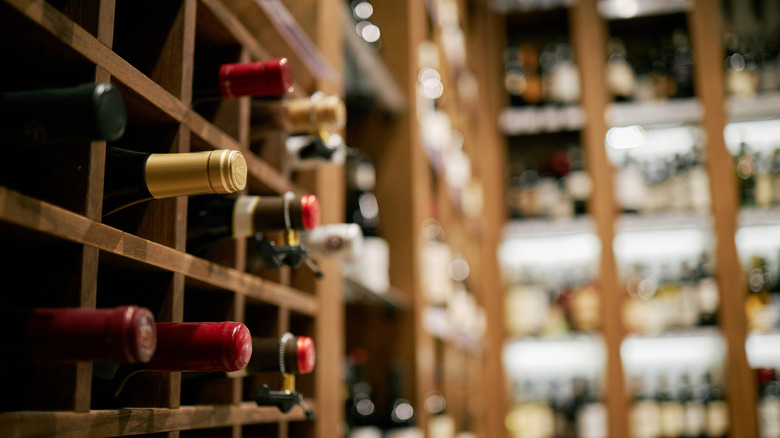
There are certain types of wines that leave you in awe, boldly standing out in the sea of your vintage collection. It could be a classic pinot noir that guarantees graceful sips or a surprising chardonnay with a smooth and silky finish. However, like all luxuries, not every vintage wine lives up to the hype. Chowhound spoke with Chris Upchurch, the owner and head winemaker at Upchurch Vineyard, who exclusively told us all about what makes one vintage wine a collector's treasure while others simply flop. "Age-worthy structure, particularly the balance of acidity, tannin, and concentration of fruit, is a large part of what separates the truly great wines," he said, adding that it's important to consider the wine in its entirety — reading wine labels included — not solely focusing on the notes. "It's a combination of all the factors (look, smell, palate feel, taste) and the ability to improve over time that make a wine complete, balanced, and unforgettable," he added.
Upchurch also believes that structure and balance can make a big difference in wines. And in the complex world of winemaking, it's perhaps even more important than the notes themselves; hence knowing the wine's composition and framework will allow for a deeper understanding and appreciation of a well-crafted vintage bottle.
Choosing the right vintage
Judging wine is like getting to know a person — prestige and labels don't necessarily matter. What matters most is what's on the inside, so even those from the underrated wine regions in the U.S. can be a surprising standout. Chris Upchurch explains, "Some wines with impressive initial scores or hype — even from prestigious producers — fail to stand the test of time because they're too soft, ripe, or manipulated to age." That's why there are underdogs in the scene who carefully produce wines with precise architecture, later turning into successes a few decades after.
Ultimately, in spotting a great vintage, you'd need to pay attention to three things: balance, structure, and potential. A sign of a balanced bottle is when each sip gives you pure pleasure, to put it simply. There would be no off-putting taste that would hinder you from truly enjoying the wine's notes. Structure, on the other hand, requires a bit more experience to recognize, as you need a more well-rounded understanding of the different elements that come into play. Some would start with tannins, which impact your wine, giving it a dry, puckery texture. They can act as a counterpoint, as they mellow the fruit-forward sweetness and the intensity of the alcohol. A wine's aging potential also matters, as it gives you a hint on how well it will develop down the line. Factors like alcohol content, refined tannins, and high acidity can give you a peek at how beautifully a wine will evolve over the years.