

How To Choose Between Whole Milk And Buttermilk When Baking Cake
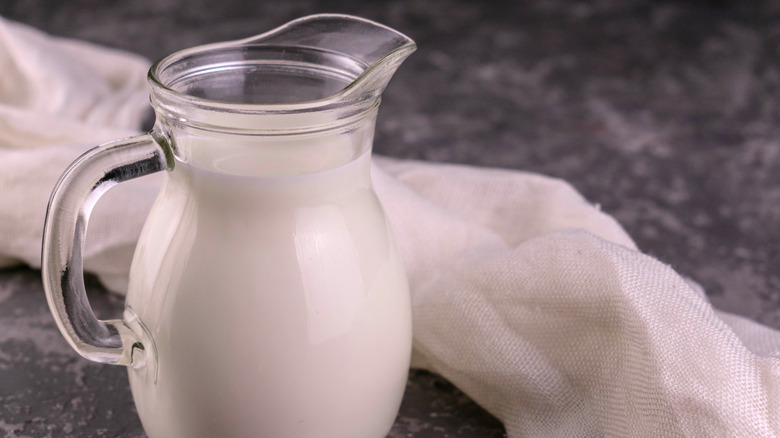
When comparing whole milk and buttermilk, we know that buttermilk is thicker than regular milk, and it has a tart, somewhat pungent flavor. But what is buttermilk, exactly? Essentially, it's a fermented milk. Traditionally, buttermilk was the byproduct of butter churning. When the butter fats would solidify from the churning cream, there would be some liquid milk left over. Originally, that liquid was allowed to ferment naturally. But, these days, buttermilk is cultured, much like yogurt.
Buttermilk is certainly a necessary ingredient in a basic buttermilk pancakes recipe, but why is that, and when can you use it in larger cakes and quick breads instead of whole milk? For some advice, we reached out to an expert for a Chowhound exclusive. Alysha Dintale is the executive pastry chef at The Goddess and Grocer, and she has a plethora of experience on the subject.
"You can typically substitute buttermilk for milk in recipes that use baking soda as a leavening agent," Dintale says. "Think cakes, muffins, pancakes, and quick breads." She says that it's all about the acidity of buttermilk — which is why it has the pungent flavor. "[The acidity] reacts with the baking soda to produce carbon dioxide, which helps your baked goods rise and creates a light, airy texture." This is also why buttermilk is important in biscuits. But why is this, and how does it work?
When to use buttermilk in your baking and when to stick to whole milk
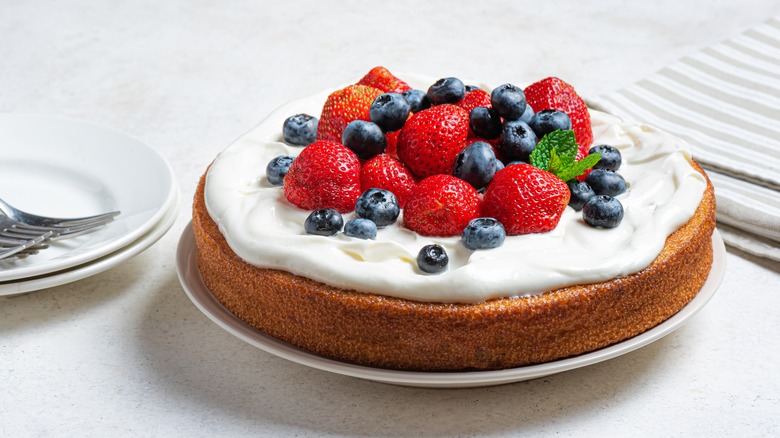
To decide when buttermilk makes a good replacement, Alysha Dintale says, "A good rule of thumb is to stick to recipes where the chemistry of acid and base is already at play. If a recipe calls for baking powder or doesn't include any leavening, substituting buttermilk might throw off the balance and lead to a denser or overly tangy result." The difference between baking soda and baking powder is that baking soda is pure sodium bicarbonate (on the base end of the spectrum), which reacts with acidic ingredients to create carbon dioxide and help cakes rise. So baking soda works great with buttermilk. Baking powder, on the other hand, is sodium bicarbonate, plus acid, so the extra acid from the buttermilk doesn't make a great mix, and will actually lessen the cake's rise.
However, when using buttermilk appropriately, Dintale says, "One of the main benefits is tenderness, because of its acidity, buttermilk helps weaken gluten strands, which results in softer, more delicate baked goods." Plus, Dintale says that buttermilk will add a subtle, tangy flavor that works great to enhance recipes concentrated on chocolate, citrus, and berry flavors.
Dintale advises against using buttermilk in recipes where its acidity and viscosity can be detrimental. It's not ideal for custards, puddings, or pastry creams because they could curdle or split. Typically, boxed cakes contain baking powder or sodium bicarbonate and an acid element, so it should be avoided there. Finally, Dintale says, "And since buttermilk often has a slightly higher salt content than milk, that can impact the seasoning of a dish, especially in baking, where precision matters."