

What You Need To Know Before Using Trader Joe's Salmon For Sushi
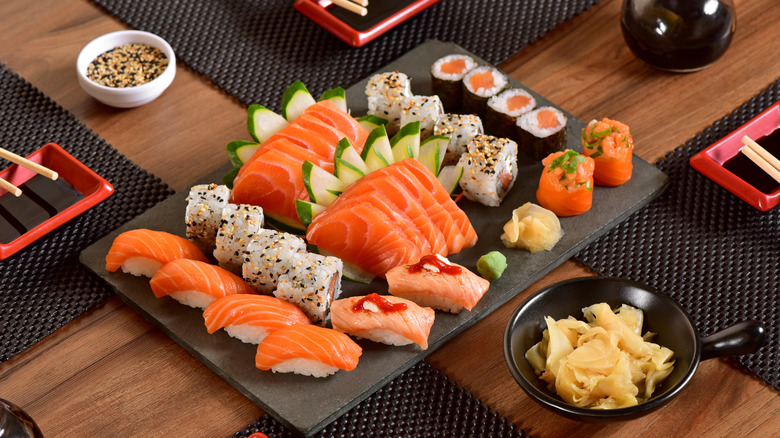
Shopping for salmon at Trader Joe's is a wonderful way to save money on quality seafood. Seeing the shelves stacked with fresh salmon fillets can inspire home chefs to dream of preparing sumptuous dishes. However, how do you know if you can use Trader Joe's salmon to make sushi? Direct from the store, you shouldn't eat Trader Joe's salmon in its raw form, as it's not sushi-grade and hasn't yet been prepared properly. However, there is a way to treat salmon that is not sushi-grade so you can use it to make sushi, especially when the fish was farm-raised.
The fish used to make sushi is usually sold as sushi-grade. There are no specific regulation requirements for a fish to get sushi-grade designation, but a common guideline is for it to be frozen at -4 degrees Fahrenheit for seven days, or at -31 degrees Fahrenheit for 15 hours in order to kill any parasites. The fish must also have been handled with special care right from the catch to remain ultra-fresh and suitable for immediate raw consumption. This makes it a premium product and thus more expensive than conventional fish. You can freeze salmon at home in this way to create your own sushi-grade salmon, but there's another way that is more accessible to the home chef. Luckily for sushi lovers on a budget, farm-raised salmon from Norway, which is the kind of farmed salmon available at Trader Joe's, is fed a controlled diet that reduces the chances of the fish containing parasites, so the fish generally requires minimal additional preparation to make it safe for consumption as sushi.
How to make salmon safe for sushi
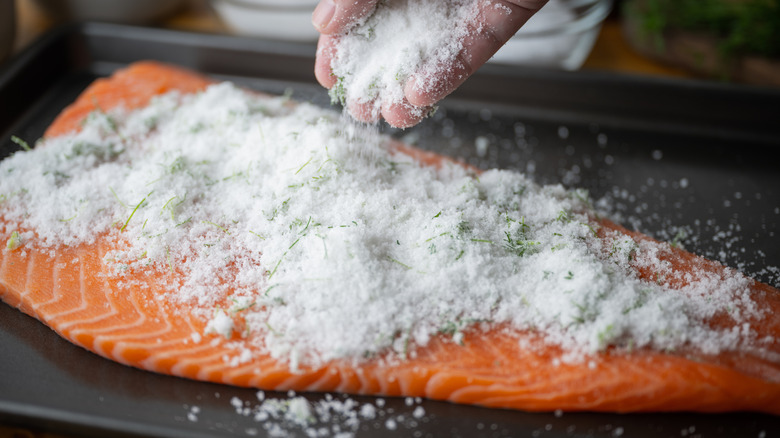
The best method to prepare non-sushi-grade salmon for use in sushi is a combination of curing the fish with salt and sugar using the proper ratio of ingredients, and then potentially freezing it. The most common way to do this is to rub a 1:1 salt and sugar mixture (¼ cup total for every 2 pounds of fish) over the entire fillet of salmon and place it in the refrigerator for about 45 minutes. This step will draw out the moisture and add a complex flavor to the finished salmon. Then, remove the fish from the refrigerator and pat off the salt and sugar. Optionally, you might brush rice vinegar on the fish and let it sit for an additional one hour and then pat dry. You can freeze the fish for about two days for additional safety; however, with farmed Atlantic salmon raised in parasite-free conditions, additional freezing may not be as necessary.
To make sushi at home, you will need to know certain preparation techniques and avoid the common mistakes that will ruin your homemade sushi. Among the many possible sushi-making missteps, if you're making maki rolls, try not to overfill them so they will close. The quality of rice you select is very important as well. Using sushi rice and seasoning it properly with the right amount of rice vinegar is key to preparing delicious sushi rolls and for topping with sliced fish for nigiri-style sushi.