

This Edible Weed Has More Calcium Than A Glass Of Milk

Calcium is a nutrient crucial not only to healthy development as children grow, but also for healthy aging throughout adulthood. While we most frequently focus on how calcium benefits our teeth and bones, it also supports our blood's ability to clot, healthy nerve and muscle function, and even reduces the risk of developing cancer. Though many of us struggle to achieve the daily recommended value of 1,000 to 1,200 milligrams for adults, there are plenty of ways to pack more of it into our daily diets without ever touching a glass of milk.
For instance, soybeans and legumes in the white bean family are very high in calcium, offering between 70 and 100 milligrams per ½ cup. However, just 1 cup of cooked nettle leaves contains about 430 milligrams of calcium — much more than the aforementioned beans, and even overshooting an ordinary glass of milk by about 130 milligrams. Yogurt is the only food that has more at 450 milligrams per cup, but if you're looking for a plant-based source of calcium, nothing beats stinging nettle.
Of course, to reap these benefits, it's important to know how to harvest and consume stinging nettles safely. They get their name from the tiny, sharp hairs on their leaves and stems that cause itchy, painful rashes if touched. Stinging nettle should always be harvested while wearing heavy gloves and be steamed or otherwise cooked to deactivate the irritants. You can then use it to fortify smoothies or add rich, earthy flavor to soups and pasta dishes.
Observing safety first to enjoy tasty dishes later
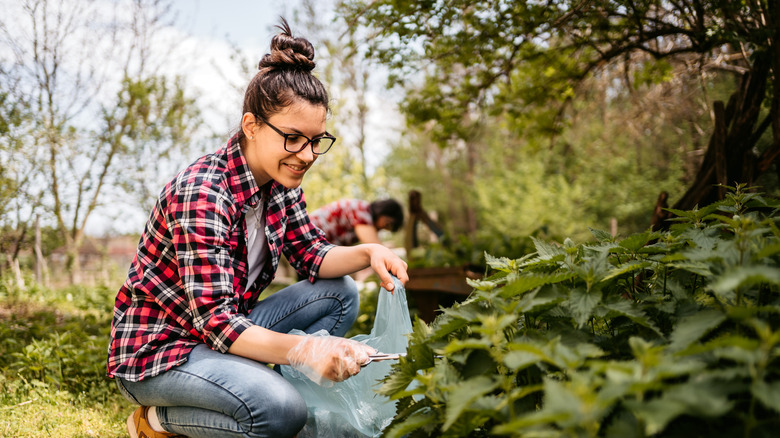
Whether you're foraging nettles from the local forest undergrowth or from a dedicated plot in your herb garden, you need a thick pair of gardening gloves to protect your hands. It's also best to harvest younger nettle plants in spring and early summer, both because the hairs are less developed and because younger nettles taste nutty, earthy, and green. Older nettles are tough and may be woody or bitter. Additionally, steaming, blanching, drying, or otherwise heating the nettles breaks down the "sting" in these plants, so it's best to harvest them right before you intend to use them rather than storing them like lettuce or arugula.
Once you've mastered handling nettles safely, you can use them in an herby pesto, as dressing for a delicious and comforting baked salad, in veggie-rich pasta sauces, as a stand-in for seaweed in miso soup, or you can pack them into your favorite green smoothie recipe. The earthy flavor could go particularly well with bright citrus fruits, peaches, chocolate, or golden beets if you're feeling especially adventurous. You can also swap them into your favorite recipe for garlicky air-fried kale chips, making nettle chips instead. While these chips are perfectly snackable on their own, you can also crumble them into popcorn seasoning or use them to add a crunchy zing to a salad. It's also pretty easy to sneak them into hearty chilis and stews for an undertone of tasty umami.